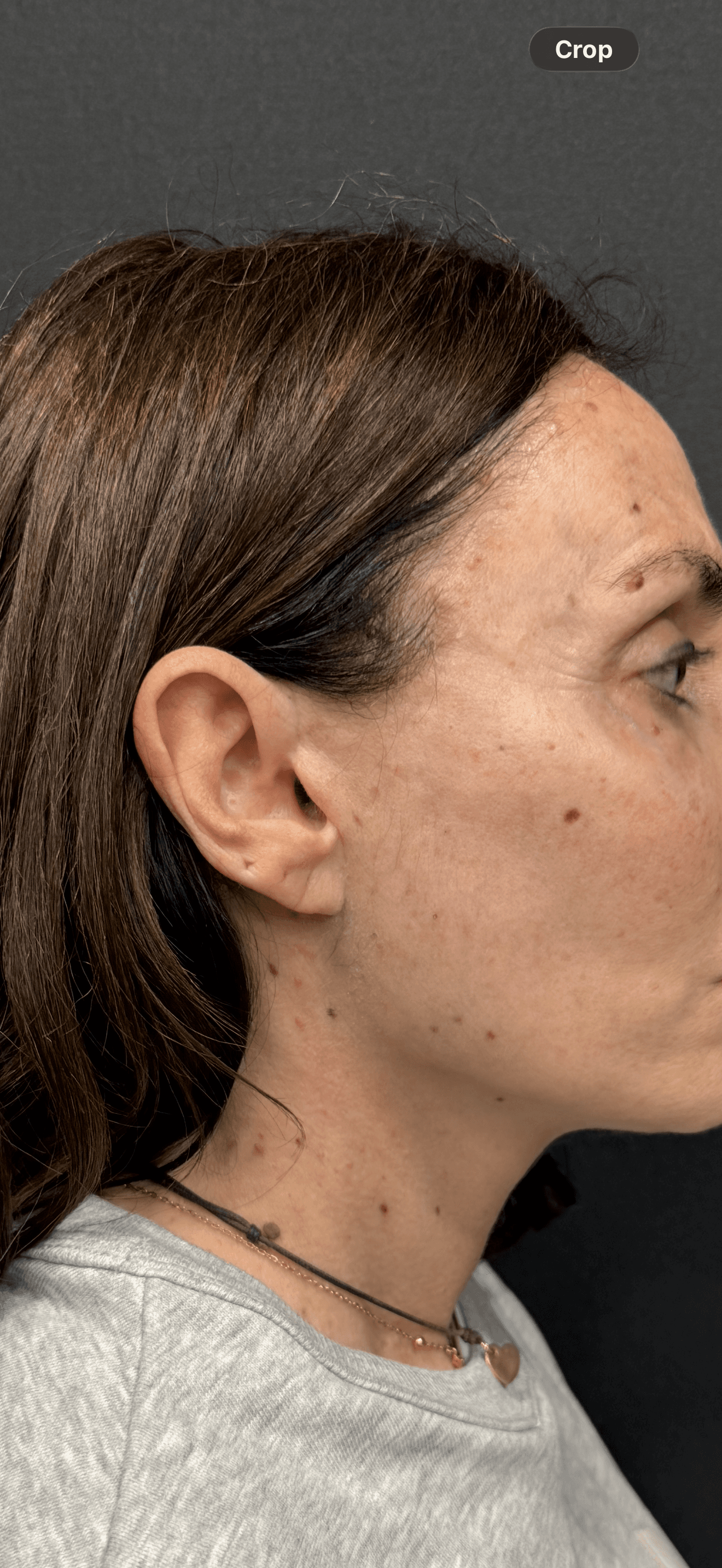
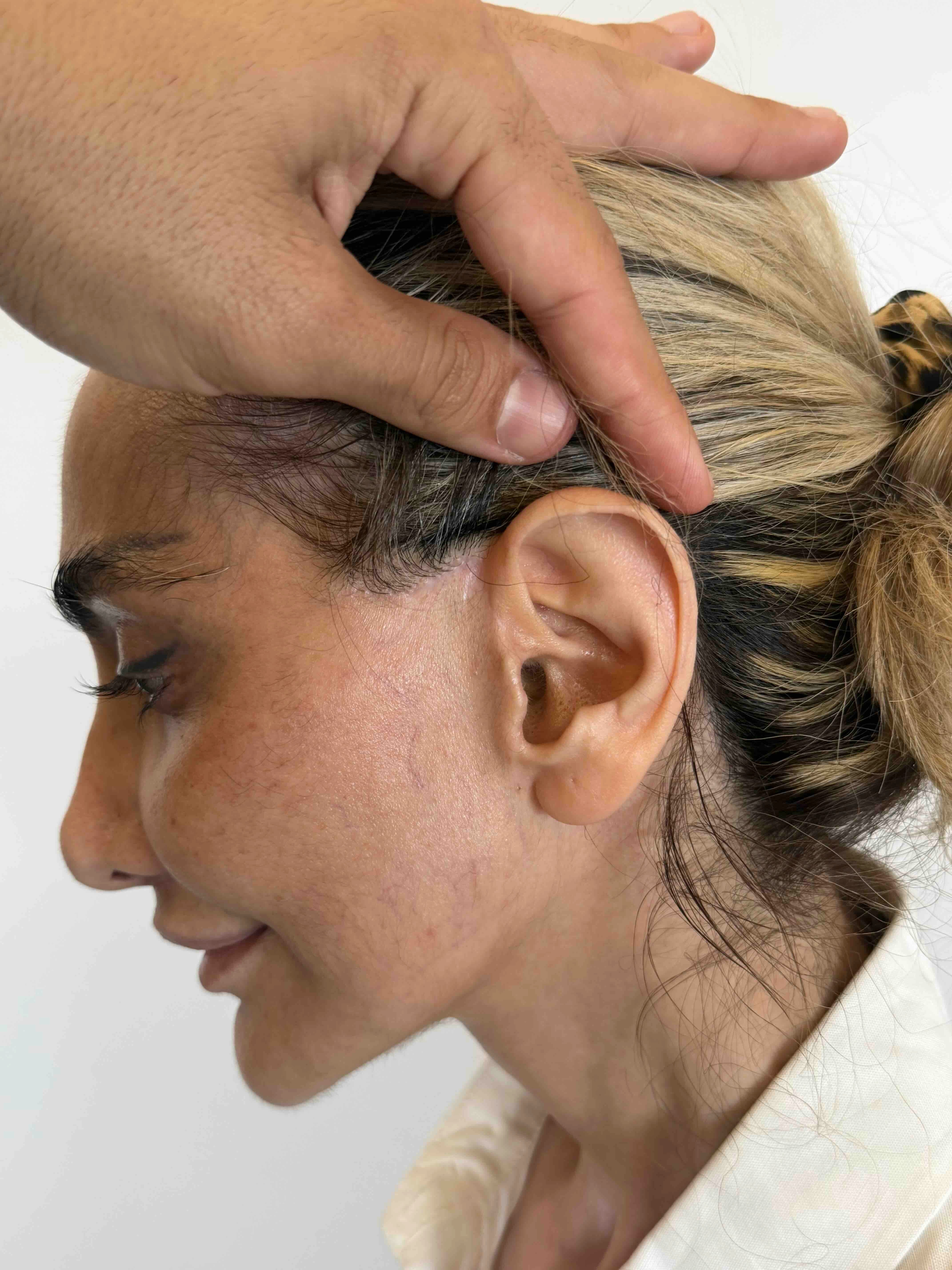
Every week in my Istanbul clinic, I meet patients who come to me for a facelift revision — or who are determined to avoid the mistakes they've seen in others. Their concerns are always the same: "I want to look younger, but I don't want people to know I've had surgery." This is the essence of modern facelift philosophy. A well-executed facelift should be invisible. Nobody should be able to tell.
But not all facelifts are equal. Whether due to outdated techniques, improper execution, or poor planning, some surgeries leave behind unmistakable traces — what we call facelift stigmatas. These are visible signs that betray the fact that a person has undergone facial rejuvenation surgery. As a plastic surgeon specialising in face and neck lift procedures, I want to walk you through the most common ones, explain why they happen, and tell you exactly how we prevent them.
1. The Over-Pulled, Windswept Look
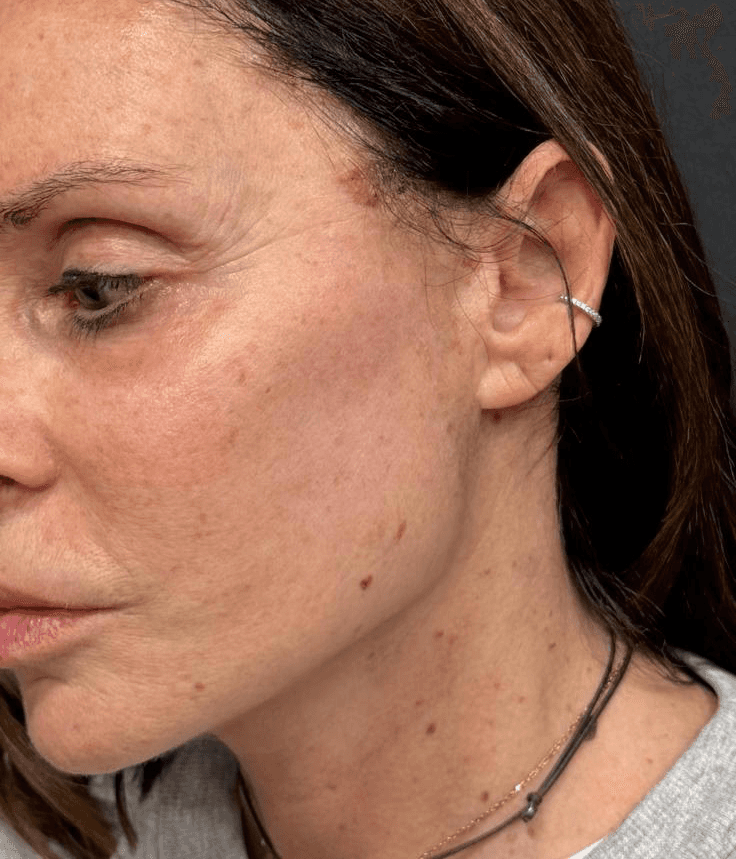
This is perhaps the most recognised of all facelift stigmatas. When you see a face that looks stretched, swept sideways, or frozen — that is the windswept look, and it is the hallmark of a poorly planned facelift.
It happens most often with skin-only facelift techniques, which were widely used in earlier decades. In a skin-only facelift, the surgeon pulls the skin directly — laterally, toward the ears — to achieve tightening. The result is a face that looks like it's being blown by a strong wind. The mouth corners are dragged outward and slightly upward in an unnatural direction, and the overall appearance is mask-like and stiff.
Even with modern techniques, this stigmata can occur if the vector of the lift is not chosen correctly. The direction in which we lift the tissues matters enormously. For facial rejuvenation to look natural, different anatomical zones require different vectors. The midface, for example, needs to be lifted upward — not sideways. When everything is simply pulled toward the ear, it creates distortion rather than restoration.
In my practice, I pay meticulous attention to lift vectors for each individual patient. A facelift is not a one-size-fits-all pull. It is a precise anatomical repositioning — and when done right, the result looks like a younger version of the same person, not a different person altogether.
2. Pixie Ear Deformity
The pixie ear deformity is one of the most classic and well-documented facelift stigmatas in the plastic surgery literature. It occurs when the earlobe becomes distorted — pulled downward, elongated, and fused to the cheek — losing its natural free-hanging shape. The result resembles the pointed, attached ears of a mythical pixie, hence the name.
Why does it happen? The answer is almost always the same: excessive tension on the skin closure.
In older, skin-only facelift techniques, the skin itself was expected to carry the entire load of the lift. Over time, gravity wins. The skin stretches, and the earlobe — being the path of least resistance — gradually migrates downward and attaches to the face. There is no longer a natural groove between the earlobe and the cheek; the two become one flat, pulled surface.
This is precisely why modern facelift surgery has moved decisively toward SMAS-based techniques. The SMAS (Superficial Musculoaponeurotic System) is the deep fibromuscular layer of the face. When we lift and reposition the SMAS, it is the deep layer that carries the tension of the lift — not the skin. The skin is then re-draped over the repositioned deep tissues with absolutely no tension. With a tension-free skin closure, the earlobe remains in its natural position and retains its original shape.
I wrote an in-depth article specifically about pixie ear deformity — how it forms, how we prevent it, and how we correct it in revision cases. If this is a concern for you, I'd encourage you to read that post for a more detailed breakdown.
3. Wide and Visible Scars
Well-placed facelift incisions should be nearly invisible after healing. They run along natural contours — in front of and behind the ear, into the hairline — and when properly closed, they fade to fine, barely perceptible lines. When you see a wide, thickened, or discoloured scar after a facelift, it is almost always a sign of the same fundamental problem: too much tension on the skin closure.
Skin heals beautifully when brought together gently, without force. When a surgeon relies on the skin to do the work of the lift — pulling it tight before closing — the incision is under constant stress. The body responds by laying down more collagen in a disorganised way, producing a wide, hypertrophic, or stretched scar.
The principle I follow is straightforward: let the deep layers — the SMAS, the platysma, the deeper facial tissues — carry the lifting tension. By the time we close the skin, there should be virtually no tension at all on the incision line. The skin is simply resting in its new position, not being pulled there. This approach consistently produces the finest, most inconspicuous scars possible.
4. Elevated or Missing Sideburn
The sideburn is a natural, defining feature of the face. It frames the temporal region and forms a subtle but important transition between the hairline and the face. When a facelift results in an elevated or completely absent sideburn, the change is striking — even to people who can't identify exactly what looks different. Something simply looks off.
This stigmata is directly related to the choice of incision placement in the temporal region.
Patients frequently ask me: "Why don't you use an incision hidden completely inside the hair? That way the scar would be completely invisible." It's a reasonable question, and in theory, placing the incision entirely within the hair sounds ideal. But there is a serious trade-off: when the temporal incision is placed inside the hairline, the hairline and sideburn are pulled upward as the skin is advanced. The sideburn rises. In significant lifts, it can disappear entirely. And once it is gone, there is no surgical way to restore it — the only option is hair transplantation to recreate what was lost.
For this reason, I use a pre-hairline incision in the temporal area for the vast majority of my patients. Yes, there will be a faint scar along the edge of the hairline — but it heals extremely well, especially when tension-free, and it preserves the sideburn in its natural position. For selected patients where I calculate there will be no meaningful hairline shift, I may use an incision inside the hair. But this is the exception, not the rule.
A natural-looking facelift must preserve natural anatomy. The sideburn is part of that anatomy.
5. Loss of Tragal Definition
The tragus is the small, firm cartilage projection at the front of the ear canal. It has a very specific, three-dimensional shape — slightly prominent, with a natural shadow behind it that gives the ear its characteristic contour. In a well-executed facelift, the tragus looks exactly as it always has. In a poorly executed one, it disappears.
Loss of tragal definition occurs when the skin over the tragus becomes thick, bulky, or blunted — either because the skin was not thinned appropriately, or because the incision was placed in a way that distorts the anatomy. The result is a tragus that looks flat and featureless, which is a subtle but telltale sign of surgery for anyone who knows what to look for.
I dedicated a full blog post to tragal preservation techniques because I consider it one of the most technically demanding aspects of facelift surgery. When we make the incision through the retro-tragal approach (behind the tragus), we must be extraordinarily precise. The cartilage itself should never be cut. Beyond that, I perform two specific maneuvers to preserve definition: first, I carefully thin the skin directly over the tragus to prevent any tissue bulk from obscuring its contour; second, I suture the deep layer of the skin to the tragal cartilage itself, anchoring it in position so it heals flush against the cartilage rather than over it.
The result is a tragus that looks exactly as nature intended — three-dimensional, well-defined, and completely natural.
Why These Signs Appear — And How Modern Facelift Surgery Prevents Them
Looking at all five of these stigmatas together, a clear pattern emerges: most of them share the same root cause — excessive tension on the skin.
Old-generation facelift techniques treated the skin as the primary structural layer. Pull the skin, sew it back, and let it hold the result. This approach is now understood to be fundamentally flawed. The skin is not designed to bear sustained load. It will stretch, distort, and eventually create every one of the stigmatas I've described above.
Modern facelift surgery is built on a completely different philosophy. The deep structural layers — the SMAS in the face, the platysma in the neck — are lifted, repositioned, and secured. These tissues are designed to bear tension. They hold the result long-term. The skin is then re-draped passively over the repositioned deep framework, with no tension whatsoever at the closure line.
This approach simultaneously:
Prevents the windswept, over-pulled appearance
Eliminates pixie ear deformity
Produces fine, well-healed scars
Preserves the sideburn and hairline
Allows precise, anatomical closure around the tragus
The goal of every facelift I perform is to create a result that nobody can identify as surgical. A patient should look refreshed, rested, and naturally younger — not operated on.
Choosing the Right Surgeon Matters
If you are considering a facelift — whether in Istanbul, Turkey, or anywhere in the world — these are the questions worth asking your surgeon: What technique do you use? How do you handle SMAS tension? Where exactly do you place your temporal incision, and why? How do you protect the tragus? What does your approach to earlobe closure look like?
The answers to these questions tell you a great deal about how your surgeon thinks, and whether their philosophy aligns with producing results that stand the test of time without leaving any telltale signs behind.
I am a European Board-certified plastic surgeon, Fellow of the European Board of Plastic, Reconstructive and Aesthetic Surgery (EBOPRAS), and member of ISAPS and ASPS. My practice in Istanbul focuses almost exclusively on facial rejuvenation, and preventing the stigmatas described above is central to how I approach every case.
If you have questions about facelift surgery, would like to discuss your specific anatomy and goals, or are interested in a consultation — I invite you to reach out through my website at doctorcbs.com.
Dr. Cem Berkay Sınacı — Plastic, Reconstructive and Aesthetic Surgeon, Istanbul, Turkey