
If you've been researching brow lift surgery, you've probably come across terms like endoscopic brow lift, direct brow lift, temporal brow lift, or coronal brow lift — and wondered which one is best. The answer is that there is no single best technique. What matters is finding the most appropriate approach for your anatomy, age, skin quality, hairline, and the specific changes you want to address. This is exactly how I evaluate every brow lift candidate in my practice.
Why Brow Lift Technique Selection Matters
The brow is one of the most expressive parts of the face. A brow that sits too low can make you look tired, angry, or older than you are — even when you feel nothing of the sort. But the way we correct this has to be tailored to each patient. Operating on a 35-year-old with mild lateral brow descent is fundamentally different from treating a 65-year-old with deep forehead creases, heavy skin, and significant brow ptosis.
Using the wrong technique — even a technically well-executed one — can lead to results that look unnatural, cause hairline changes the patient didn't want, or fail to address the actual problem. My job is to match the surgery to the patient, not the patient to the surgery.
Endoscopic Temporal Brow Lift: For Younger Patients Without Skin Excess
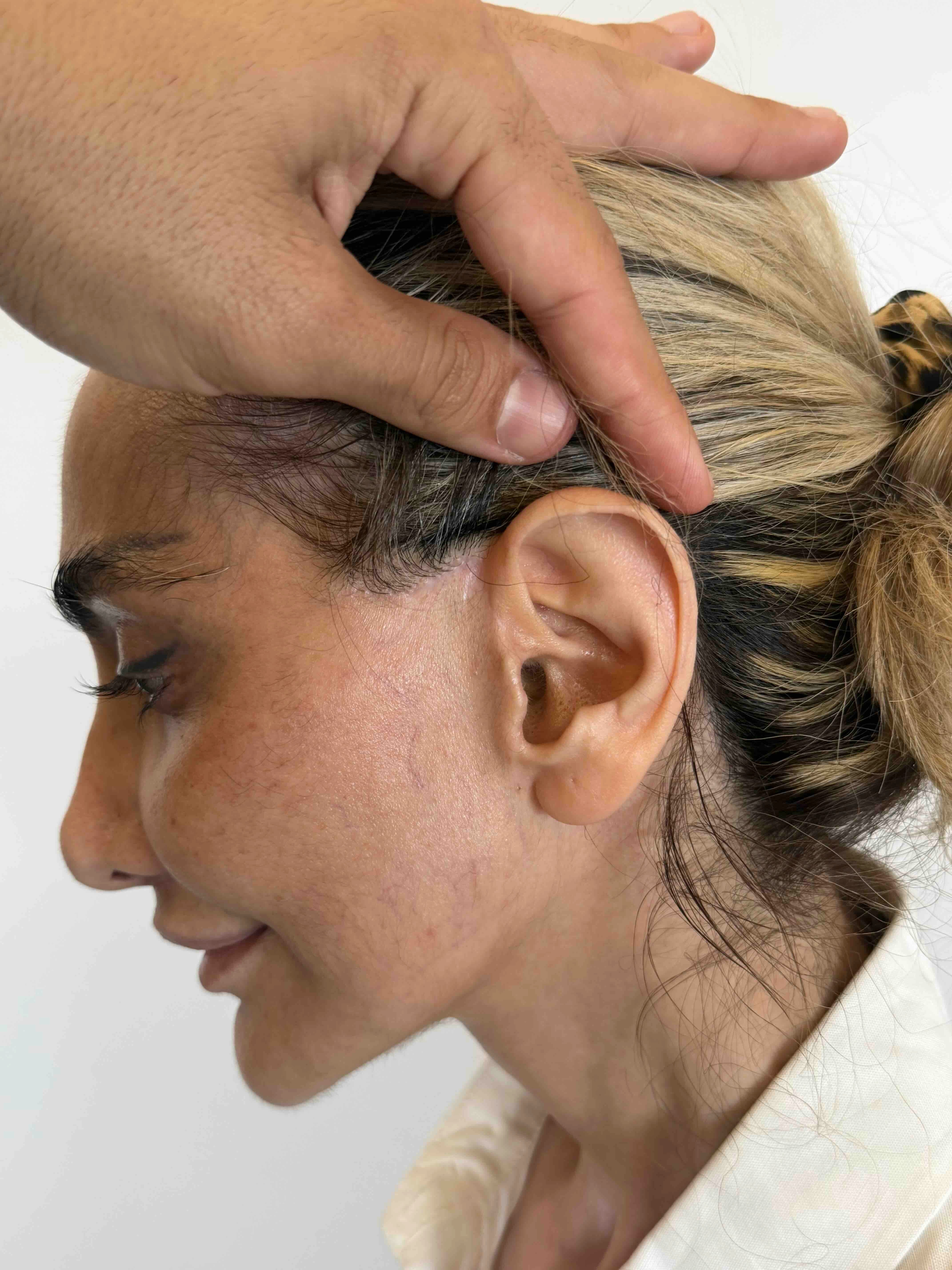
For younger patients — typically in their 30s to mid-40s — who have no significant skin excess but experience lateral brow descent or early forehead aging, I generally prefer the endoscopic temporal brow lift. This is a minimally invasive approach performed through small incisions concealed within the hairline. A small camera guides the procedure, allowing precise release and elevation of the brow without the need to remove skin.
Within temporal brow lifting, there is further nuance. In some patients, I only need to elevate the tail of the brow — the outer third — which has descended and is contributing to a tired or heavy appearance around the outer eye. In other cases, the entire brow benefits from elevation, but with the emphasis still placed on the lateral portion, since over-lifting the medial brow can create an unnatural arched appearance. This distinction is made during consultation based on the patient's individual anatomy and aesthetic goals.
Direct Brow Lift: A Reliable Option for Older Patients
In older patients with significant brow ptosis, deep forehead wrinkles, and heavier skin, I sometimes prefer the direct brow lift. This technique involves removing a carefully measured strip of skin directly above the eyebrow, then elevating and securing the brow in a higher position.
The honest trade-off with a direct brow lift is the scar. It sits at the upper border of the brow, and in younger patients or those with smooth skin, it can be visible. However, in older patients whose skin carries natural lines and texture in that area, the scar tends to heal very well and becomes virtually imperceptible over time. For the right candidate, the direct approach offers powerful, predictable, and lasting correction that more subtle techniques simply cannot match.
Vertical Endoscopic Brow Lift: When the Hairline Is High
One of the challenges in brow lift surgery arises when a patient has a high hairline or very little hair — making it difficult or undesirable to use the hairline for incision placement. Placing standard incisions in this area could elevate the hairline further, which is the last thing these patients need.
For these cases, I use a vertical endoscopic brow lift, where I repurpose the existing deep forehead wrinkles as entry points for the endoscope and instruments. The horizontal creases that come with age become a discreet access route. This allows me to perform a thorough endoscopic release and elevation while keeping any incision marks concealed within the natural lines of the forehead — no hairline alteration, no new scarring in exposed skin.
Gliding Brow Lift: Designed for Thick Skin
Thick skin presents a specific challenge in brow lifting. Standard suspension techniques that work well in thinner skin may not achieve the same degree of elevation or longevity when the tissue is heavier.
For these patients, I sometimes use the gliding brow lift technique. This approach involves carefully separating the skin from the underlying tissues in the brow region, then repositioning and securing the skin in a higher position using hemostatic net stitches — temporary fixation sutures that are removed within 2 to 3 days postoperatively. By allowing the skin to glide into its new position and then holding it there during the initial healing period, we achieve reliable elevation even in patients where other methods would fall short.
How I Decide Which Technique Is Right for You
Every consultation for brow lift surgery follows the same principle: I listen, I examine, and then I plan. The questions I'm asking during that process include:
How much descent is there, and where — the full brow or primarily the tail?
What is the skin thickness and quality?
What is the patient's age and overall facial aging picture?
Where is the hairline, and how important is preserving its position?
Is this procedure being combined with other facial rejuvenation surgery?
Brow lifting is also frequently combined with upper blepharoplasty, facelift, or other facial procedures — and when combined, the planning becomes even more important to ensure proportionate, harmonious results.
The Right Brow Lift for Your Face — Not a One-Size-Fits-All Procedure
If you're considering brow lift surgery and have been told there's one definitive answer — one technique that's objectively better than all others — I'd encourage you to ask more questions. The best brow lift is the one that's thoughtfully matched to your anatomy, your goals, and your life. That's the only standard I work to.
I perform brow lift surgery for patients traveling from the United States, United Kingdom, Canada, Australia, and across Europe to Istanbul, Turkey. My clinic is certified as an international health tourism center by the Turkish Ministry of Health. If you'd like to discuss your specific case, you're welcome to reach out for a consultation.