One of the most common concerns I hear from patients considering a facelift is about scarring. Specifically, they want to know: will my scars be visible? Will my ear look natural? What happens to my tragus? These are fair questions — and they deserve honest, detailed answers backed by real long-term results.
In this post, I'm going to walk you through how a retro-tragal facelift incision heals over time, why the tragus may look different in the early weeks, and what you can realistically expect at 6 months and 1 year after surgery. I'll also explain the surgical techniques I use to preserve natural tragus definition and achieve nearly invisible facelift scars in the long term.
What Is a Retro-Tragal Incision in Facelift Surgery?
The tragus is the small, rounded cartilage projection that sits at the front opening of your ear canal. During a facelift, the surgeon must make an incision near the tragus to access and reposition the deeper facial tissues. Where exactly that incision is placed makes a significant difference in how visible the final facelift scar will be.
There are two primary facelift incision types around the tragus:
Retro-tragal (post-tragal) incision: The incision is placed just behind the tragal cartilage, running along its posterior edge. This positions the scar inside the natural shadow of the ear, making it extremely well hidden once healed.
Pre-tragal incision: The incision runs in the groove just in front of the tragus. The scar sits in the pre-auricular crease, which is a natural skin fold. It heals well but is slightly more visible upon close inspection compared to the retro-tragal approach.
Both techniques, when performed properly, produce excellent results. The choice between the two depends on patient anatomy, sex, hair-bearing skin considerations, and the surgeon's expertise.
Why I Prefer the Retro-Tragal Incision for Most Patients
For the majority of my female facelift patients, I almost always choose the retro-tragal incision. The reason is simple: the facelift scar behind the ear is virtually invisible once fully healed. It sits within the natural concavity behind the tragal cartilage, hidden from direct view.
For male patients, I use both retro-tragal and pre-tragal incisions depending on the individual case. Each approach has its advantages.
When a retro-tragal incision is used in male patients, the scar is beautifully hidden — but there is a potential trade-off. Depending on how much skin is removed, some hair-bearing skin can migrate onto the tragus over time. This means a male patient may notice some hair growth directly on the tragus in the months following surgery.
However, this is a very manageable issue. Most of my male patients who undergo a retro-tragal facelift simply do a few laser hair removal sessions focused on the tragus area after healing is complete. The result? A retro-tragal scar that is essentially invisible and a tragus with no hair — the best of both worlds.
With a pre-tragal incision in men, the tragus never develops hair on it, since no hair-bearing skin is placed over the cartilage. The scar sits in the pre-tragal groove, which is still quite inconspicuous, but upon very close examination, it is slightly more visible compared to the retro-tragal alternative.
The Healing Reality: Why Your Tragus Looks Different After Surgery
Here's the part most patients — and many online resources — don't talk about enough.
In the first few weeks after a facelift with a retro-tragal incision, your tragus will not look like it normally does. This is completely expected, and it is temporary.
The retro-tragal incision requires draping a thin skin flap over the tragal cartilage. In the immediate postoperative period, swelling (edema) develops in this area, just as it does throughout the rest of the face and neck. This edema sits right over the tragal cartilage and temporarily masks its natural definition.
What does this look like? The tragus appears slightly rounded, puffy, and less defined. Some patients look at their ears in the first week or two and worry that the tragus has been "damaged" or that it will never look natural again. This reaction is understandable but misguided — what they are seeing is swelling, not a permanent change.
This is the main message I want my patients to understand: the edema masks the tragal cartilage definition during the healing period, and this is why early postoperative photos can look a little unnatural around the ear. It does not mean anything has gone wrong.
The Healing Timeline for Tragus Definition
Here is what you can expect as the facelift scar heals and the tragal area matures:
Week 1–2: Maximum swelling around the tragus. The cartilage contour is hidden beneath edema. The skin over the tragus looks thick and undefined. Sutures may still be present. This is the stage that alarms most patients, but it is entirely normal.
Week 3–6: Swelling begins to decrease noticeably. The tragus starts to regain some shape, though it still appears slightly fuller than normal. The facelift scar behind the ear begins to flatten and fade from red to pink.
Month 2–3: A significant turning point. The cartilage definition of the tragus starts to become visible again as residual edema resolves. Most patients begin to feel reassured at this stage.
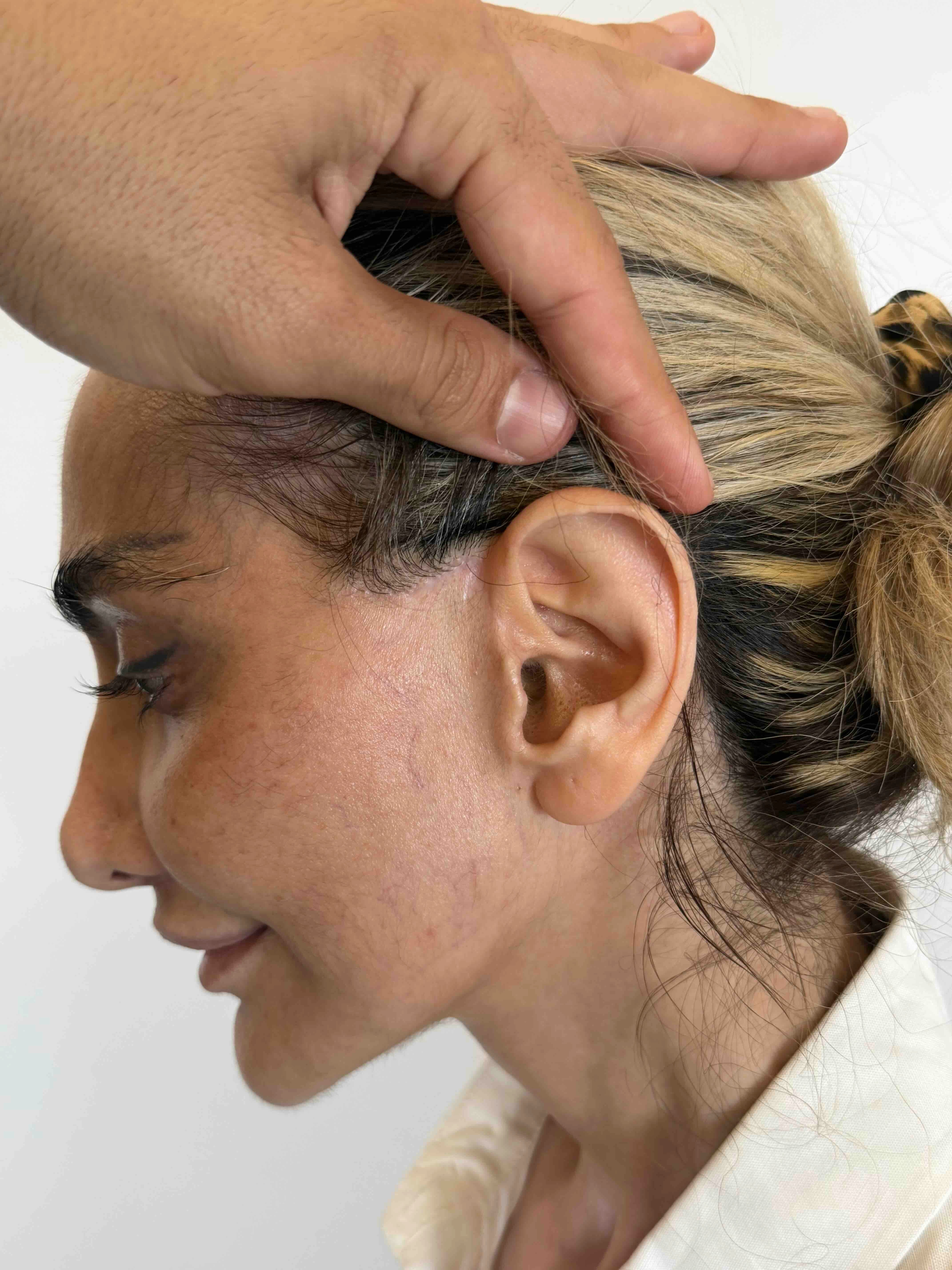
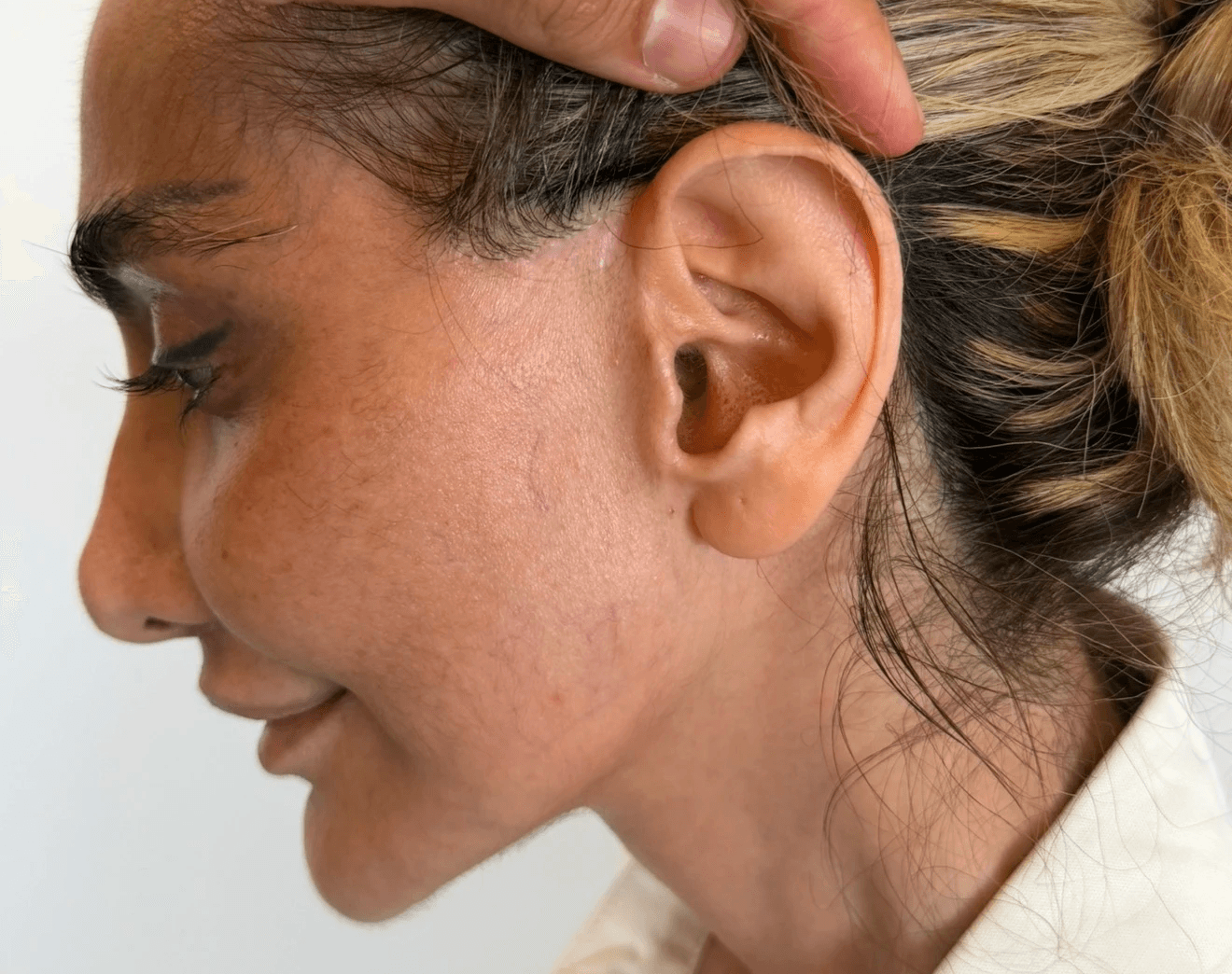
Month 6: The original tragus shape has largely returned. The skin over the tragus has thinned and settled, revealing the underlying cartilage contour. The facelift scar is now pale, thin, and very difficult to detect — even with close inspection. I have included 6-month postoperative photos below so you can see this for yourself.
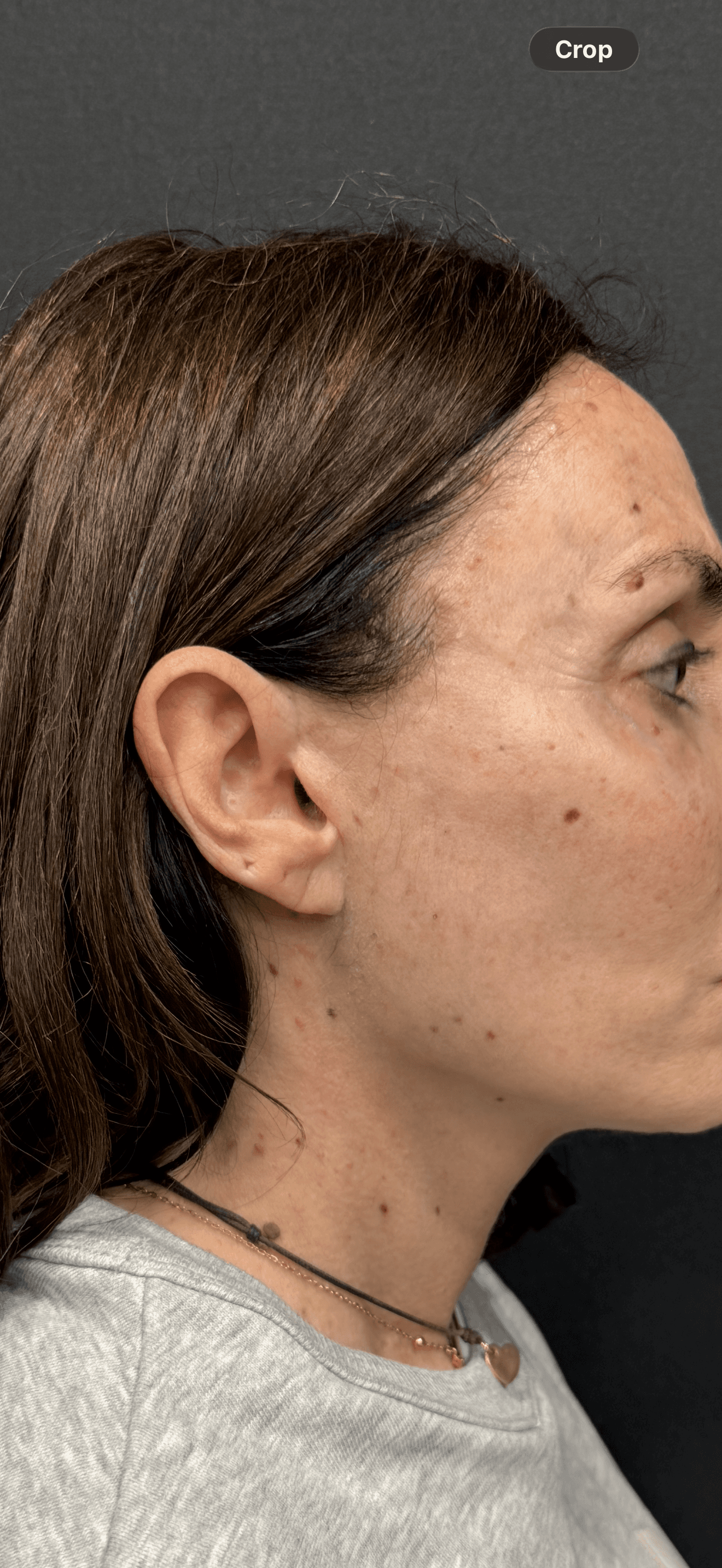
Month 12 and beyond: Full maturation is complete. The tragal cartilage definition is fully restored to its natural appearance — provided the surgery was performed with the proper techniques. The facelift scar behind the ear is essentially invisible, blending seamlessly with the natural skin folds. See the 1-year postoperative photos below for the final result.
My Surgical Techniques for Preserving Tragus Definition
Achieving a natural-looking tragus after a retro-tragal facelift incision is not automatic. It requires deliberate surgical maneuvers and attention to detail. Here are three key techniques I use to ensure excellent long-term tragal definition and minimal scarring.
1. Skin Flap Thinning Over the Tragus
Before final closure, I carefully thin the skin flap that will drape over the tragal cartilage. Specifically, I trim the subcutaneous fat directly beneath the skin in the tragal area, creating a very thin skin flap. This step is performed as the last maneuver before stitching.
Why does this matter? A thinner skin flap conforms more closely to the underlying cartilage, allowing the natural tragal contour to show through clearly once healing is complete. If the skin flap is left too thick, the tragus can appear perpetually full or undefined — even after all swelling has resolved.
However, this is a step that requires careful judgment. If the skin is thinned excessively, blood circulation to the flap can be compromised, potentially leading to healing complications. The goal is to achieve the thinnest possible flap that still maintains robust blood supply — a balance that comes with experience and meticulous technique.
2. Tension-Free Skin Closure
One of the most critical principles for achieving a thin, nearly invisible facelift scar is ensuring that the skin incision is completely free of tension during closure.
How is this achieved? During a modern facelift — particularly a deep plane facelift or SMAS facelift — the deeper tissue layers (the SMAS, platysma, and deep facial fascia) are repositioned and secured with strong sutures. These deep layers carry all the structural tension of the lift.
By the time I close the skin incision, there should be zero pulling force on the skin edges. The skin is simply redraped and closed without any tension whatsoever. This tension-free closure is the single most important factor in producing a thin, flat scar that fades to near invisibility over time.
When skin is closed under tension, the scar widens, becomes raised (hypertrophic), and remains conspicuous. A tension-free closure virtually eliminates this risk.
3. Tragal Skin Fixation Sutures
The final technique I employ is securing the thin skin flap directly to the underlying tragal cartilage using absorbable suture material. These fixation sutures hold the skin in a precise, stable position over the cartilage during the critical early healing period.
Why is this important? Without fixation, the thin skin can shift slightly during healing, which can result in an irregular or poorly defined tragal contour. By anchoring the skin to the cartilage with absorbable sutures, I ensure that the flap heals in exactly the right position. As the sutures dissolve over the following weeks, the skin has already adhered to the cartilage in its natural configuration.
The combination of these three techniques — flap thinning, tension-free closure, and cartilage fixation — consistently produces a tragus that looks completely natural in the long term, with a facelift scar that is virtually undetectable.
Facelift Scar Before and After: 6-Month and 1-Year Photos
Real results are the best evidence. Below, you'll find postoperative photos showing the retro-tragal facelift incision at 6 months and 1 year after surgery.
[6-Month Postoperative Photos]
At 6 months, note how the tragal cartilage definition has returned. The scar behind the tragus has faded to a thin, pale line that is barely distinguishable from the surrounding skin. The tragus looks natural and well-defined.
[1-Year Postoperative Photos]
At 1 year, the healing is complete. The tragus has its full, natural contour. The retro-tragal scar is essentially invisible. There is no sign of distortion, thickening, or unnatural fullness.
Frequently Asked Questions About Facelift Scars
Does a facelift change the shape of your tragus?
Temporarily, yes — but not permanently. Swelling after a retro-tragal incision masks the tragal cartilage for the first few weeks to months. By 6 months, the original shape returns if proper surgical techniques were used.
Are facelift scars visible?
With modern techniques and experienced surgeons, facelift scars become nearly invisible by 6 to 12 months. The retro-tragal incision produces the most concealed scar, hidden within the natural contours of the ear.
What does a facelift scar look like after 1 year?
At 1 year, a well-executed facelift scar is thin, pale, and flat — essentially invisible to the casual observer. Even upon close inspection, retro-tragal scars are extremely difficult to detect.
Which is better: pre-tragal or retro-tragal incision?
Both produce excellent results. The retro-tragal incision offers superior scar concealment but requires more surgical skill. The pre-tragal incision avoids any risk of hair migration onto the tragus, making it a good option for some male patients. Your surgeon should choose the approach best suited to your anatomy and goals.
Can men have a retro-tragal facelift incision?
Absolutely. Many of my male facelift patients have retro-tragal incisions. If hair migration onto the tragus occurs, a few sessions of laser hair removal after healing resolve this completely. The end result is an invisible scar and a hair-free tragus.
How long does it take for facelift scars to fade?
Facelift scars go through several phases: red and slightly raised in the first weeks, pink and flattening by month 2–3, and pale and nearly invisible by month 6–12. Full scar maturation can continue for up to 18–24 months.
What is the best facelift technique for minimal scarring?
The deep plane facelift, when combined with a retro-tragal incision and tension-free closure, produces the least visible scarring. The deep tissue repositioning eliminates tension on the skin, which is the key to thin, flat scars.
Is Turkey a good destination for facelift surgery?
Turkey has become one of the world's leading destinations for facelift surgery, with board-certified plastic surgeons trained to international standards. Istanbul in particular offers access to highly experienced surgeons who perform high volumes of face rejuvenation procedures, including deep plane facelifts, neck lifts, and blepharoplasty. When choosing a surgeon in Turkey, look for European or Turkish board certification, membership in international societies like ISAPS and ASPS, and documented long-term results.
Why Choosing an Experienced Surgeon Matters
The techniques described in this post — skin flap thinning, tension-free closure, tragal fixation sutures — are not universally practiced. They require training, experience, and a meticulous approach to surgical detail. The difference between a visible, distorted facelift scar and an invisible one often comes down to these refinements.
As a European and Turkish board-certified plastic surgeon, fellow of the European Board of Plastic Reconstructive and Aesthetic Surgery, and member of ISAPS and ASPS, I bring extensive international training to every procedure. My fellowship with Dr. Raul Gonzalez in Brazil and cadaver training for facial surgery in Bangkok deepened my expertise in the precise tissue handling that produces natural, long-lasting facelift results with minimal scarring.
If you're considering a facelift and want to understand how your scars will heal — or if you've had a facelift and are concerned about your tragus appearance in the early weeks — I hope this post has given you confidence and clarity.
Book a Consultation
If you're considering a facelift in Istanbul, Turkey, I'd be happy to discuss your goals, answer your questions about incision techniques and scarring, and show you more long-term before-and-after results from my patients. Contact my clinic to schedule an in-person or virtual consultation.
Dr. Cem Berkay Sinaci is a European and Turkish board-certified plastic surgeon based in Istanbul, Turkey, specializing in face rejuvenation procedures including facelift, neck lift, blepharoplasty, brow lift, lip lift, and rhinoplasty. He is a fellow of the European Board of Plastic Reconstructive and Aesthetic Surgery and a member of ISAPS and ASPS.