Author: Dr. Cem Berkay Sinaci, M.D. — European and Turkish Board-Certified Plastic Surgeon Published: March 2026 Category: Face & Neck Aesthetics Estimated Reading Time: 8 minutes
One of the most common questions I hear from patients considering facial rejuvenation is whether they need a facelift, a necklift, or both. It is a fair question, and the answer depends entirely on the anatomy sitting in front of me. In some cases, one procedure alone delivers a beautiful result. In many others, combining the two is the only way to achieve a natural, long-lasting outcome.
After performing hundreds of face and neck rejuvenation surgeries in Istanbul, I have developed a clear philosophy on this topic. In this article, I will walk you through how I evaluate each patient, when a standalone procedure works well, and why the combination approach is often the better choice.
Understanding the Face and Neck as Connected Units
To understand why these procedures are so often performed together, it helps to think about facial anatomy in terms of aesthetic subunits. Each subunit — the forehead, the midface, the jawline, the neck — has its own structures, but some of these subunits are more closely linked than others.
The face and neck are essentially continuous subunits. The skin, the underlying fat, the SMAS layer (the deeper muscular tissue that surgeons reposition during a facelift), and the platysma muscle in the neck all flow into one another without a clear boundary. When aging affects one area, it almost always affects the other to some degree.
The brow, by contrast, is a relatively independent subunit. Many patients benefit from a browlift without needing a facelift, and vice versa. But the face and neck rarely age in isolation from each other.
When a Standalone Facelift or Necklift Is Enough
Not every patient needs both procedures. I regularly see patients — often younger individuals in their late 30s or 40s — who have mild skin laxity or early soft tissue descent limited to one area.
A standalone facelift may be appropriate when the jawline has lost definition and there is mild jowling, but the neck skin remains relatively tight and the platysma muscle has good tone. In these patients, lifting the SMAS and repositioning the deeper facial tissues restores a clean jawline without needing to address the neck directly.
A standalone necklift may be suitable for patients whose primary concern is an isolated issue in the neck — perhaps mild banding from the platysma muscle, a small amount of submental fat, or early skin laxity just below the chin — while the midface and jawline still look youthful and well-supported.
These standalone cases tend to share a common profile: the aging changes are mild to moderate and are clearly limited to one zone.
The Transition Zone Problem: Why Doing Only One Can Look Unnatural
Here is where things get more nuanced, and where my experience as a surgeon shapes my recommendations.
When a patient has moderate to severe skin excess or soft tissue sagging that affects both the face and the neck, performing only one of the two procedures creates a visible problem: a transition zone.
Imagine lifting and tightening the face while leaving the neck untouched, or vice versa. There will be an abrupt change between the rejuvenated area and the area that was not addressed. The jawline may look refreshed, but the neck below it still sags, or the neck looks tight while the jowls above remain heavy. This mismatch is one of the telltale signs of facial surgery — it looks operated rather than naturally youthful.
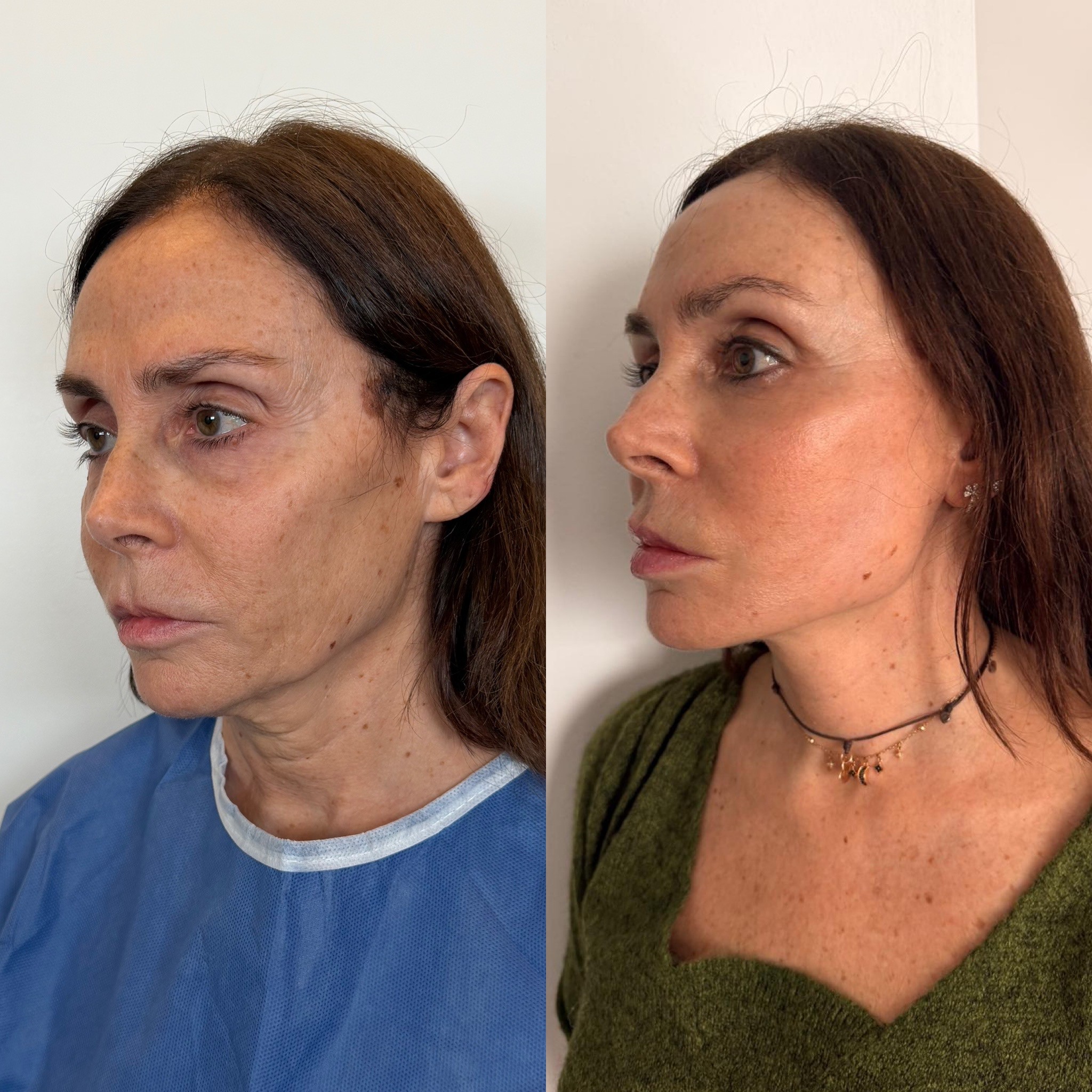
When both areas are addressed together, the surgeon can create a smooth, continuous contour from the cheek through the jawline and down into the neck. There is no transition zone, no abrupt shift between treated and untreated tissue. The result looks like a younger version of the patient rather than a face that has been "done."
The Structural Argument: Why the Facelift Supports the Necklift
Beyond aesthetics, there is an important structural reason why these procedures work better together in many patients.
The platysma muscle runs from the chest and clavicle area up through the neck and connects with the SMAS layer in the face. When this muscle becomes lax — which happens naturally with aging — it contributes to neck banding, loss of the cervicomental angle (the clean angle between the chin and the neck), and overall sagging.
In patients with moderate to severe platysma laxity and significant neck skin excess, a necklift alone may not provide enough structural support to hold the correction over time. The muscle is being tightened and repositioned, but without support from above, the repair is under constant gravitational tension.
When a facelift is performed at the same time, the SMAS and platysma are lifted and secured as a continuous unit. The facelift provides an anchor point — it carries the weight of the deeper tissues from a higher, more stable position. This means the necklift repair is not bearing the full load on its own. The result is not only more aesthetically seamless but also more durable over the years.
In practical terms, my patients who undergo the combined procedure tend to enjoy their results for significantly longer than those who have a necklift in isolation for the same degree of aging.
Read this blog post for more details: The Secret to a Youthful Face: Why Your Neck Holds the Key
How I Evaluate Each Patient
Every patient who comes to my clinic in Istanbul for a facial rejuvenation consultation receives a thorough assessment. I evaluate several key factors when deciding whether to recommend a standalone procedure or a combination approach.
Skin quality and excess: I assess the degree of skin laxity in both the face and the neck. Mild excess in one area alone may warrant a single procedure. Moderate to severe excess in both areas strongly favors a combined approach.
Soft tissue descent: I look at how much the deeper tissues — fat pads, SMAS, platysma — have dropped. When descent is significant in both zones, addressing only one will leave a visible imbalance.
Platysma muscle tone: The condition of the platysma is a critical factor. Loose or banded platysma muscles almost always require attention, and when the laxity is moderate to severe, the structural benefit of combining with a facelift becomes important.
Patient age and goals: Younger patients with early aging changes sometimes do well with a single procedure. Patients in their 50s, 60s, or beyond who want comprehensive rejuvenation nearly always benefit from the combination.
Overall facial harmony: I always step back and look at the whole picture. The goal is not to create a tight face or a tight neck — it is to create a harmonious, natural appearance where every area is in balance.
What to Expect from a Combined Face and Neck Lift
Patients often worry that combining the procedures means a dramatically longer surgery or recovery. In practice, the difference is less significant than many expect.
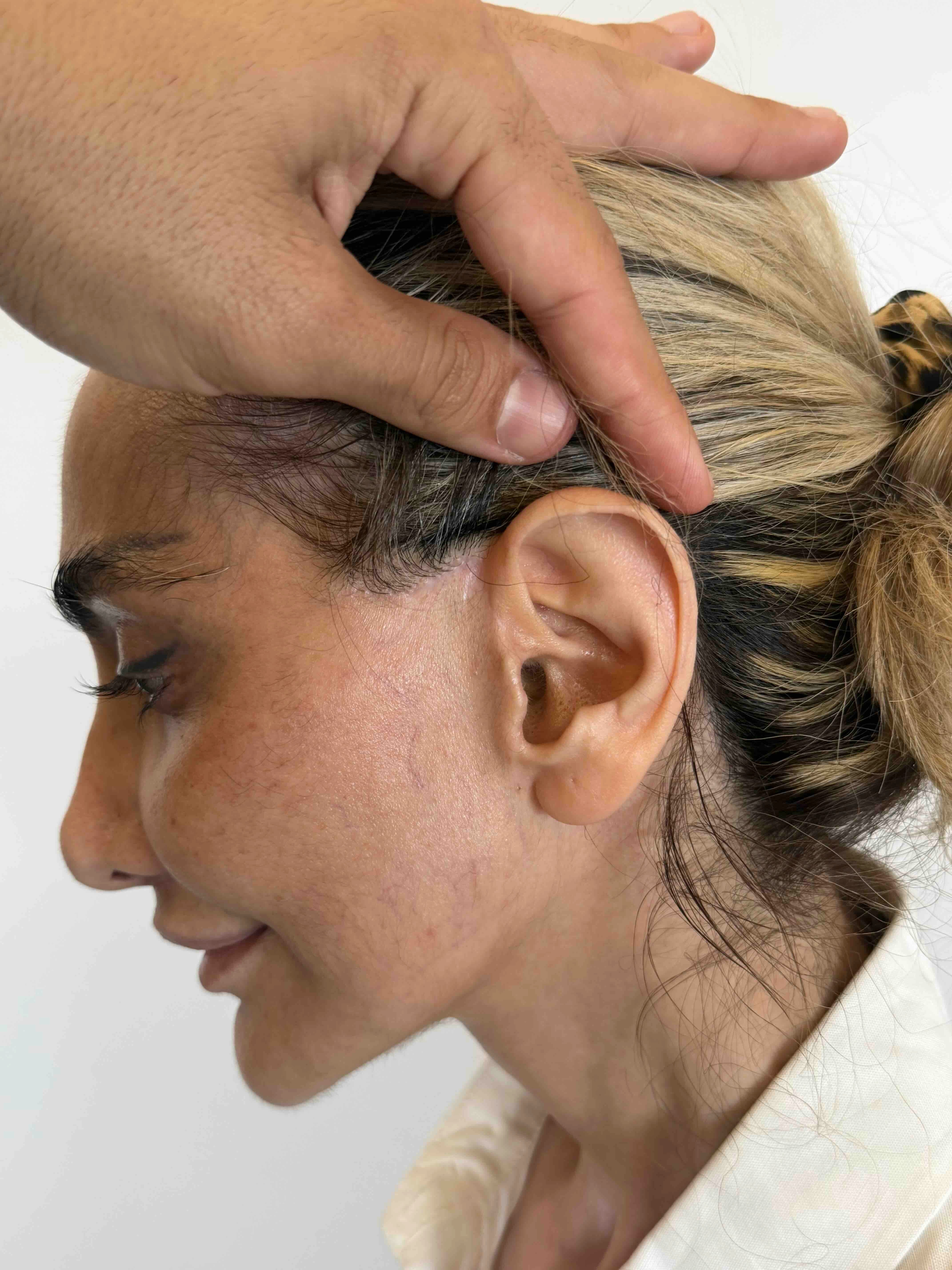
A combined face and neck lift typically takes between three and five hours, depending on the complexity of the case. Because both areas are accessed through similar incisions — typically placed around the ears and, when necessary, under the chin — the surgical approach is efficient.
Recovery follows a similar timeline to a standalone facelift. Most patients experience swelling and bruising that peaks around day two or three and steadily improves over the following two weeks. I generally advise my international patients to plan for a stay of seven to ten days in Istanbul before traveling home, with most social activities resumable at two to three weeks.
The key advantage patients notice during recovery is the consistency of the result. Because both areas heal together, there is no stage where one area looks rejuvenated while the other still appears aged.
Frequently Asked Questions
Is a combined face and neck lift more risky than doing them separately?
No. Because the anatomical planes are continuous and the procedures share incision sites, combining them does not significantly increase surgical risk compared to performing them individually. In experienced hands, the combination is a standard approach in facial rejuvenation surgery.
Can I have a necklift now and a facelift later?
Technically, yes, but this is rarely the ideal approach. Staging the procedures means two separate surgeries, two recovery periods, and importantly, you may develop the transition zone appearance between surgeries. If both areas need attention, addressing them together produces a more cohesive and cost-effective result.
At what age should I consider a face and neck lift?
There is no fixed age. I have performed combined procedures on patients in their mid-40s and on patients in their 70s. The decision is based on anatomy, not age. When significant laxity is present in both the face and neck, the combination is appropriate regardless of the patient's age.
How long do results last?
Results from a well-performed combined face and neck lift typically last eight to twelve years, though this varies based on genetics, lifestyle, skin quality, and sun exposure. The combined approach tends to be more durable than a standalone necklift because of the structural support the facelift provides to the deeper tissue layers.
Why should I choose a board-certified plastic surgeon for this procedure?
A combined face and neck lift is one of the most technically demanding procedures in aesthetic surgery. It requires deep knowledge of facial anatomy, experience managing the SMAS and platysma layers, and an artistic eye for creating natural, balanced results. Board certification — particularly from the European Board of Plastic, Reconstructive and Aesthetic Surgery and national boards — ensures your surgeon has completed rigorous training and meets the highest international standards. As a fellow of the European Board and a member of ISAPS (The International Society of Aesthetic Plastic Surgery) and ASPS (American Society of Plastic Surgeons), I bring both the technical expertise and the international perspective that patients traveling to Turkey for surgery deserve.
The Bottom Line
The face and neck age together, and in many cases, they should be rejuvenated together. A combined face and neck lift eliminates the unnatural transition zone that can occur when only one area is addressed, provides stronger structural support for long-lasting results, and creates the kind of seamless, natural rejuvenation that patients truly want.
If you are considering facial rejuvenation and are unsure whether you need a facelift, a necklift, or both, the best next step is a personalized consultation. Every face is unique, and the right surgical plan should be tailored to your specific anatomy and goals.
Dr. Cem Berkay Sinaci is a European and Turkish board-certified plastic surgeon based in Istanbul, Turkey. He specializes in face and neck rejuvenation surgery and welcomes international patients at his clinic. To schedule a consultation, visit doctorcbs.com or reach out via WhatsApp for a personalized assessment.