
Breast Lift with Implants & Asymmetry Fix | Day 13
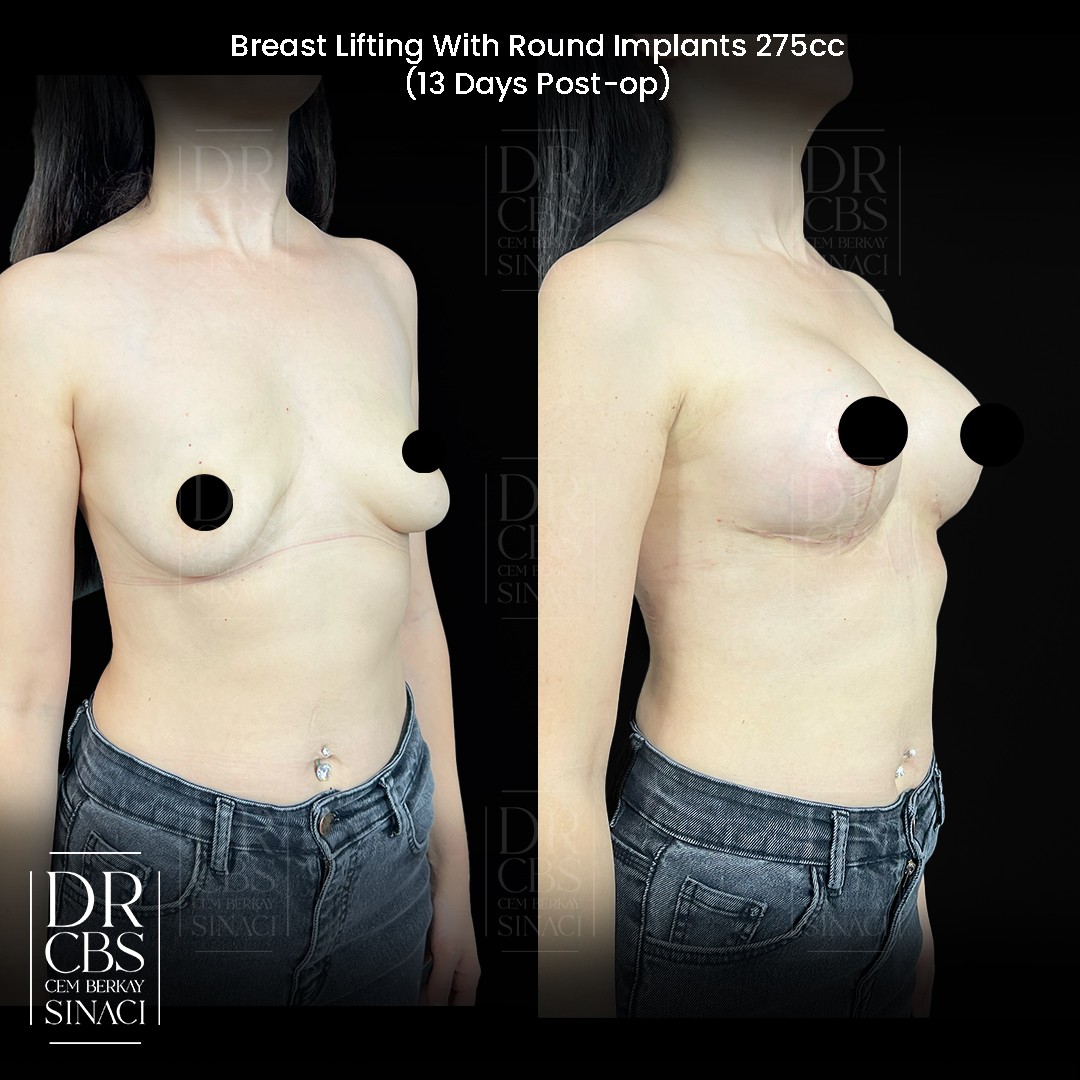
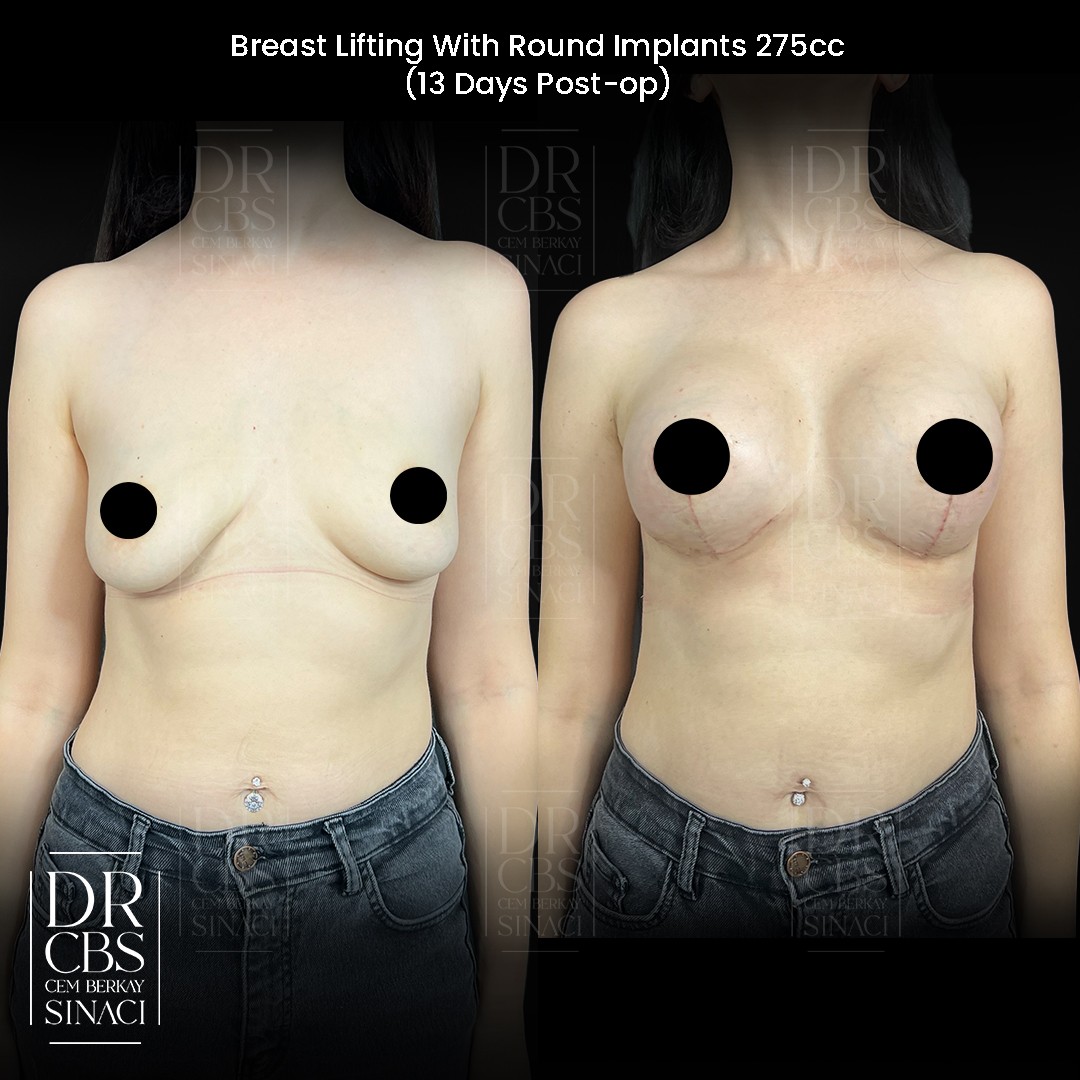
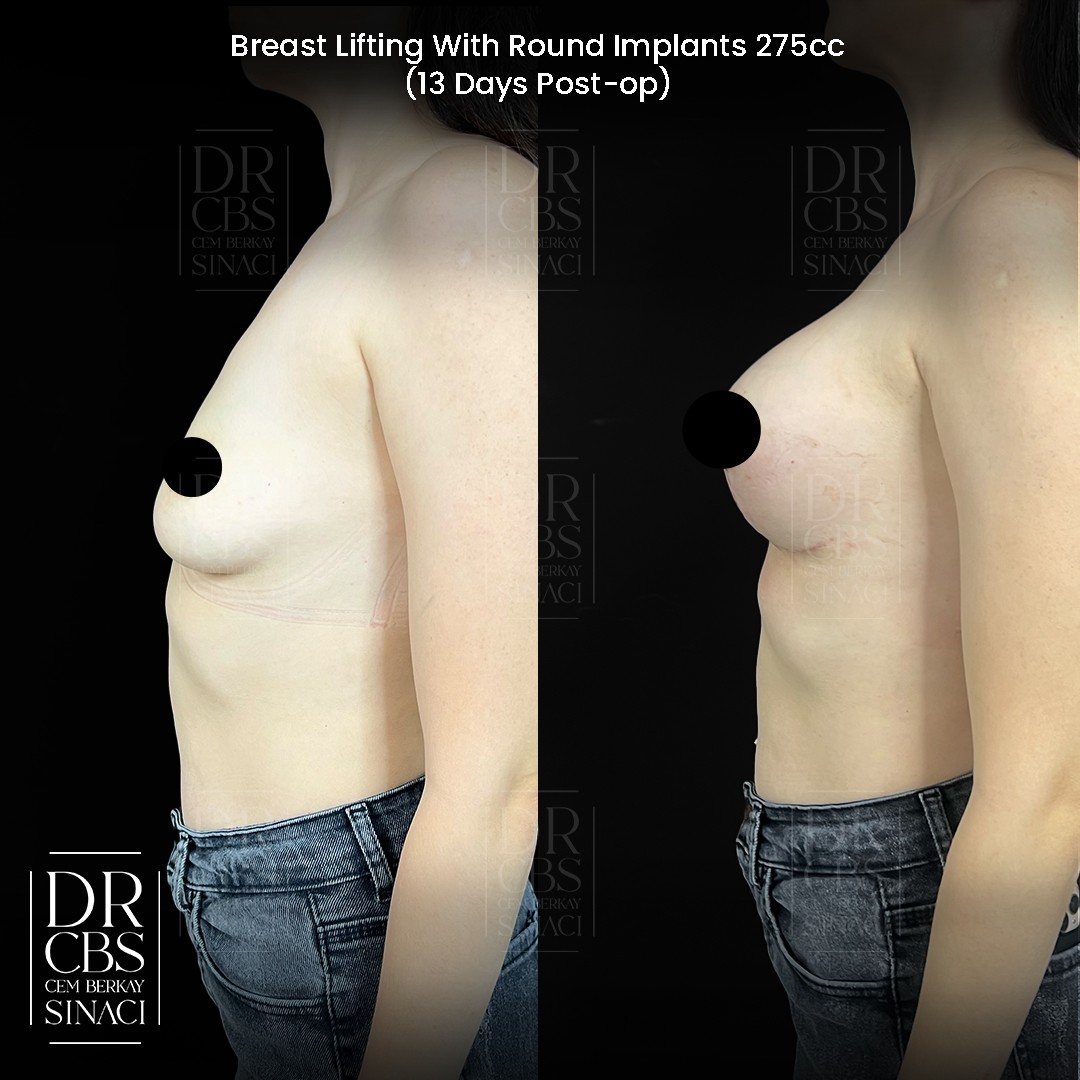
Breast lift with implants and asymmetry correction at 13 days. Mastopexy-augmentation at age 27 before and after by Dr. Cem Berkay Sinaci, Istanbul.
Patient Overview
Patient: Yelda
Age: 27 years old
Gender: Female
Procedures: Breast lift (mastopexy) with implant augmentation, bilateral asymmetry correction
After photos taken at: 13 days post-surgery
Case Description
Yelda is the youngest patient in our breast lift with implants gallery. At 27, her decision to pursue mastopexy-augmentation was not driven by aging or post-pregnancy changes — it was driven by a developmental asymmetry that had been present since her breasts first formed during puberty. One breast had developed noticeably larger and lower than the other, and over the years the discrepancy had only become more pronounced. Bras were a constant negotiation — she would fit one side and compromise the other. Swimwear was avoided. Fitted clothing required strategic layering.
What finally brought Yelda to consultation was not a sudden worsening but a quiet accumulation of years spent working around a problem that had a solution. By 27, she had researched extensively, understood the procedure, and arrived with clear, realistic expectations — often the profile of a patient who produces the most satisfying outcome, because the decision has been made thoughtfully rather than impulsively.
Asymmetry Correction at 27: The Advantage of Unoperated Tissue
Every asymmetry correction we perform involves customized work on each side, but Yelda's case had a particular advantage: her tissue had never been surgically altered. There were no previous implants to remove, no capsule to manage, no scar tissue planes to navigate. The surgeon works with native anatomy — skin that has its full elasticity, breast tissue in its natural configuration, and a chest wall free of any surgical modification.
This matters practically. In revision asymmetry cases like Irina's, the tissue on one or both sides has been changed by a previous procedure, which limits options and adds complexity. In a primary case like Yelda's, the full range of surgical techniques is available, and the tissue responds predictably to each intervention. The result is typically faster settling, more symmetrical healing, and scars that mature more favorably.
At 27, Yelda's collagen production and skin elasticity are at their peak — the tissue heals efficiently, adapts quickly to the implant, and produces fine scars. These biological advantages do not diminish the skill required for the correction, but they create the most favorable conditions for the correction to succeed.
Tailoring Each Side Independently
Yelda's asymmetry involved differences in breast volume, nipple height, and skin envelope size between the two sides. Correcting all three dimensions required a different surgical plan for each breast — essentially performing two related but distinct procedures in a single session.
On the larger, more ptotic side, more skin was excised, the nipple was elevated a greater distance, and the implant was selected to complement the existing tissue volume. On the smaller side, less skin was removed, the nipple required less repositioning, and a slightly different implant approach was used to match the projected final volume of the opposite breast.
The intraoperative process involved sitting Yelda upright multiple times to compare the two sides under gravity — the only reliable way to assess symmetry. Adjustments were made iteratively until the closest possible match was achieved in volume, projection, nipple position, and overall contour.
Results at 13 Days
Thirteen days places Yelda between the acute recovery phase and the settled result — close to Ksenia's 15-day documentation but two days earlier. At this stage, the implants have begun their descent but are still higher than their final position. The lift closures are healing, with scars in their pink, early-maturation phase. Mild residual swelling is present, more pronounced on the side that received more extensive work.
This last point is worth emphasizing for asymmetry patients specifically: the side that required more surgical intervention typically swells more and settles more slowly. At 13 days, Yelda's two breasts do not look perfectly matched — and they are not supposed to. The asymmetric swelling and the slightly different settling rates between the two sides will equalize over the coming weeks. The true bilateral comparison becomes reliable at six to eight weeks, and the final symmetry assessment is made at three months.
What is already visible at 13 days is the directional improvement. Both breasts are lifted, filled, and proportionate to her frame in a way they never were before. The gross asymmetry that defined her preoperative appearance — the obvious size and height difference — has been corrected. The remaining differences are subtle and healing-related rather than structural.
Surgeon's Note
Yelda's case is a reminder that mastopexy-augmentation is not exclusively an age-related procedure. At 27, her indication was developmental asymmetry — a condition present since puberty that no amount of waiting, exercise, or non-surgical intervention would resolve. Addressing it now, with tissue at its most responsive, gives her the longest benefit from the correction and the most favorable healing conditions.
The technical challenge of asymmetry correction lies in the constant bilateral comparison. Every decision on one side must be evaluated against the other. It is a procedure that cannot be rushed — the iterative process of adjusting, comparing, and refining during surgery is what produces symmetry that looks natural rather than forced. At 13 days, the foundation for that symmetry is clearly established. The weeks ahead will bring equalization of the residual swelling differences and progressive refinement of the matched contour.
Frequently Asked Questions
Can breast asymmetry be corrected in your twenties?
Yes, and there are advantages to earlier correction. The tissue has not been altered by previous surgery, skin elasticity is at its peak, and the patient benefits from the result for more years. The only prerequisite is that breast development is complete — typically by age 18 to 20. From that point onward, correction is appropriate whenever the patient is ready.
Why do the two breasts look slightly different during recovery after asymmetry correction?
The side that required more extensive surgical work — more skin removal, more tissue rearrangement, or a different implant approach — typically swells more and settles more slowly than the other side. This creates a temporary visual difference during recovery that does not reflect the final result. The two sides equalize as swelling resolves, and the true symmetry becomes apparent at approximately six to eight weeks.
Is 13 days enough to assess the result of a breast lift with implants?
Thirteen days gives a promising indication of direction but is too early for a definitive assessment. The implants are still settling, the swelling has not fully resolved, and the tissue is still adapting. The shape at 13 days will continue to improve — more lower pole projection, softer upper pole, reduced firmness — over the following two to three months. Most patients find the 13-day appearance encouraging even though the final result will be notably more refined.
At 27, will my breast lift result last as long as it would for an older patient?
Longer, in most cases. Younger tissue has stronger collagen support and better elasticity, both of which help maintain the lifted position over time. While gravity and aging will continue to affect the breast over the decades, a 27-year-old typically enjoys a longer period before any revision might be considered compared to a patient who had the same procedure at 45. Maintaining a stable weight and wearing supportive bras during exercise further extends the result's longevity.