
Two-Week Neck Lift Recovery for Turkey Neck Correction
2-week recovery before after of neck lift for turkey neck deformity correction in 52-year male patient by board-certified plastic surgeon in Istanbul, Turkey


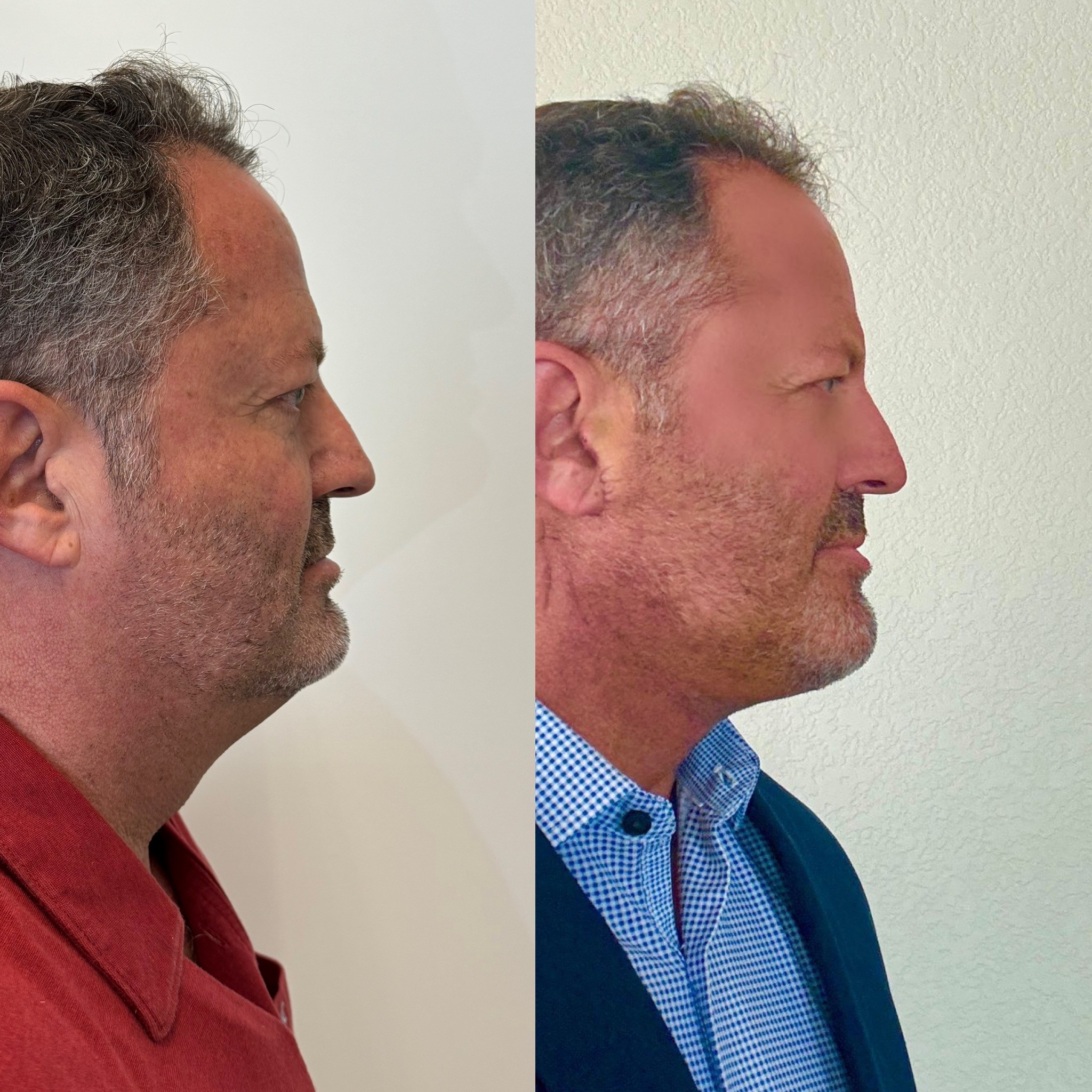
Patient Overview
Patient: Tony
Age: 52 years old
Gender: Male
Procedures: Neck lift (turkey neck correction)
After photos taken at: 2 weeks post-surgery
Note: Normal post-operative swelling present, neck definition continues improving
Location: Istanbul, Turkey
What the Neck Lift Recovery Process Actually Looks Like at Two Weeks
Patients researching neck lift surgery online find hundreds of final result photographs but very few that show what the recovery genuinely looks like at the two-week mark. This gap in available information creates unrealistic expectations and unnecessary anxiety. When a patient sees their reflection at day 14 and notices residual swelling, mild firmness, or uneven contour, they may worry that something has gone wrong when in fact everything is progressing exactly as it should. Tony's before and after photographs at two weeks following turkey neck correction in Istanbul serve as an honest and valuable reference point for anyone preparing for this procedure. His surgery was performed by Dr. Cem Berkay Sinaci, a Fellow of the European Board of Plastic Reconstructive and Aesthetic Surgery (FEBOPRAS) and active member of ISAPS and ASPS.
Why Turkey Neck Develops Earlier in Some Men Than Others
At 52, Tony was younger than the typical turkey neck correction patient, but the deformity had already progressed to the point where it significantly affected his profile. Several factors determine how early turkey neck appears and how severe it becomes. Genetics play the largest role. Men who inherit thinner platysma muscles, a lower hyoid bone position, or a tendency toward submental fat deposition will develop visible neck laxity earlier than those with a naturally strong cervicomental angle and thick, well-positioned platysma bands.
Lifestyle factors also contribute. Significant weight fluctuations stretch the neck skin and weaken the platysma over repeated cycles of expansion and contraction. Sun exposure accelerates elastin breakdown in the neck skin, which is often neglected in skincare routines that focus exclusively on the face. Even posture plays a role. Years of looking downward at screens can accelerate the forward migration of submental fat and the stretching of anterior neck skin. For Tony, a combination of genetic predisposition and accumulated lifestyle factors had produced a turkey neck deformity that was no longer responsive to non-surgical interventions.
The Surgical Correction of Tony's Turkey Neck Deformity
Tony's neck lift addressed the three structural layers that together produce the turkey neck appearance: the platysma muscle, the subcutaneous and subplatysmal fat, and the redundant skin envelope. Dr. Sinaci began by accessing the neck through a small submental incision beneath the chin and additional incisions concealed around the ears. The separated platysma muscle bands were identified, sutured together in the midline, and tightened to recreate the muscular sling that supports a defined neck contour. Fat deposits both above and below the platysma were carefully removed, sculpting the submental region and sharpening the cervicomental angle.
Once the deeper structural work was complete, the excess skin was redraped over the newly tightened foundation, trimmed, and closed in layers to minimise tension on the surface and promote optimal scar healing. The entire procedure is designed to address the turkey neck from the inside out, creating a result that is supported by restored anatomy rather than simply tightened skin stretched over unchanged structures beneath.
Understanding Normal Swelling at Two Weeks Post Neck Lift
Tony's two-week photographs show clear improvement in his neck contour alongside visible residual swelling, and this is an important educational point for prospective patients. Post-surgical swelling after a neck lift follows a predictable pattern that every patient should understand before their operation.
During the first 48 to 72 hours, swelling peaks. The body sends inflammatory cells and fluid to the surgical site as part of the natural healing cascade. This is not a complication but a necessary biological response that initiates tissue repair. A compression garment worn during this period helps control the swelling and supports the redraped skin as it begins to adhere to the newly tightened muscle layer beneath.
Between days three and seven, the most dramatic swelling begins to resolve. Bruising, if present, transitions through its colour stages and starts to fade. By day ten to fourteen, where Tony's photographs were captured, the superficial swelling has substantially decreased and the structural improvement is clearly visible. However, deeper tissue swelling persists. This residual fullness is most noticeable along the jawline and in the submental region, exactly the areas where the most significant surgical work was performed.
How Neck Definition Continues to Improve Beyond Two Weeks
The two-week result is not the final result. This is perhaps the most important message for patients evaluating early postoperative photographs. The neck definition visible in Tony's images will continue to sharpen progressively over the following weeks and months as the remaining deeper swelling resolves.
Between weeks two and six, patients notice the most rapid ongoing improvement. The firmness beneath the skin softens as the internal sutures stabilise and the tissues integrate into their new position. The cervicomental angle becomes progressively sharper as the last layers of swelling dissipate. By month two to three, the result represents approximately 85 to 90 percent of the final outcome. Full maturation, including complete softening of the deeper tissues and final settling of the skin envelope, continues for up to six months.
This timeline explains why experienced surgeons advise patients not to judge their result at two weeks. What Tony sees in the mirror today is a work in progress. The foundation has been surgically created, and his body is now completing the process through natural healing. Each week will bring incremental refinement that builds toward the final contour.
The Difference Between Swelling and an Unsatisfactory Result
One of the most common sources of early postoperative anxiety is the inability to distinguish between normal healing swelling and an actual problem. Swelling after a neck lift is diffuse, meaning it is spread broadly across the surgical area rather than concentrated in one specific spot. It feels firm but not hard, and it gradually decreases day by day. It is symmetrical or nearly so, and it does not worsen after the initial peak at 48 to 72 hours.
Warning signs that would warrant a call to the surgeon are distinctly different: sudden unilateral swelling that appears days after surgery could indicate a haematoma. Increasing redness, warmth, or pain at the incision site could suggest infection. Skin that appears dusky or discoloured beyond normal bruising could indicate a circulatory issue. Tony's swelling shows none of these characteristics. His healing is progressing normally, with the gradual, predictable improvement that indicates healthy tissue recovery and a well-executed surgical plan.
Setting Realistic Expectations for Male Neck Lift Surgery
Men considering neck lift surgery benefit enormously from seeing real two-week recovery photographs like Tony's rather than only polished final results. Understanding that the recovery is a process, not an event, allows patients to approach the postoperative period with patience and confidence. The dramatic transformation from turkey neck deformity to defined jawline does not appear overnight. It unfolds over weeks as the body heals, the swelling resolves, and the surgical result progressively reveals itself.
Dr. Sinaci's approach to patient education emphasises this timeline from the very first consultation. International patients who travel to Istanbul for their neck lift leave with a clear understanding of what each stage of recovery will look like, what is normal, and what milestones to expect. This transparency, combined with Dr. Sinaci's fellowship training in Brazil and advanced facial anatomy courses in Bangkok, ensures that patients like Tony are not only well operated on but well prepared for the journey from surgery day to final result.