
Deep Plane Face Neck Lift With Blepharoplasty Results
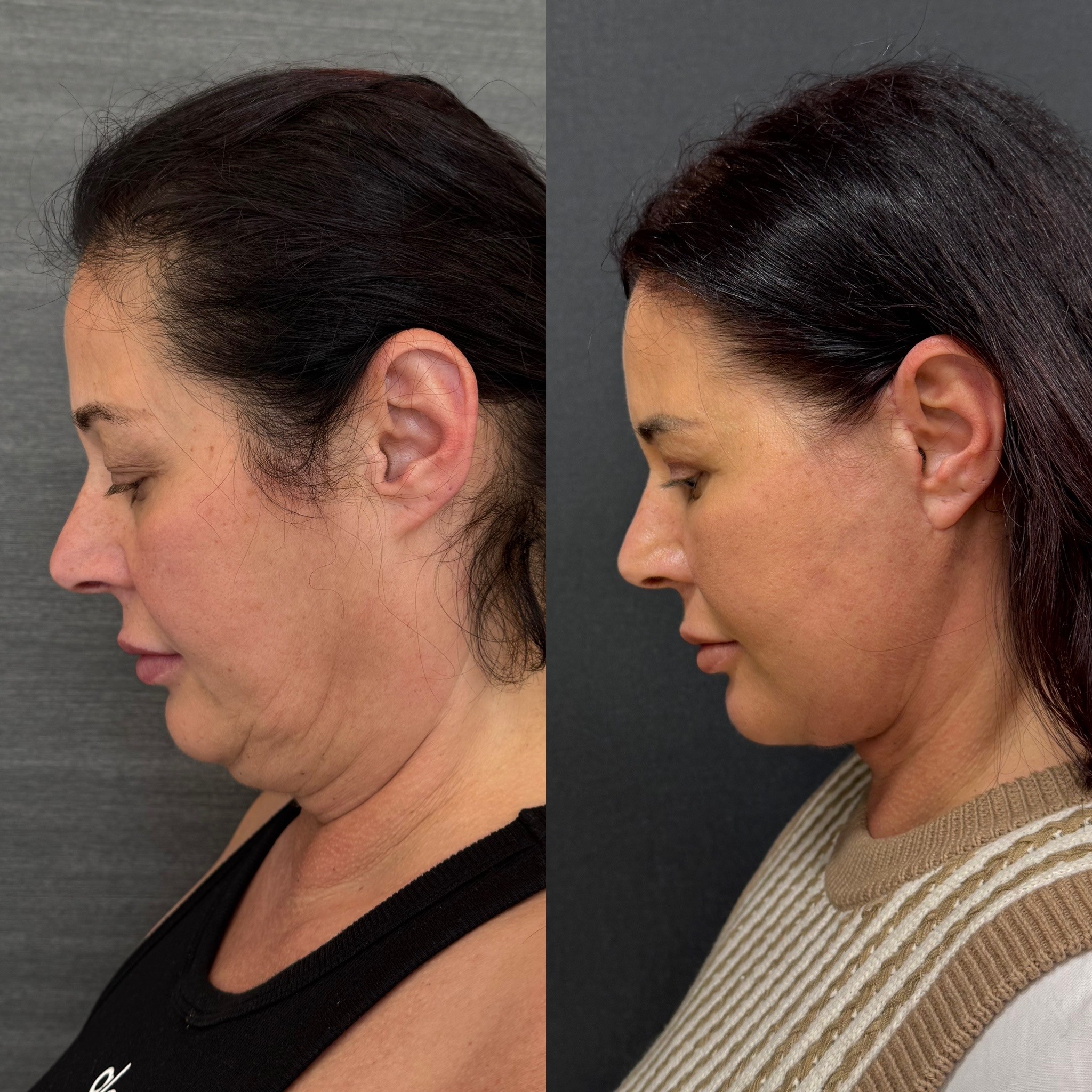
1-month before after of deep plane face and neck lift with upper blepharoplasty for 53-year-old female from USA by board-certified surgeon in Istanbul, Turkey.


Patient Overview
Patient: Ferradov
Age: 53 years old
Gender: Female
Procedures: Deep plane face and neck lift, upper blepharoplasty
After photos taken at: 1 month post-surgery
Origin: United States of America
Location: Istanbul, Turkey
What Makes a Deep Plane Facelift Different From Every Other Technique
The term facelift encompasses a wide spectrum of surgical techniques, and not all facelifts are created equal. The critical difference lies in which layer of tissue the surgeon operates within. A traditional facelift, often called a SMAS facelift, lifts and tightens the superficial musculoaponeurotic system — a fibrous layer that sits between the skin and the deeper facial muscles — while leaving the deeper structures untouched. A deep plane facelift goes further. It releases and repositions the tissues beneath the SMAS, working in the plane between the SMAS and the deeper facial muscles where the ligaments that anchor the face to the underlying bone are located. For Ferradov, a 53-year-old woman who travelled from the United States to Istanbul, the deep plane approach was selected by Dr. Cem Berkay Sinaci, a Fellow of the European Board of Plastic Reconstructive and Aesthetic Surgery (FEBOPRAS) and active member of ISAPS and ASPS, because it offered the most natural and longest-lasting correction for her degree of facial and neck ageing.
Why the Deep Plane Approach Produces More Natural Results
The fundamental limitation of superficial facelift techniques is that they rely on skin tension to maintain the lift. When the skin is pulled tighter to compensate for sagging deeper tissues, the result can appear stretched, windswept, or unnaturally taut, particularly around the mouth and ears. Over time, skin stretches, and a result that depends on skin tension will gradually relax and lose its effect within a few years.
The deep plane facelift avoids this entirely by repositioning the deeper tissue layer as a single, intact unit. Rather than pulling the skin, Dr. Sinaci releases the retaining ligaments that hold the descended tissue in its aged position and then moves the entire composite flap — muscle, fat, and skin together — back to where it sat in youth. Because the deeper structures carry the lift, the skin is redraped without tension. It simply lies over the repositioned foundation, which is why deep plane results look natural rather than tight. The face appears refreshed and restored rather than surgically altered, which was precisely the outcome Ferradov wanted.
How the Deep Plane Technique Addresses the Neck Simultaneously
One of the most significant advantages of the deep plane facelift is its ability to address the neck as part of the same tissue repositioning. In superficial techniques, the face and neck are often treated as separate zones requiring different approaches. In the deep plane method, the dissection extends from the midface down into the neck in a continuous plane, allowing the surgeon to lift and reposition the descended tissue from cheek to collarbone as one cohesive unit.
For Ferradov, this meant that the jowling along her jawline, the deepened nasolabial folds, the loss of midface volume, and the neck laxity were all corrected through a single tissue repositioning rather than a patchwork of separate manoeuvres. The platysma muscle in the neck was addressed as a natural extension of the deep plane dissection, tightening the neck contour and eliminating the banding and laxity that had developed over the preceding decade. The result is a continuous, smooth transition from midface through jawline to neck, without the visible demarcation between treated and untreated zones that can occur with less comprehensive approaches.
Upper Blepharoplasty to Complete the Facial Rejuvenation
While the deep plane facelift addressed the middle and lower thirds of Ferradov's face along with her neck, the upper third required its own attention. The upper eyelids had developed the redundant skin fold that is one of the earliest and most noticeable signs of facial ageing. This excess tissue draped over the natural eyelid crease, creating a hooded appearance that made the eyes look heavy and fatigued regardless of how rested she actually was.
Upper blepharoplasty removes this redundant skin through an incision placed precisely within the eyelid crease. The amount of skin excised is carefully measured before surgery while the patient is upright, ensuring enough is removed to open up the eye area without compromising the ability to close the eyes comfortably. For Ferradov, the blepharoplasty worked as the finishing element of her rejuvenation. The deep plane lift restored the midface, jawline, and neck, while the blepharoplasty refreshed the eye area, producing a result where every zone of the face appears consistently rejuvenated.
One-Month Results After Deep Plane Face and Neck Lift
Ferradov's before and after photographs were taken at one month post-surgery, a meaningful milestone in the deep plane facelift recovery timeline. At this stage, the majority of visible bruising has fully resolved and superficial swelling has substantially subsided. The structural repositioning achieved during surgery is clearly visible: the midface appears fuller and more projected, the nasolabial folds have softened, the jawline is clean and defined, and the neck contour is smooth and free of banding.
One month is not yet the final result. Deeper tissue swelling, particularly along the jawline and in the midface where the most significant repositioning occurred, continues to resolve over the following two to three months. The tissues are also still settling into their new position, and the skin is gradually adapting to the reshaped foundation beneath it. By month three to four, the result represents approximately 90 percent of the final outcome, with the last subtle refinements continuing for up to a year.
The upper blepharoplasty result is closer to its final form at one month. The eyelid crease is well defined, the excess skin has been removed, and the incision line is healing within the natural fold where it will become virtually invisible within the coming months.
Deep Plane Facelift Recovery Compared to Traditional Techniques
Patients often assume that a more extensive surgical technique means a more difficult recovery. With the deep plane facelift, the opposite is frequently true. Because the skin is not pulled tight against underlying tension, there is less stress on the wound edges, which translates to less bruising and faster healing of the incision lines. The skin flap maintains its own blood supply because it is not separated from the deeper tissues the way it is in superficial techniques, which reduces the risk of skin healing complications.
Ferradov's recovery followed the typical deep plane timeline. The first week involved the most significant swelling and bruising, with a compression garment supporting the tissues. By week two, she was comfortable appearing in public with light makeup covering any residual bruising. By the one-month mark when her photographs were taken, she had fully returned to her normal daily routine and social activities, with no outward signs of recent surgery visible to casual observers.
Why Experienced Patients From the USA Choose Deep Plane Surgery in Istanbul
The deep plane facelift is technically the most demanding facelift technique, requiring the surgeon to work in close proximity to the facial nerve branches that control expression. This is why it is not offered by every plastic surgeon. It demands advanced training, detailed anatomical knowledge, and significant experience to perform safely and effectively. Dr. Sinaci's fellowship training with world-renowned plastic surgeon Raul Gonzalez in Brazil, combined with cadaver dissection courses in Bangkok focused specifically on the deep tissue planes and nerve anatomy of the face, provided the foundation for his deep plane practice.
For American patients like Ferradov who have researched facelift techniques thoroughly and specifically seek the deep plane approach, Istanbul offers access to surgeons with this level of specialised training in modern clinical facilities with comprehensive international patient care. The combination of surgical expertise, personalised treatment planning, and dedicated aftercare protocols makes the city an increasingly preferred destination for patients who understand the difference between facelift techniques and want the most advanced option available.