
Rhinoplasty With Ultrasonic Piezo Technique Results
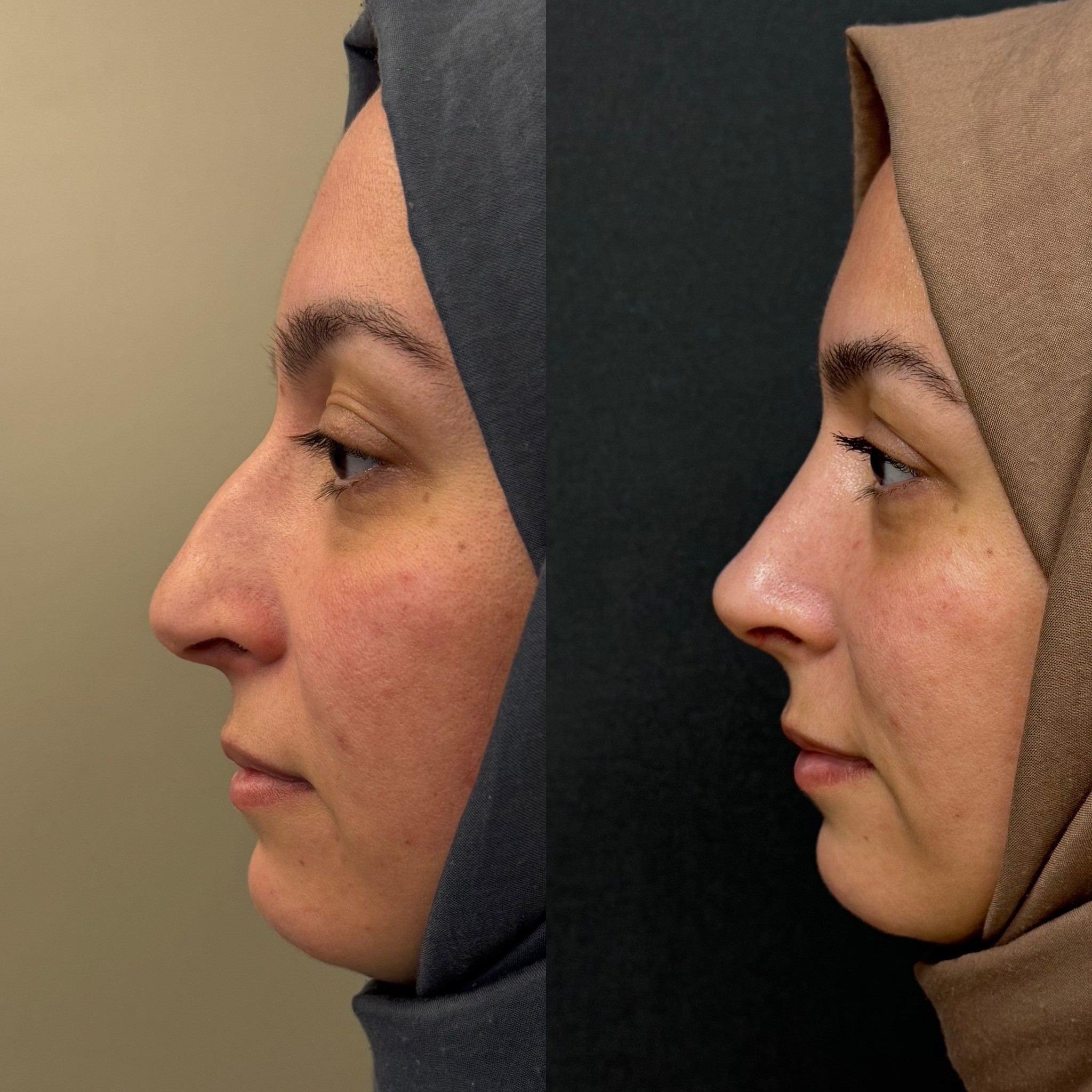
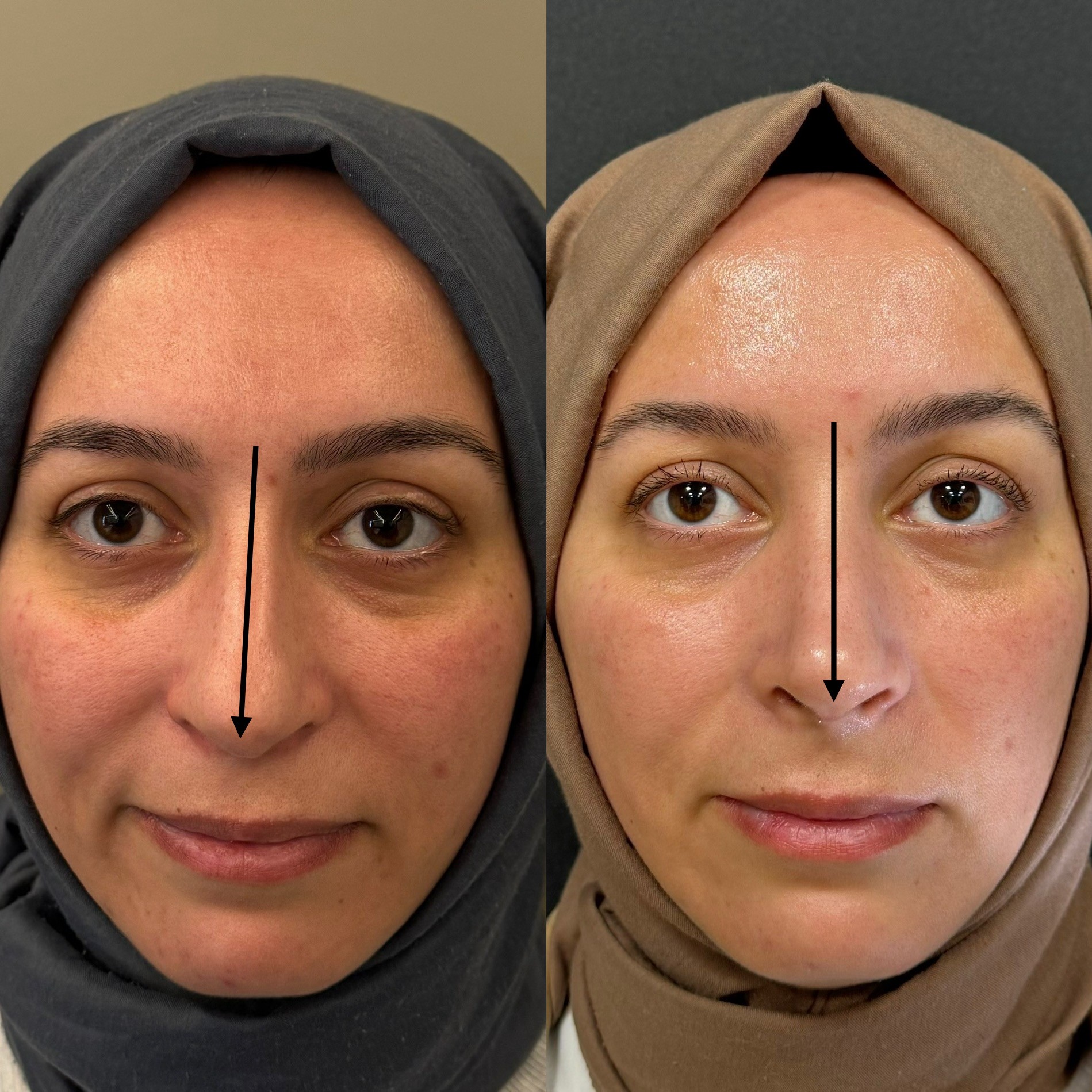
1-month before after of ultrasonic piezo rhinoplasty with minimal swelling and bruising for 42-year-old female by board-certified surgeon in Istanbul, Turkey.
Patient Overview
Patient: Rabia
Age: 42 years old
Gender: Female
Procedures: Ultrasonic piezo rhinoplasty
After photos taken at: 1 month post-surgery
Location: Istanbul, Turkey
How Rhinoplasty in Your Forties Differs From Rhinoplasty in Your Twenties
Rhinoplasty is frequently associated with younger patients in their twenties seeking their first cosmetic procedure, but a significant and growing number of patients pursue nose surgery in their forties and beyond. The motivations, the anatomy, and the surgical considerations are all distinctly different at this stage of life. For Rabia, a 42-year-old woman whose one-month photographs show minimal swelling and bruising following ultrasonic piezo rhinoplasty in Istanbul, the decision to reshape her nose came at a point in life where she had a clear, mature understanding of what she wanted and the patience to research her options thoroughly. Her surgery was performed by Dr. Cem Berkay Sinaci, a Fellow of the European Board of Plastic Reconstructive and Aesthetic Surgery (FEBOPRAS) and active member of ISAPS and ASPS.
The Mature Nose — What Changes With Age and Why It Matters Surgically
The nose at 42 is not the same structure it was at 22. Several age-related changes affect both the appearance of the nose and the surgical approach required to reshape it. The nasal skin, particularly over the tip, gradually thins in some patients and thickens in others depending on genetics and skin type. The cartilage loses some of its structural rigidity as the collagen within it changes composition over the decades. The tip may begin to droop as the supporting cartilages weaken and gravity pulls the nasal lobule downward. The nasal bones may have thickened slightly with age, and the soft tissue envelope may have loosened from the underlying framework.
These changes are not obstacles to rhinoplasty — they are variables that must be accounted for in the surgical plan. A surgeon who approaches a 42-year-old nose with the same strategy used for a 22-year-old risks producing a result that ages poorly or fails to account for the tissue's different healing characteristics. Dr. Sinaci's preoperative assessment of Rabia included a detailed evaluation of her skin thickness, cartilage strength, tip support mechanisms, and bone density, all of which informed the specific techniques used during her procedure.
Why Patients in Their Forties Often Get Better Rhinoplasty Results
There is a counterintuitive reality in rhinoplasty that surgeons understand but patients rarely hear: patients in their forties frequently achieve more satisfying results than patients in their twenties. Several factors contribute to this. First, the expectations are more refined. A 42-year-old patient has lived with her nose for decades and knows precisely what she does and does not want changed. There is less uncertainty, less influence from trends, and more clarity about the specific improvements that will make a meaningful difference.
Second, in patients with moderately thin skin like many women in their forties, the refined cartilage and bone work shows through the skin envelope more readily than it does in younger patients with thicker, more sebaceous skin. This means the precision of the surgical sculpting translates more directly into the visible result. The delicate refinements that piezo technology enables are especially apparent when the skin is thin enough to reveal them.
Third, emotional maturity plays a role in recovery satisfaction. Patients in their forties tend to approach the healing timeline with greater patience, understanding that the result evolves over months and trusting the process rather than fixating on daily changes during the early postoperative period.
Ultrasonic Piezo Rhinoplasty and Minimal Tissue Trauma at One Month
Rabia's one-month photographs demonstrate the recovery advantage that piezo rhinoplasty offers across all age groups but that is particularly appreciated by patients in their forties who may heal slightly slower than their younger counterparts. The ultrasonic piezo device cuts bone using high-frequency vibrations that are selective for mineralised hard tissue, leaving the surrounding soft tissue, blood vessels, and periosteum completely undamaged. This tissue selectivity means dramatically less bruising and swelling compared to conventional rhinoplasty instruments.
At one month, Rabia shows minimal residual swelling. The nasal bridge is smooth and well-defined, and the early tip refinement is already visible. In a conventional rhinoplasty at the same timeframe, a 42-year-old patient would typically still carry enough swelling to partially obscure the surgical refinement, particularly along the supratip region. The piezo approach has accelerated her visible recovery, allowing her to appreciate her result months earlier than she would have with traditional instruments.
The reduced tissue trauma also benefits the quality of the final result. Less disruption to the periosteum means less scar tissue formation around the nasal bones, which translates into smoother contours and fewer palpable irregularities once healing is complete. For patients with thinner skin where even minor irregularities can be visible, this reduction in scar tissue formation is a meaningful advantage.
Structural Considerations in Rhinoplasty for the Over-40 Patient
The weakening of nasal cartilage that occurs with age means that structural reinforcement becomes an even more important element of the surgical plan for patients in their forties. Younger patients often have cartilage that is strong enough to maintain its reshaped form with minimal grafting. In a mature nose, the cartilage may need additional structural support to hold its new position and resist the gradual changes that continued ageing will bring.
Dr. Sinaci addresses this through strategic grafting techniques that reinforce the areas of the nose most susceptible to long-term change. Spreader grafts along the dorsum maintain the width and straightness of the middle vault. Columellar strut grafts support tip projection and prevent drooping. Shield or cap grafts refine the tip contour while providing structural stability. These grafts are typically harvested from the patient's own septum, ensuring biocompatibility and eliminating any risk of rejection.
For Rabia, this structural approach means that her one-month result is built on a stable internal framework that will maintain its shape through the decades ahead. The nose will age naturally alongside the rest of her face, but the foundation of the rhinoplasty will remain intact because it was designed to account for the tissue characteristics of a mature patient.
One Month Post-Rhinoplasty — Where Rabia Stands in the Healing Timeline
At 30 days, Rabia has passed through the acute recovery phase and entered the period of progressive refinement. The nasal splint was removed during the first week. Any bruising, which was already minimal due to the piezo technique, resolved within the first ten to fourteen days. The swelling has decreased substantially, revealing the early shape of the surgical result.
What remains at one month is deeper tissue swelling that is not visible to the casual observer but is detectable by the surgeon during examination and by the patient when she looks closely in the mirror. The supratip region, directly above the nasal tip, is the last area to fully de-swell in virtually every rhinoplasty. At one month it may appear very slightly fuller than it will at six months or a year. The tip itself continues to refine as the skin contracts over the reshaped cartilage framework, a process that unfolds gradually over 12 to 18 months.
For Rabia, the one-month result is already showing the refined nasal shape that the surgery was designed to produce. The bridge is smooth, the proportions are balanced with the rest of her face, and the early tip definition is clearly emerging. Each month from this point forward will bring incremental improvement as the last layers of swelling dissipate and the skin fully adapts to its new foundation.
Rhinoplasty for Mature Patients in Istanbul — Expertise That Accounts for Age
Performing rhinoplasty on patients in their forties and beyond requires a surgeon who understands how tissue age affects every aspect of the procedure, from the initial incision planning to the long-term structural stability of the result. Dr. Sinaci's practice in Istanbul brings together ultrasonic piezo technology for precise, tissue-preserving bone work with structural cartilage techniques refined through fellowship training with world-renowned surgeon Raul Gonzalez in Brazil and advanced anatomy courses in Bangkok. For patients like Rabia who pursue rhinoplasty at a stage of life where both the anatomy and the expectations differ from younger patients, this combination of technology and experience produces results that honour the maturity of the tissue while delivering the refinement the patient seeks.