
Revision Rhinoplasty for Deviated Nose - Breathing Fix
5-day before after of revision rhinoplasty for crooked nose and breathing issues for surgical nurse from Canada by board-certified surgeon in Istanbul, Turkey

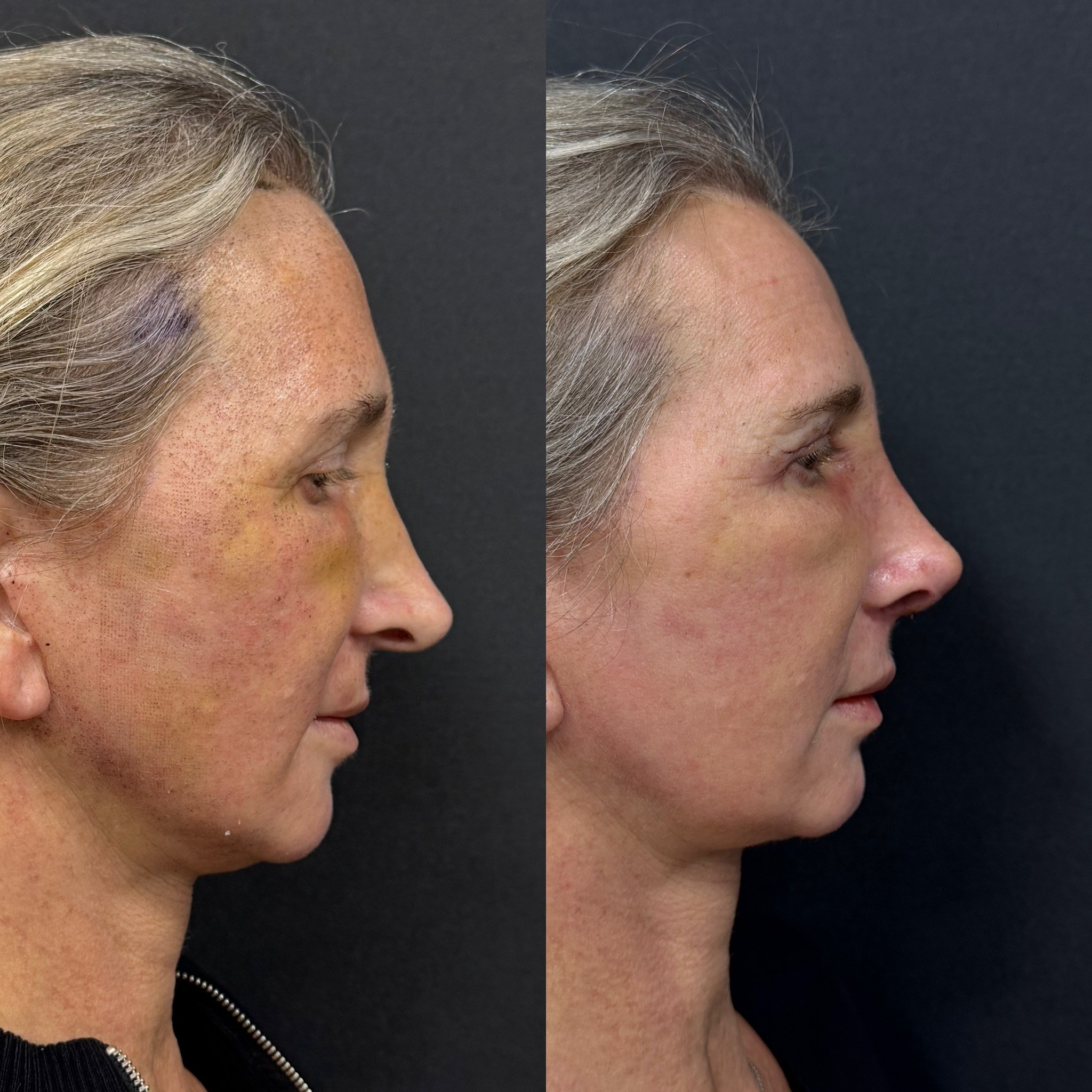
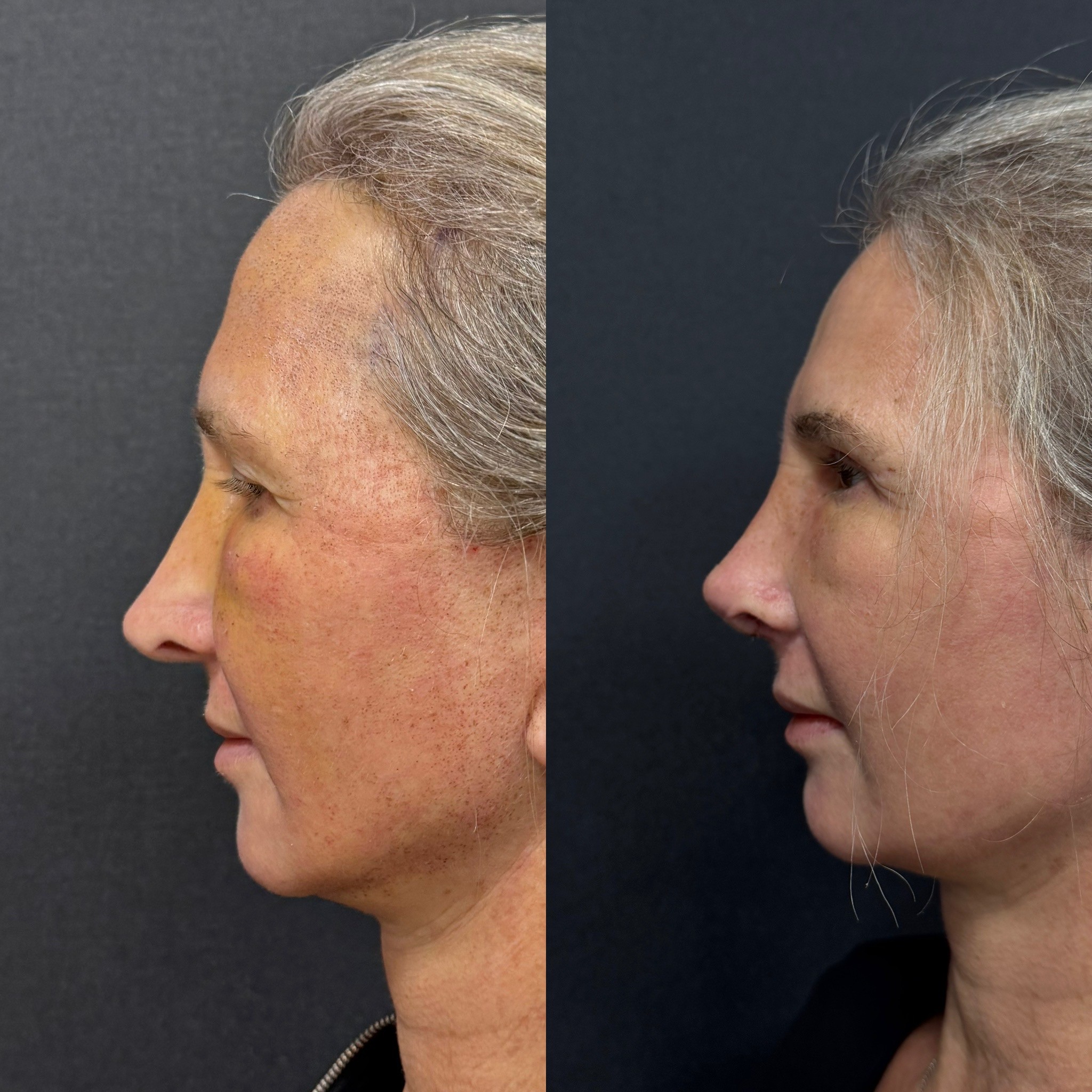
Patient Overview
Patient: Iwonna
Age: 52 years old
Gender: Female
Procedures: Revision rhinoplasty (crooked/deviated nose correction, breathing restoration). Previously had face and neck lift with Dr. Sinaci one year earlier.
Profession: Surgical nurse
After photos taken at: 5 days post-surgery
Origin: Canada
Location: Istanbul, Turkey
When a Surgical Nurse Returns a Second Year for Another Procedure
A patient choosing to return to the same surgeon for a second procedure is one of the strongest endorsements in medicine. When that patient is a surgical nurse who spends her professional life inside operating rooms evaluating surgical technique, sterile protocols, and clinical standards, the endorsement carries exceptional weight. Iwonna, a 52-year-old surgical nurse from Canada, first came to Istanbul for a face and neck lift performed by Dr. Cem Berkay Sinaci, a Fellow of the European Board of Plastic Reconstructive and Aesthetic Surgery (FEBOPRAS) and member of ISAPS and ASPS. One year later, satisfied with her facelift result and confident in Dr. Sinaci's surgical skill, she returned to Istanbul specifically for revision rhinoplasty to correct a crooked, deviated nose and restore nasal breathing that had been compromised by a previous rhinoplasty performed elsewhere.
The Trust That Brings a Patient Back — From Facelift to Revision Rhinoplasty
The decision to return to the same surgeon for a completely different procedure reveals a depth of trust that extends beyond satisfaction with a single result. Iwonna's face and neck lift one year earlier gave her direct, personal experience with every aspect of Dr. Sinaci's practice: the thoroughness of the consultation, the quality of the preoperative planning, the clinical environment on the day of surgery, the surgical result itself, and the postoperative care that followed. As a surgical nurse, she evaluated each of these elements with professional-grade scrutiny that most patients simply do not possess.
Her return for revision rhinoplasty, a procedure she knew from professional experience to be among the most technically demanding in facial plastic surgery, demonstrated that her first experience had met or exceeded the standards she upholds in her own operating room every working day. She did not need to research new surgeons, compare credentials, or weigh unfamiliar options. She had already seen Dr. Sinaci's work firsthand, both on the operating table and in the mirror over twelve months of living with her facelift result.
The Dual Challenge — Straightening a Deviated Nose While Restoring Breathing
Iwonna's revision rhinoplasty addressed two interconnected problems that her previous rhinoplasty, performed by another surgeon, had failed to resolve. The first was a crooked, deviated nose that remained visibly off-centre. The second was compromised nasal breathing that affected her daily quality of life and her comfort during long hours in the operating theatre wearing a surgical mask.
These two problems are rarely independent. A deviated nasal framework pushes the septum off the midline, narrowing the airway on one or both sides. The internal nasal valve, the narrowest point of the nasal airway where the upper lateral cartilage meets the septum, is particularly sensitive to even minor deviations. A shift of just one to two millimetres at the valve level can reduce airflow by 20 to 30 percent on the affected side. Correcting the external deviation without simultaneously addressing the internal valve produces a nose that looks straighter but still cannot breathe properly. Both problems must be solved together, and this dual correction was the core of Iwonna's surgical plan.
Why Correcting Deviation Is Harder in Revision Than in Primary Rhinoplasty
Straightening a crooked nose that has already been operated on is among the most technically demanding tasks in nasal surgery. The first procedure will have altered the internal anatomy in ways that complicate every subsequent step. Scar tissue has formed along the previous dissection planes, binding structures together in unpredictable patterns. Cartilage that was trimmed, scored, or partially removed during the first operation may have weakened asymmetrically, creating internal forces that pull the nose toward its deviated position even after surgical straightening.
Cartilage memory is amplified in revision cases. Cartilage that was deviated before the first surgery and inadequately corrected has spent additional years reinforcing its tendency to return to its crooked shape. Scar contracture adds another deforming force, pulling tissues toward areas of greatest fibrosis. The revision surgeon must overcome both the cartilage's intrinsic memory and the external forces of scar contraction, requiring more robust structural techniques than a primary case would demand.
Dr. Sinaci's approach involved complete structural reconstruction of the deviated framework. This meant releasing all scar tissue tethering the nose in its deviated position, reconstructing septal support to establish a true midline, reinforcing the correction with strategically placed grafts to resist re-deviation, and addressing the internal valve to restore functional breathing.
Functional Rhinoplasty — Rebuilding the Nasal Airway During Revision Surgery
The breathing component of Iwonna's revision was not secondary to the cosmetic correction — it was an equal priority. The nasal airway depends on three critical zones. The external valve at the nostril opening must remain patent during inspiration. The internal valve angle between the septum and upper lateral cartilage must measure at least 10 to 15 degrees for adequate airflow. And the septal passage must be unobstructed, with the septum positioned close enough to the midline that neither side is significantly narrowed.
In revision cases where the first surgery compromised one or more of these zones, reconstruction involves spreader grafts to widen the internal valve angle, alar batten grafts to reinforce the external valve and prevent sidewall collapse during breathing, and septoplasty to straighten septal cartilage and remove obstructing spurs or deviations. For Iwonna, whose breathing issues were directly attributable to structural changes from her first rhinoplasty performed elsewhere, functional reconstruction was integrated into the plan from the beginning, ensuring every modification served both the aesthetic straightening and airway restoration simultaneously.
What a Surgical Nurse Evaluates That Other Patients Cannot
Iwonna's professional background gave her a perspective on her surgical experience that extends far beyond the typical patient evaluation. Having already been through Dr. Sinaci's operating room for her face and neck lift the previous year, she understood the clinical environment intimately. She had observed the sterile technique, the instrument handling, the anaesthesia protocols, and the surgical workflow firsthand.
Her decision to return for an even more complex procedure — revision rhinoplasty is widely regarded as more technically demanding than facelift surgery — reflected a professional assessment that the clinical standards met her expectations not just as a patient but as a colleague in the surgical field. For prospective patients who may not have Iwonna's clinical expertise, her choice to return for a second year carries an endorsement that no written testimonial could replicate. She evaluated this surgeon and this practice with the same criteria she applies to the operating rooms where she works professionally, and she chose to come back.
Five-Day Recovery After Revision Rhinoplasty for Deviation Correction
Iwonna's before and after photographs at five days capture the very early stage of recovery from a complex revision procedure. Bruising and swelling are present, and the external splint may have recently been removed. The visible improvement in nasal alignment is already apparent even through early healing because the underlying framework has been physically repositioned to the midline, and this structural correction reads through the superficial swelling.
The breathing improvement is harder to appreciate at five days because internal swelling temporarily congests the nasal passages. As this internal swelling resolves over the coming weeks, the restored airway will become progressively clearer. The full revision rhinoplasty recovery extends longer than primary recovery, with tip swelling and deep tissue remodelling potentially continuing for 18 to 24 months. At five days, Iwonna is seeing the earliest evidence of a correction that will sharpen substantially over the months ahead.
A Returning Patient's Journey — From Canada to Istanbul, Two Years Running
Iwonna's story illustrates a pattern that Dr. Sinaci sees regularly in his international practice. A patient travels to Istanbul for one procedure, experiences the quality of the surgical care and the result firsthand, and returns for additional work when the time is right. This returning patient relationship is built entirely on earned trust. There are no contractual obligations, no geographic convenience, and no lack of alternatives. A Canadian surgical nurse has access to excellent surgeons at home and could choose any destination in the world for her revision rhinoplasty. She chose to return to the same surgeon in Istanbul because her first experience, evaluated through the lens of a healthcare professional who knows exactly what good surgical care looks like, gave her complete confidence in the outcome of her second.
Dr. Sinaci's training, including fellowship with world-renowned plastic surgeon Raul Gonzalez in Brazil and cadaver-based facial anatomy courses in Bangkok, provides the breadth of expertise that makes this kind of multi-procedure patient relationship possible. A surgeon who performs both face and neck lifts and complex revision rhinoplasties at an international standard offers returning patients the continuity of care and the consistent quality that builds the trust Iwonna demonstrated by coming back.