
Double Chin Laser Lipo Day 1 Result | Local Anesthesia
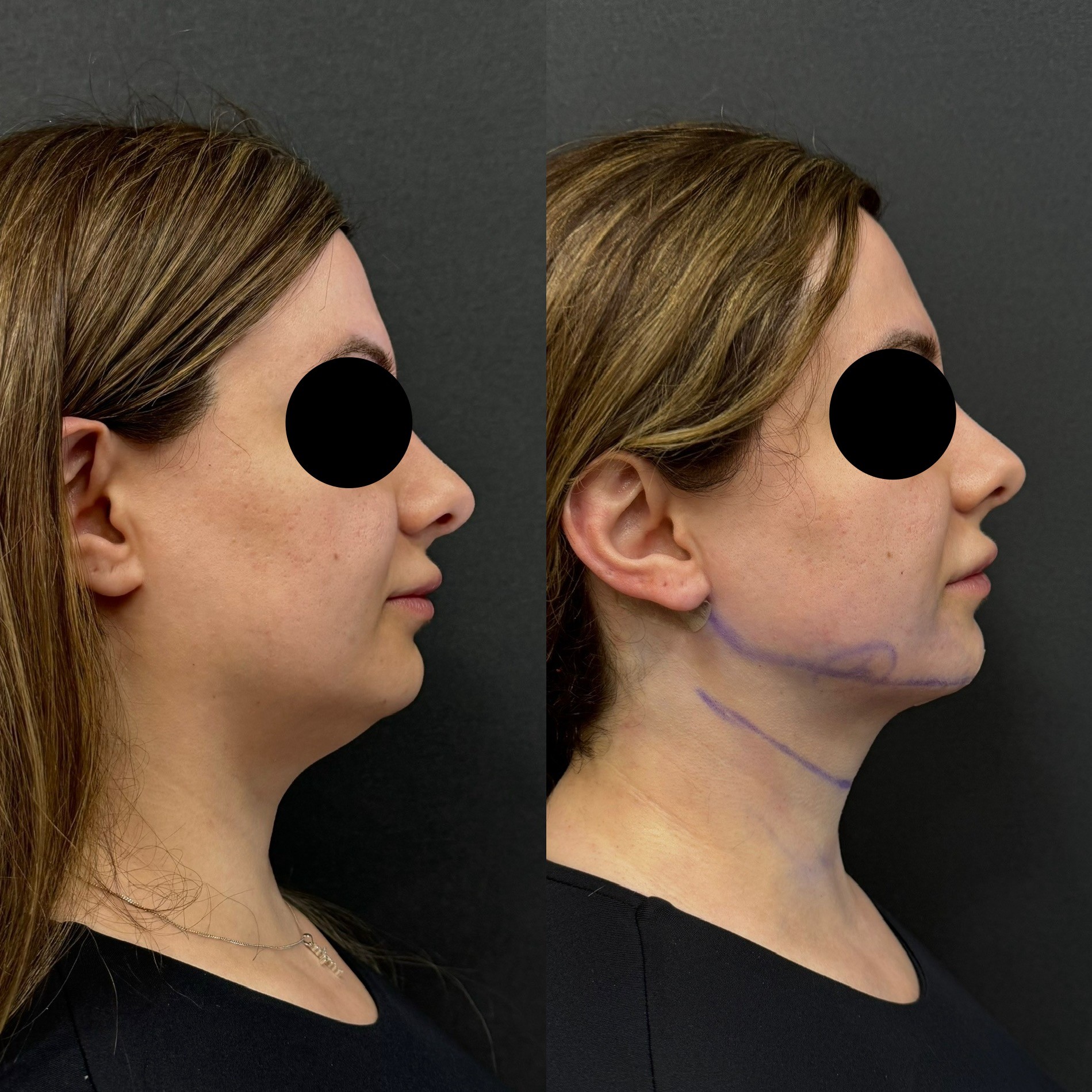
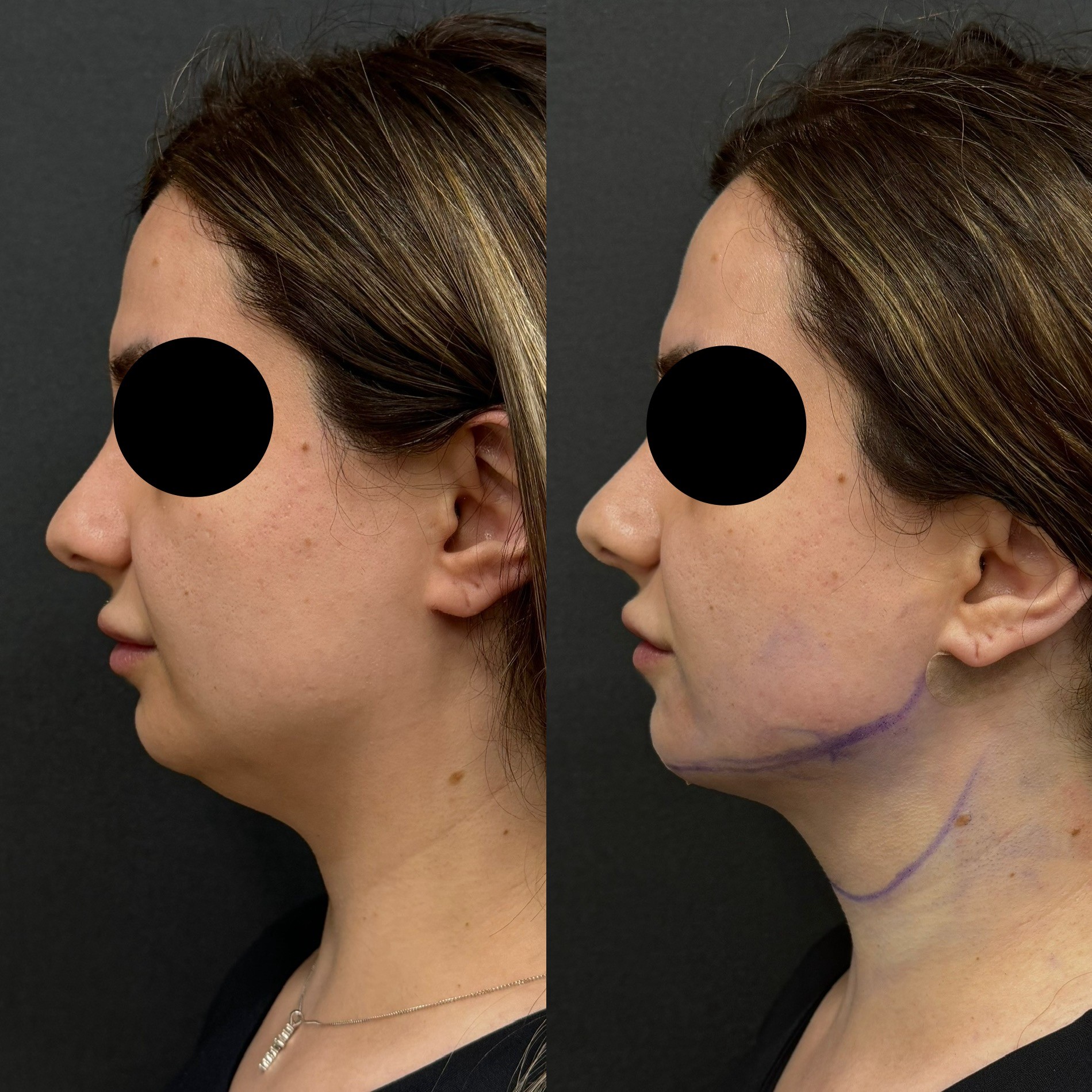
Double chin laser liposuction immediate same-day before and after. Facial contouring under local anesthesia by Dr. Cem Berkay Sinaci, Istanbul, Turkey.

Patient Overview
Patient: Fatma
Age: 44 years old
Gender: Female
Procedures: Laser liposuction of the submental area (double chin removal)
After photos taken at: Same day (immediately post-procedure)
Case Description
Fatma underwent laser liposuction to the submental area at our clinic in Istanbul, and her after photographs were taken the same day — within hours of the procedure being completed. Like Ribak's same-day documentation for the combination lipo and thread lift, Fatma's case captures the immediate structural result before the body's healing response has begun to modify the appearance. The key difference is that Fatma's procedure was standalone laser liposuction without threads, performed entirely under local anesthesia, which makes her case a useful reference for patients specifically interested in understanding what this single procedure delivers on its own, from the very first moment.
The Local Anesthesia Experience from Start to Finish
One of the most common barriers to scheduling a double chin procedure is anxiety about anesthesia. Many patients assume that any liposuction — even a small, localized treatment — requires general anesthesia, an operating theater, and the full infrastructure of a hospital setting. Fatma's case demonstrates that submental laser liposuction is a fundamentally different experience.
The procedure begins with the application of topical numbing cream to the treatment area, which sits for approximately 20 minutes. This reduces the sensation of the subsequent local anesthetic injections. The local anesthetic — a dilute lidocaine solution with epinephrine — is then infiltrated into the submental fat pad through the same tiny access points that will be used for the liposuction cannula. The epinephrine constricts the blood vessels in the area, reducing bleeding and extending the duration of the numbing effect.
From the patient's perspective, the injection phase produces a brief stinging sensation lasting 15 to 20 seconds per injection site. Once the anesthetic takes effect — which happens within two to three minutes — the treatment area is completely numb. The patient remains fully awake and conversational throughout the remainder of the procedure. She can hear the sounds of the equipment, feel pressure and movement in the treated area, but experiences no pain.
The laser phase and fat aspiration phase together take approximately 30 to 45 minutes for a standalone submental treatment. The patient lies comfortably with her head slightly extended to expose the treatment area. She can communicate with the surgical team throughout, ask questions, request adjustments to her positioning, or simply listen to music.
When the procedure is complete, the tiny access incisions are closed with a single suture each or with adhesive strips, and the compression chin strap is applied. The patient sits up, looks in the mirror, and — as Fatma's photographs demonstrate — sees the result immediately. There is no grogginess, no nausea, no post-anesthetic confusion. She stands, walks out of the procedure room, and is fully functional.
Fatma was back at her accommodation within 30 minutes of the procedure ending. She ate lunch normally, used her phone, and walked around her hotel that afternoon. This level of immediate functionality is one of the most significant practical advantages of local anesthesia — the procedure is a defined event within the day, not the beginning of a recovery period that starts with waking up from sedation.
What the Same-Day Photographs Show Without Thread Lift
Fatma's immediate result is worth comparing to Ribak's same-day photographs, which documented the combination of liposuction plus thread lift. The comparison illustrates the distinct contribution of each component.
In Fatma's case — liposuction only — the immediate improvement is concentrated in volume reduction. The submental fullness that constituted the double chin is visibly diminished. The profile view shows a slimmer, cleaner transition from chin to neck. The cervicomental angle has improved because the fat that was filling it in has been removed.
What is not present — because no threads were placed — is the mechanical tissue repositioning effect. The jawline contour reflects the natural tissue position after fat removal, without the additional upward-and-backward lift that threads provide. For Fatma, this was the appropriate approach because her primary issue was isolated fat accumulation, not soft tissue descent. Her jawline tissue was sitting in the correct position — it was simply being obscured by the fat in front of it. Once the fat was removed, the underlying definition emerged on its own.
This distinction reinforces a principle that runs throughout our gallery: the procedure should be matched to the anatomy, not applied as a default package. Fatma needed fat removal. She did not need tissue repositioning. Performing a thread lift in a patient who does not have tissue laxity adds cost, recovery time, and the possibility of dimpling — all for a benefit that the anatomy does not require. The honest assessment during the consultation is what prevents unnecessary additions and keeps the treatment plan focused on what will actually make a difference.
44 and Local Anesthesia: Addressing Age-Related Concerns
At 44, Fatma sits in a demographic that often has specific questions about whether local anesthesia is sufficient for their procedure. Patients in their twenties and thirties tend to accept local anesthesia readily. Patients in their fifties and beyond sometimes prefer the reassurance of sedation. The forties represent a middle ground where patients frequently ask: will local anesthesia really be enough?
The answer, for submental laser liposuction, is unambiguously yes. The treatment area is small, superficial, and easily anesthetized. The sensory nerves that supply the submental region are well-defined and consistently located, making nerve block supplementation straightforward if the initial infiltration does not provide complete numbness. The procedure duration is short enough that the anesthetic effect does not begin to wear off before the treatment is complete.
The relevant question is not whether local anesthesia provides adequate pain control — it does, reliably and consistently. The relevant question is whether the patient's anxiety level allows her to be comfortably awake during the procedure. Most patients are surprised by how routine the experience feels once they are in the chair. The anticipation is almost universally worse than the reality.
For the small percentage of patients who have genuine procedural anxiety that would prevent them from being comfortable under local anesthesia alone, oral sedation can be added. A single anxiolytic tablet taken 30 to 45 minutes before the procedure creates a state of calm relaxation while keeping the patient conscious and responsive. This hybrid approach — local anesthesia for pain control plus mild oral sedation for anxiety — provides a comfortable experience for even the most apprehensive patients without the risks, cost, and recovery implications of general anesthesia.
Same-Day Result Versus Final Result: What Changes
Fatma's immediate post-procedure appearance represents the structural endpoint of the fat removal. The volume that was taken out is gone permanently. What changes over the following weeks and months is everything surrounding that structural change.
In the first three to five days, swelling develops and partially obscures the improvement visible in these same-day photographs. This is not regression — the fat has not returned. It is the body's inflammatory response to the procedure, producing fluid accumulation that temporarily fills in some of the contour that the liposuction created. Patients who compare day three to their same-day photos may feel that they have "lost" some of the result. They have not. It is hidden behind swelling and will re-emerge.
Between weeks one and three, the swelling resolves progressively and the contour returns — this time looking even cleaner than the same-day appearance because the tissue has begun to settle and the skin is starting its retraction process.
Between months one and three, the collagen remodeling from the laser energy reaches its peak activity. The skin tightens incrementally, the jawline becomes more defined, and the overall contour reaches its final, polished form. The three-month result — as we showed in Fazilet's case — represents the complete outcome.
Fatma's same-day photographs therefore show the beginning of a three-month arc. The immediate result is genuinely impressive. The final result surpasses it.
Surgeon's Note
I include Fatma's case because it isolates the laser liposuction result without the confounding variable of a concurrent thread lift. For patients researching their options, seeing what liposuction alone achieves — versus what the combination achieves — helps them understand what each component contributes and whether they need one or both.
At 44 with good skin elasticity and a well-defined mandibular border, Fatma was an ideal candidate for standalone laser liposuction. The fat deposit was the entire problem. Once it was removed, the natural contours of her chin, jawline, and neck emerged without any additional intervention. This is the scenario where less truly is more — adding threads would have added complexity without adding meaningful benefit.
What I also want to highlight about this case is the local anesthesia experience itself. There is a perception among many patients that awake procedures are somehow lesser or more frightening than procedures under general anesthesia. In reality, for appropriate indications, local anesthesia is not a compromise — it is an advantage. The patient avoids all systemic anesthesia risks, recovers immediately, and can assess the result in the mirror before leaving the clinic. Fatma looked at her profile at the end of the procedure, saw the double chin gone, and smiled. That immediate feedback — impossible under general anesthesia — is a profoundly satisfying moment for both the patient and the surgeon.
Frequently Asked Questions
Does double chin laser liposuction under local anesthesia hurt?
The local anesthetic injections produce a brief stinging sensation lasting approximately 15 to 20 seconds per site. Once the area is numb — which takes two to three minutes — patients feel pressure and movement but no pain throughout the procedure. After the anesthetic wears off, typically four to six hours later, the area feels sore and tight for the first two to three days. Most patients manage this comfortably with standard oral pain medication and describe the overall experience as far easier than they anticipated.
How quickly can I return to normal activities after double chin liposuction under local anesthesia?
Because there is no general anesthesia to recover from, patients are fully functional immediately after the procedure. Most return to their accommodation, eat normally, and manage all daily activities on the same day. Desk-based work can typically be resumed the following day. Social activities and public appearances are comfortable by day five to seven, once the initial swelling has diminished. The only restrictions are avoiding strenuous exercise for two to three weeks and wearing the compression chin strap as directed.
Is local anesthesia as safe as general anesthesia for chin liposuction?
For small, localized procedures like submental liposuction, local anesthesia is generally considered safer than general anesthesia because it eliminates the systemic risks associated with general anesthesia — respiratory complications, cardiovascular effects, post-anesthetic nausea, and allergic reactions to anesthetic agents. The procedure is performed on a fully conscious, breathing patient with stable vital signs. Complications specific to local anesthesia are rare and typically minor, such as temporary numbness extending slightly beyond the intended area.
Can I see my result immediately after the procedure?
Yes. Because you are awake throughout and there is no post-anesthetic recovery period, you can look in the mirror within minutes of the procedure being completed. The immediate result shows the structural improvement from the fat removal, though it will be partially obscured by developing swelling over the following few days. The final, refined result settles at approximately three months.
What if I am too anxious to be awake during the procedure?
Mild oral sedation can be given 30 to 45 minutes before the procedure to reduce anxiety while keeping you conscious and responsive. This creates a calm, relaxed state without the risks and recovery implications of general anesthesia. The vast majority of patients who are anxious beforehand report afterward that the experience was significantly easier than they expected. Discussing your specific concerns with the surgeon during the consultation allows the team to tailor the anesthesia approach to your comfort level.