
Mommy Makeover & Tuberous Breast Correction | 15 Days
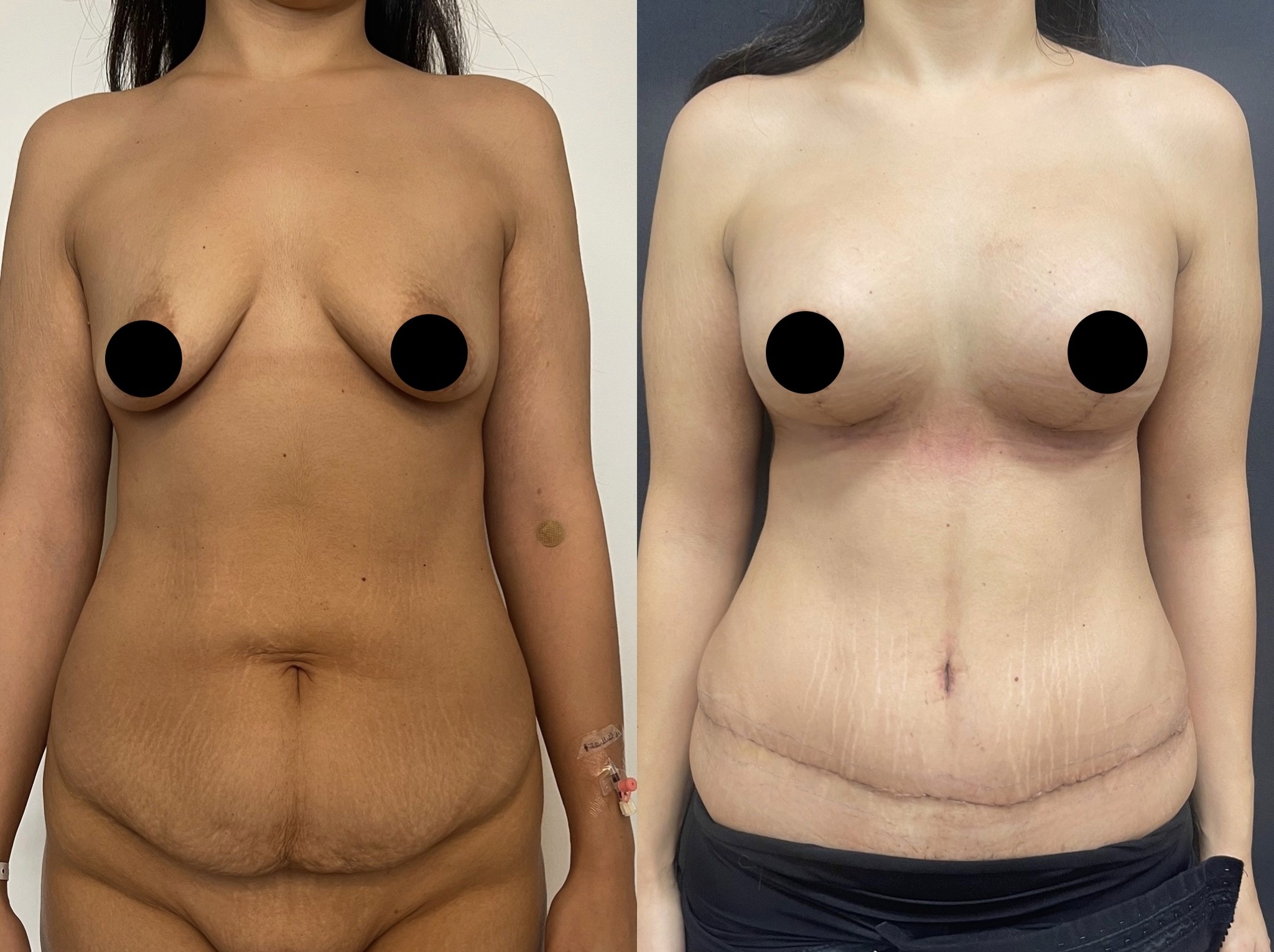
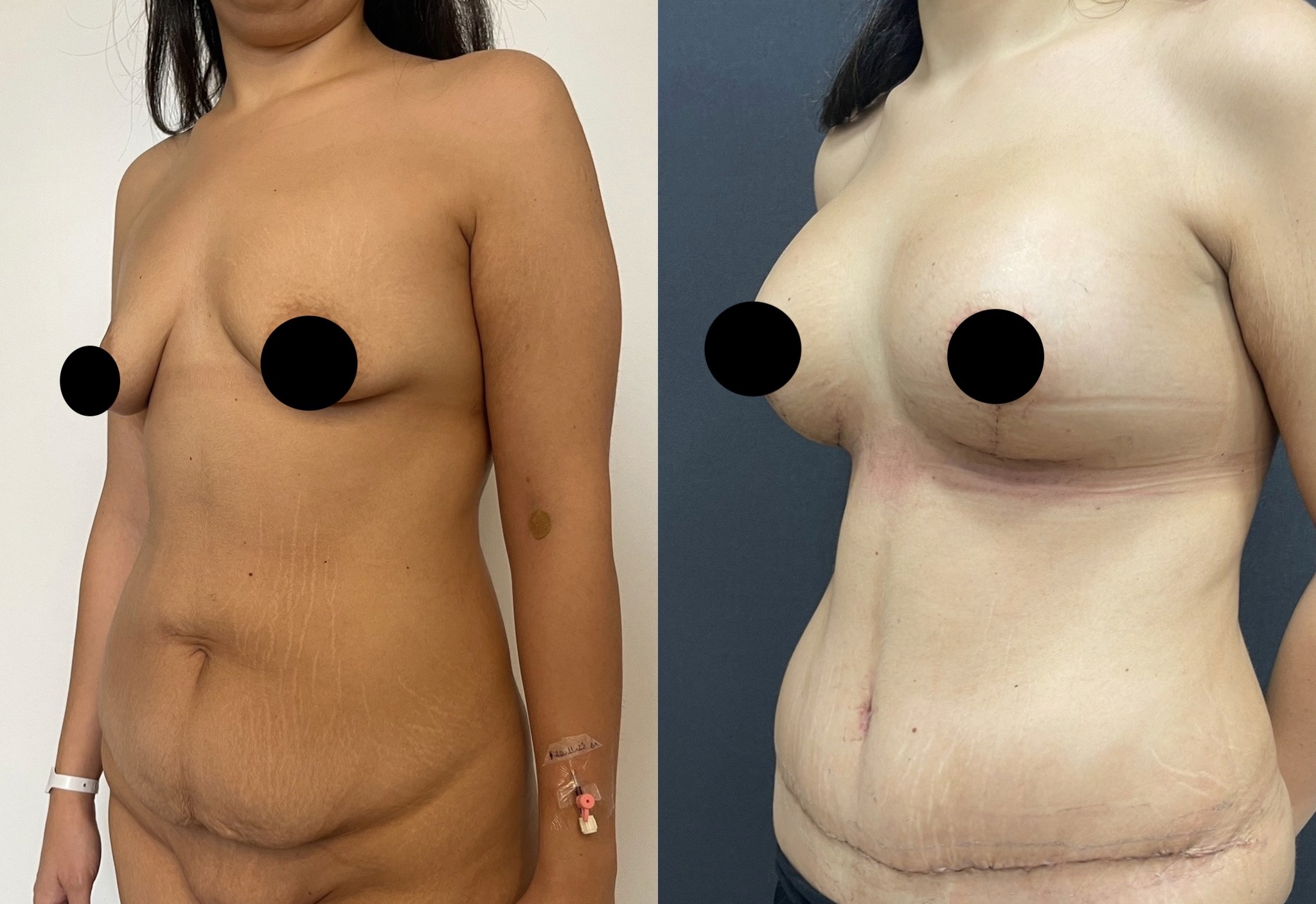
Mommy makeover before and after at 15 days. Breast lift with implants correcting tuberous breasts and tummy tuck. Dr. Cem Berkay Sinaci, Istanbul, Turkey.

Patient Overview
Patient: Elbas
Age range: 30–35 years old
Gender: Female
Procedures: Breast lift (mastopexy) with implants including tuberous breast correction, full abdominoplasty (tummy tuck)
After photos taken at: 15 days post-surgery
Case Description
Elbas came to our clinic in Istanbul seeking a mommy makeover, but her case involved a layer of complexity that goes beyond the typical post-pregnancy changes. In addition to abdominal laxity and breast deflation from breastfeeding, she had a pre-existing breast condition known as tuberous breast deformity — a congenital developmental variation that had affected the shape of her breasts since adolescence. Pregnancy and breastfeeding had worsened the appearance, but the underlying issue had been present long before motherhood.
For Elbas, this mommy makeover was not only about reversing what pregnancy had changed — it was an opportunity to correct something that had affected her confidence for much of her adult life.
What Are Tuberous Breasts?
Tuberous breast deformity is a congenital condition in which the breast does not develop fully during puberty. Rather than forming a round or teardrop shape, the breast grows into a narrow, elongated, or constricted form. The condition varies in severity, but common characteristics include a narrow breast base where the lower portion of the breast fails to expand normally, a constricted lower pole that gives the breast a tubular or cylindrical shape rather than a rounded one, herniation of breast tissue through the areola causing it to appear puffy or disproportionately large, and significant asymmetry between the two breasts in many cases.
The condition is more common than most people realize. Many women live with it without knowing it has a name or that surgical correction is possible. They may have always felt that their breasts looked "different" without understanding why, or they may have been told that implants alone would fix the problem — which is not the case.
Why Standard Augmentation Does Not Fix Tuberous Breasts
This is one of the most important points to understand about tuberous breast correction, and it is directly relevant to Elbas's surgical plan. Simply placing an implant behind a tuberous breast does not correct the deformity. The constricted tissue acts like a tight ring around the base of the breast, preventing the implant from expanding the lower pole into a natural shape. The result is often a breast that looks round and tight in the upper pole — where the implant can expand freely — but still constricted and narrow in the lower pole, creating the characteristic "double bubble" or "snoopy nose" deformity.
Correcting a tuberous breast requires releasing the constricted tissue before or during implant placement. This involves scoring or releasing the tight fascial bands that prevent the lower pole from expanding, reshaping the breast parenchyma to redistribute tissue more evenly across the breast mound, reducing the areola if it has become enlarged or herniated, and carefully selecting and positioning the implant to fill the newly created space and establish a natural breast shape.
Each of these steps addresses a different component of the deformity, and skipping any one of them leads to a suboptimal result. This is why tuberous breast correction is considered one of the more technically demanding breast procedures and why it should be performed by a surgeon with specific experience in managing this condition.
Elbas's Breast Surgery
For Elbas, the correction involved releasing the constricted lower pole tissue to allow the breast to expand into a rounder, more natural footprint. The breast tissue was reshaped to create a more even distribution across the mound. The areola was reduced to a proportionate size. And an implant was placed to provide volume, projection, and the structural foundation for a natural breast shape.
Because both breasts were affected — though to different degrees, as is common with tuberous deformity — each side was treated individually. Different degrees of tissue release, slightly different implant positioning, and independent skin management on each side were necessary to bring both breasts into the closest possible symmetry.
The mastopexy (lift) component repositioned the nipple-areola complex to the correct anatomical height, removed excess skin, and tightened the breast envelope around the newly shaped mound and implant. The combination of tuberous correction, augmentation, and lift in a single procedure gave Elbas a breast shape she had never had — not a restoration of what pregnancy took away, but a creation of what her anatomy had never fully developed.
The Abdominoplasty
The abdominal component of Elbas's mommy makeover followed standard abdominoplasty principles — removal of excess lower abdominal skin, muscle wall tightening, and scar placement within the bikini line. The abdominal procedure was planned in proportion to the breast result, ensuring that the overall body contour would appear balanced and harmonious.
Results at 15 Days
Fifteen days is a stage we do not often see documented in before and after galleries, and it offers a useful snapshot of mid-early recovery. The acute swelling and bruising of the first week have largely subsided, but the body is still clearly in a healing state.
In the breasts, the implants remain in a higher position than their final resting place, and the corrected lower poles are still adapting to the tissue release. The shape at fifteen days appears fuller in the upper pole and somewhat firm — this is expected and will evolve considerably over the next two to three months as the released tissue stretches, the implants settle, and the breast softens into its final contour. For tuberous breast correction specifically, this settling phase can take slightly longer than standard augmentation because the released tissue needs time to adapt to a shape it has never held before.
In the abdomen, the overall contour improvement is clearly visible. The lower abdominal excess has been removed and the profile is flatter. Residual swelling is present, particularly in the lower abdomen, and the scar is in its early healing phase. These will continue to improve over the following months.
At fifteen days, Elbas was walking normally, managing daily activities independently, and wearing her compression garment during the day. The transition from feeling like a surgical patient to feeling like a person in recovery — a subtle but meaningful shift — typically occurs around this two-week mark.
Surgeon's Note
Tuberous breast correction within a mommy makeover is one of the cases I find most rewarding, because the transformation addresses something the patient has lived with for far longer than the post-pregnancy changes. The abdominal changes are typically a few years old. The tuberous deformity has been present since adolescence. Correcting both in a single procedure means the patient emerges not only restored to her pre-pregnancy shape but improved beyond what her body ever looked like naturally.
The technical key to tuberous correction is the tissue release. If the constricted bands are not adequately divided, the implant cannot create a natural lower pole and the result will look tight, constricted, or double-bubbled. If the release is too aggressive, there is a risk of contour irregularities. Finding the correct balance — enough release to allow natural expansion, not so much that the tissue loses its structural integrity — requires hands-on experience with this specific deformity.
Elbas's fifteen-day result shows the early stages of what I expect will be an excellent outcome. The lower poles are already showing more roundness than her preoperative shape ever had, and this will only improve as the tissue relaxes and adapts over the coming months. I am particularly pleased with the areolar reduction, which has brought both sides into a much more proportionate relationship with the overall breast size.
Frequently Asked Questions
What are tuberous breasts and how common are they?
Tuberous breast deformity is a congenital condition where the breast does not fully develop during puberty, resulting in a narrow, elongated, or constricted shape rather than a rounded one. The areola may appear puffy or enlarged, and the two breasts are often noticeably asymmetric. The condition affects an estimated 1 to 5 percent of women, though many cases go undiagnosed because women may not realize their breast shape has a specific medical explanation.
Can tuberous breasts be fixed with implants alone?
No. Implants alone cannot correct tuberous breast deformity because the constricted tissue prevents the implant from expanding the breast into a natural shape. Without releasing the tight fascial bands in the lower pole, the implant fills only the upper portion of the breast, creating an unnatural appearance. Proper correction requires tissue release, breast reshaping, possible areolar reduction, and then implant placement — a multi-step approach that addresses the structural cause of the deformity.
Is it possible to correct tuberous breasts during a mommy makeover?
Yes, and in many cases it is the ideal time to do so. The mommy makeover already involves breast surgery and abdominal surgery in a single session, so incorporating tuberous breast correction into the breast lift and augmentation adds complexity but not a separate recovery period. For women who have lived with tuberous deformity and then experienced post-pregnancy changes on top of it, addressing everything at once is both efficient and emotionally significant.
How long does it take to see the final breast shape after tuberous breast correction?
The settling process after tuberous correction typically takes three to six months — sometimes slightly longer than standard augmentation because the released tissue is adapting to a shape it has never held before. The implants gradually descend, the lower pole fills out, and the breast softens from its initially firm, high-sitting appearance into a more natural contour. The areolar scars continue to fade for 12 to 18 months.
Will tuberous breast correction leave more scars than a standard breast lift?
The external scars are generally the same as a standard breast lift — around the areola, vertically down the lower pole, and sometimes a short horizontal component in the inframammary fold. The additional tissue release and reshaping work is performed internally through these same incisions, so no additional external scars are required. The areolar reduction may actually improve the appearance of the areola compared to its preoperative state.