
Breast Augmentation at 44: Four-Month Final Result
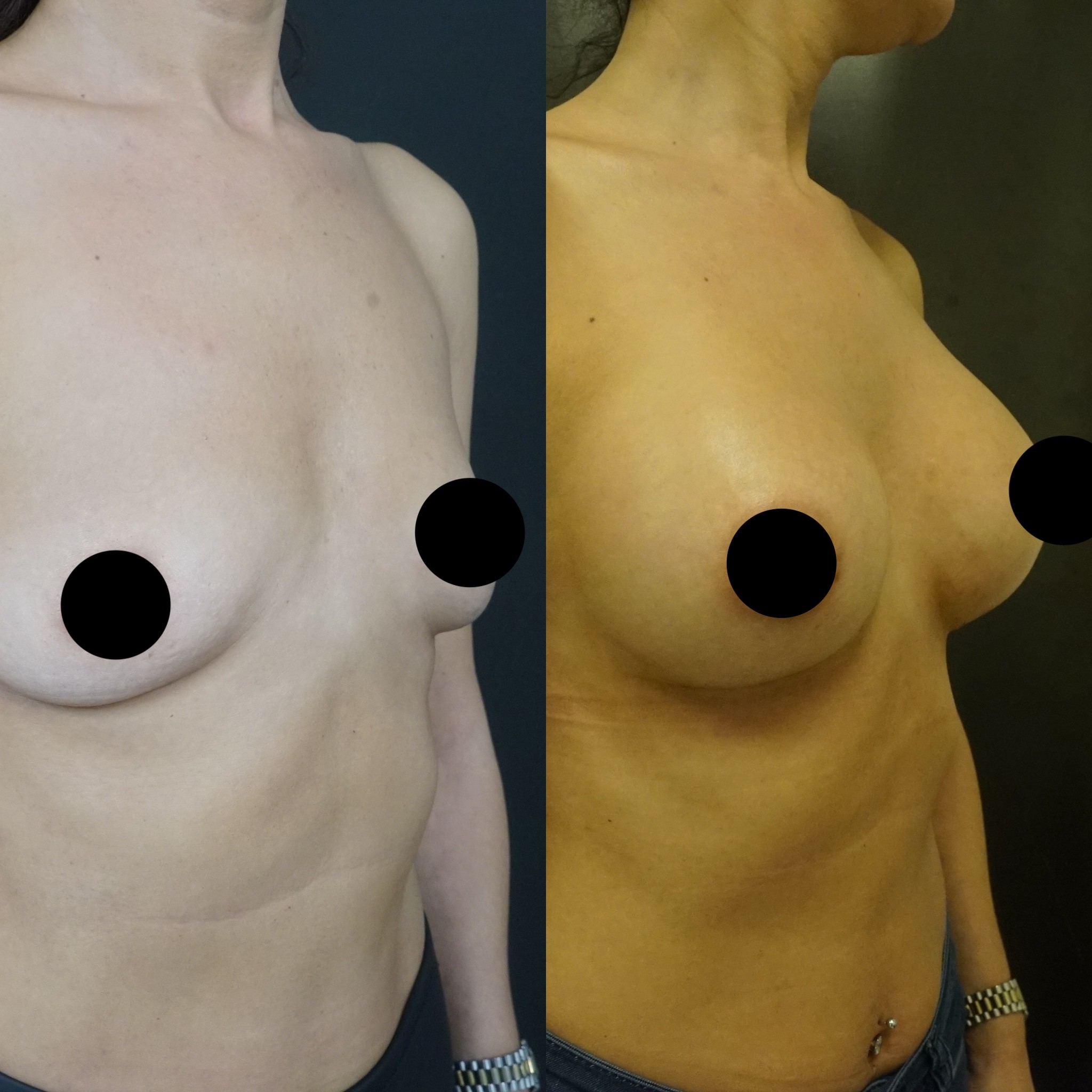
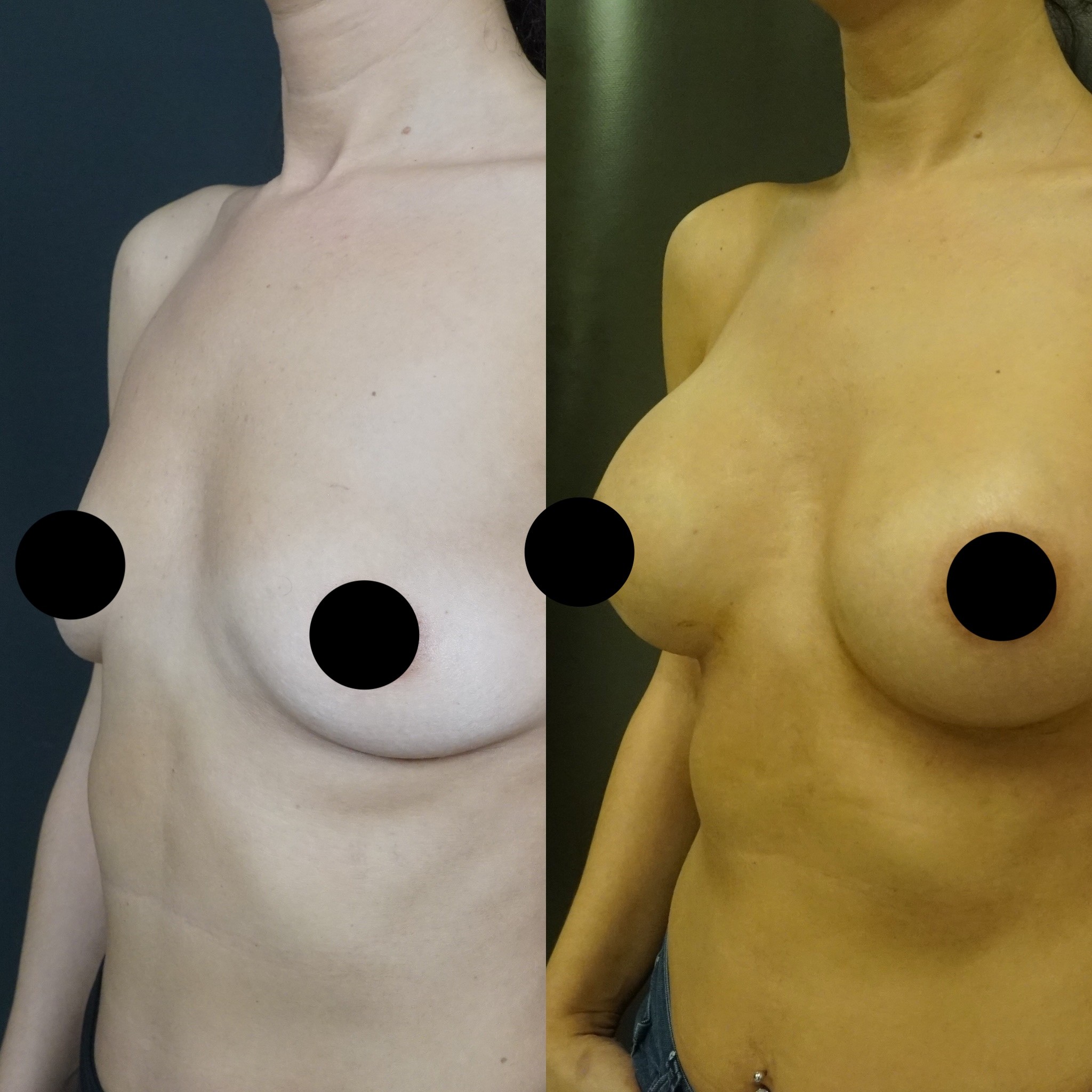
Before and after breast augmentation at age 44 showing four-month settled result. Dr Cem Berkay Sinaci delivers natural outcomes for mature patients in Istanbul

Patient Overview
Patient: Binnur
Age: 44 years old
Gender: Female
Procedures: Breast augmentation with silicone implants
After photos taken at: 4 months post-surgery
Location: Istanbul, Turkey
Breast Augmentation After Forty: What Changes and What Doesn't
The decision to undergo breast augmentation in one's forties carries a different set of considerations than the same decision at twenty-five or thirty. The anatomy has changed. The skin has experienced decades of gravitational influence, hormonal fluctuation, and in many cases the physical demands of pregnancy and breastfeeding. Breast tissue composition has shifted — the dense glandular tissue of youth gradually gives way to a softer, more fatty composition that behaves differently under surgical manipulation. None of these changes disqualify a woman from augmentation, but they fundamentally alter how the procedure must be planned and executed.
Binnur, at forty-four, represents the patient profile that Dr. Cem Berkay Sinaci sees with increasing frequency in his Istanbul practice. Women in their forties who have deferred breast augmentation for years — through child-rearing, career demands, or simply uncertainty — and have now arrived at a point where they are ready. Dr. Sinaci, a European board-certified plastic surgeon (FEBOPRAS) and active member of ISAPS and ASPS, approaches these patients with a planning methodology that accounts for the specific tissue characteristics that distinguish the mature breast from its younger counterpart.
How Tissue Quality at Forty-Four Influences Surgical Planning
The breast of a forty-four-year-old woman differs from that of a woman in her twenties in several clinically relevant ways, and each difference feeds directly into the surgical plan.
Skin elasticity is the first consideration. Collagen and elastin — the structural proteins that give skin its ability to stretch and recoil — diminish progressively with age. At forty-four, Binnur's skin retains functional elasticity but does not snap back with the same vigour as younger tissue. This influences implant size selection: the chosen volume must be supportable by the existing skin envelope without creating excessive long-term stretching. An implant that a twenty-five-year-old's skin could accommodate comfortably may be too heavy for a mature envelope to maintain over the following decade.
Breast tissue composition is the second factor. The transition from predominantly glandular to predominantly fatty tissue means that the natural breast feels softer and provides less structural resistance around the implant. This can be advantageous — fatty tissue drapes naturally over the implant, reducing the risk of visible implant edges — but it also means the tissue offers less inherent support. The surgical plane and implant dimensions must compensate for this reduced structural contribution from the native breast.
Chest wall and ribcage shape, which remain stable throughout adulthood, continue to serve as the architectural foundation for implant selection. Binnur's base width measurements and chest wall contour were assessed with the same precision applied to any patient, ensuring the implant diameter matched her skeletal framework regardless of age.
Reading the Four-Month Result
Binnur's four-month photographs represent a result that has reached its definitive form. By sixteen weeks, every major phase of the post-operative healing process has been completed. The inflammatory swelling that dominates the first month has fully resolved. The implant has completed its settling trajectory, descending from its initially elevated position into the natural resting point that Dr. Sinaci designed during surgery. The capsule — the thin layer of scar tissue that the body forms around every implant — has matured into its stable configuration.
What makes the four-month time point particularly informative is that there is essentially no difference between what Binnur sees now and what she will see at one year or beyond. The subtle changes that occur between four months and twelve months — minor continued scar maturation, imperceptible softening of the capsule — are clinically measurable but visually invisible. The breast shape, implant position, and overall aesthetic that Binnur's photographs display represent her long-term result.
This stability is especially relevant for patients in their forties, who understandably want assurance that the result they invest in will endure. The four-month checkpoint provides that assurance: if the breast looks natural, feels comfortable, and sits proportionally on the body at this stage, those qualities will persist.
Proportional Enhancement Versus Maximum Volume
One characteristic that distinguishes many patients in their forties from younger augmentation candidates is a shift in aesthetic priorities. While younger patients sometimes pursue maximum volume within safe limits, mature patients more frequently prioritise proportion, naturalness, and subtlety. The goal is often not to look augmented but to look restored — to reclaim the breast volume and shape that time, gravity, and hormonal changes have diminished.
Binnur's augmentation reflects this philosophy. The implant volume was selected to produce a result that appears as though she was simply born with fuller breasts, not as though she underwent surgery. The upper pole shows gentle fullness without the exaggerated projection that signals implants to the casual observer. The lower pole curves naturally into the inframammary fold. The breast moves with body position in a way that mimics natural tissue behaviour.
This aesthetic restraint requires more surgical skill, not less. Producing an obviously augmented result is technically straightforward — large implants in any pocket will create visible volume. Producing a result that looks entirely natural demands precise calibration of implant volume, profile, and pocket dimensions to the individual patient's body. Dr. Sinaci's approach to this calibration was refined during his fellowship with the internationally renowned plastic surgeon Raul Gonzalez in Brazil, where the concept of "natural augmentation" — enhancement that appears effortless and undetectable — is considered the highest standard of surgical artistry.
Long-Term Implant Considerations for Patients in Their Forties
Patients who undergo breast augmentation at forty-four face a practical consideration that younger patients can defer: the long-term lifespan of the implant relative to their own biological timeline. Modern silicone implants are not lifetime devices. While many implants remain intact and functional for fifteen to twenty years or longer, no manufacturer guarantees permanence. At some point in the future, Binnur may require implant assessment, and possibly replacement, as part of her ongoing breast health maintenance.
Dr. Sinaci discusses this reality transparently during the consultation process. Understanding that implants may eventually need attention is not a reason to avoid augmentation — it is simply a component of informed consent that responsible surgeons ensure every patient understands. The vast majority of patients who undergo augmentation in their forties report that the years of enhanced confidence and satisfaction with their appearance far outweigh the possibility of a future revision procedure.
Regular follow-up, including periodic imaging when clinically indicated, allows the implant to be monitored over time. Any changes in breast shape, firmness, or comfort prompt evaluation to ensure the implant and capsule remain in their optimal state.
Age as Context, Not Limitation
Binnur's four-month result challenges the implicit assumption that breast augmentation is a procedure for women in their twenties and thirties. The mature patient brings certain anatomical realities that require adapted surgical planning, but she also brings advantages: realistic expectations shaped by life experience, clear aesthetic priorities, and a stable body weight that supports long-term result consistency.
For women in their forties considering breast augmentation in Istanbul, Binnur's before and after photographs demonstrate that age does not diminish the quality of outcome achievable — it simply changes the path the surgeon takes to achieve it. The four-month result shows a breast that appears natural, proportional, and age-appropriate, reflecting the principle that the best augmentation is one that enhances what the patient has rather than imposing a shape that belongs to a different body or a different decade.