
Chin Lipo & Thread Lift Day 1 | Consultation to Result
Double chin laser liposuction with thread lift at day 1. Dimpling resolves in 7-10 days. Jawline contouring by Dr. Cem Berkay Sinaci, Istanbul, Turkey.
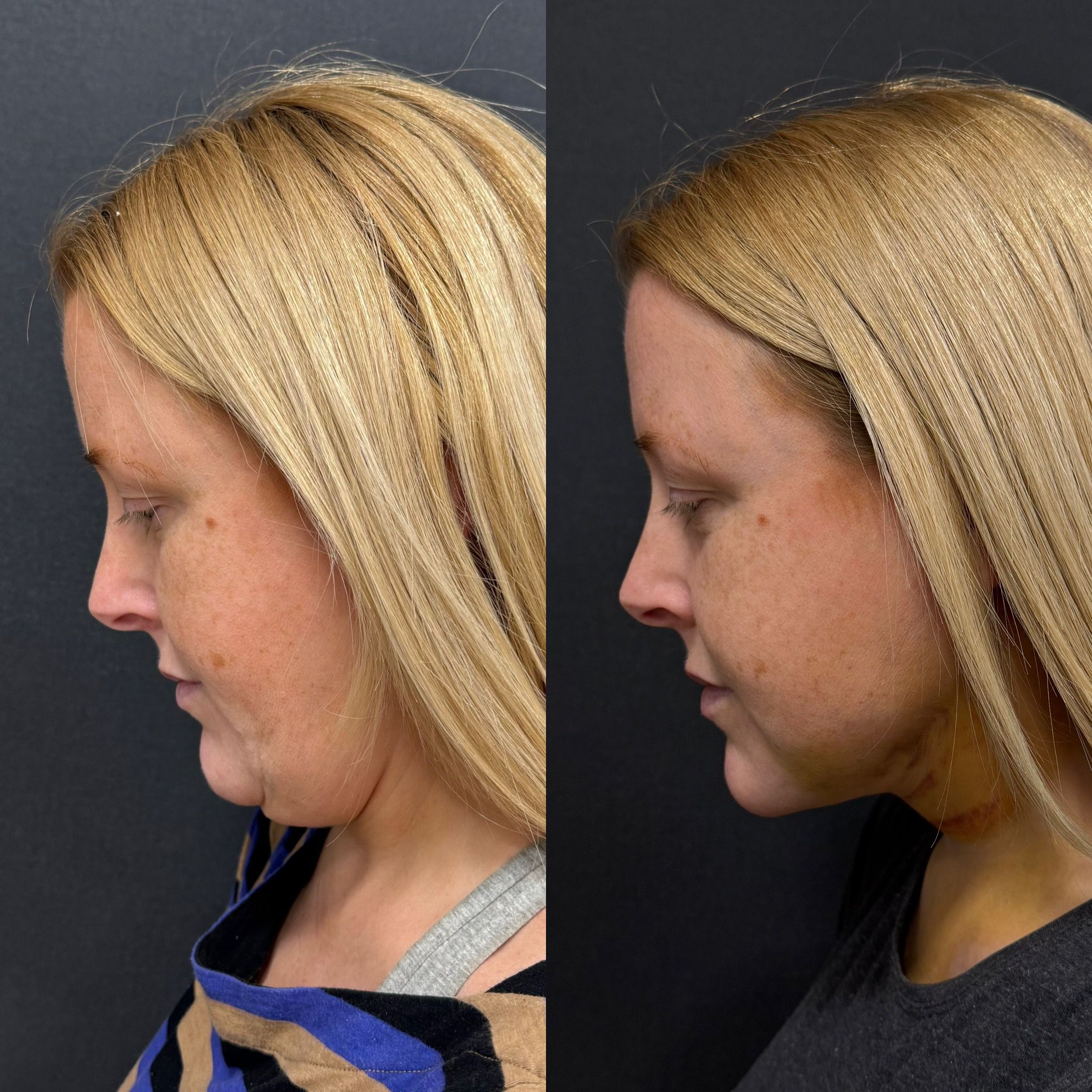
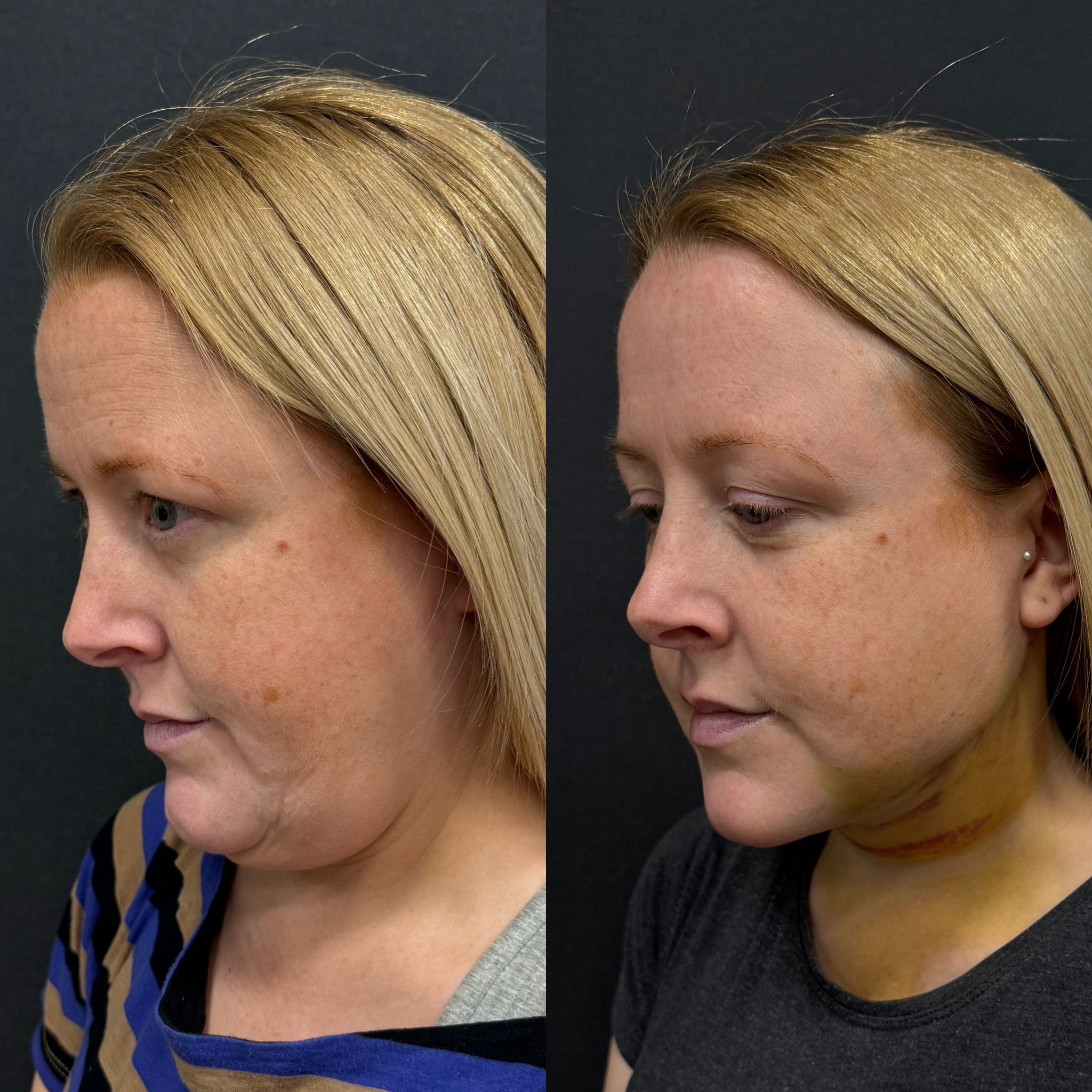
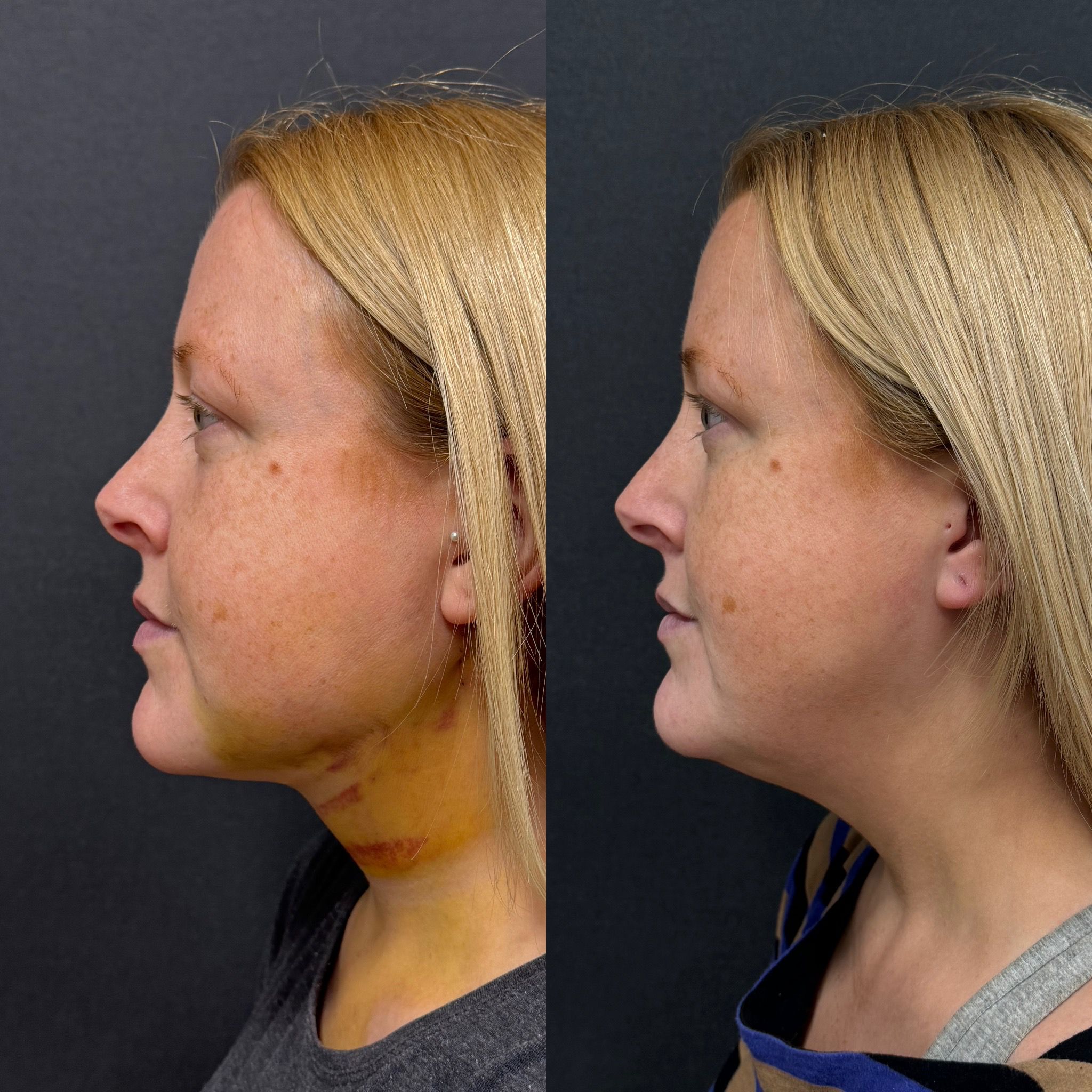
Patient Overview
Patient: Angel
Age: 34 years old
Gender: Female
Procedures: Laser liposuction of the submental area, thread lift of the jawline and neck
After photos taken at: 1 day post-procedure
Case Description
Angel underwent laser liposuction combined with a thread lift at our clinic in Istanbul, and her after photographs were taken at one day post-procedure. Her case shares the same procedure and similar timing as Ingrid's day-one documentation, but we include both because each patient's anatomy, starting point, and visual presentation during early recovery are different — and prospective patients benefit from seeing that normal healing looks slightly different on every face while following the same predictable pattern.
What makes Angel's case particularly worth discussing is the journey that preceded the procedure itself. Angel spent over a year researching double chin treatments online before booking a consultation. She arrived at our clinic having already formed strong opinions about what she needed based on social media content, YouTube videos, and forum discussions. Some of those opinions were accurate. Others needed to be gently corrected. Her experience reflects a reality that is increasingly common among patients today: the gap between what online research teaches you and what a clinical assessment reveals.
When Online Research Meets Clinical Reality
Angel came to her consultation believing she needed liposuction only. She had watched videos of standalone chin liposuction cases and identified with the patients she saw. The before photographs matched her own appearance. The after photographs showed the result she wanted. The conclusion seemed straightforward: liposuction would solve her problem.
During the examination, however, the picture was more nuanced. Yes, she had a meaningful submental fat deposit that warranted liposuction. But she also had early tissue laxity along the jawline that she had not identified in herself. This is not unusual — laxity is much harder to assess in your own mirror than fat volume is. Fat creates visible fullness that photographs clearly. Laxity creates subtle softening that is easier to feel than to see, and that only becomes obvious in comparison to the corrected version.
The clinical assessment involved several steps that cannot be replicated through online self-evaluation. Manual palpation of the submental fat pad determined its depth, extent, and consistency. A pinch test of the neck skin assessed its thickness and elasticity. The manual lift test — gently repositioning the jawline tissue upward and backward — demonstrated the additional improvement that thread lifting would provide beyond fat removal alone. Assessment of the platysma muscle determined that no banding was present, confirming that a surgical approach was not necessary.
When Angel saw the difference between the manual lift result and simple fat reduction in the mirror during the consultation, the rationale for adding threads became immediately clear to her. This is why the in-person consultation remains irreplaceable regardless of how much information is available online. A surgeon's hands provide information that no photograph, video, or questionnaire can capture.
Planning Thread Vectors: The Geometry of Jawline Definition
One aspect of thread lift technique that receives little attention in patient-facing content is the planning of thread vectors — the directional trajectories along which the threads are inserted and anchored. This planning directly determines how the jawline will look after the procedure, and it is entirely customized to each patient's facial anatomy.
The jawline is not a straight line. It follows the contour of the mandible, which curves from the chin point backward and upward toward the ear. The soft tissue descent that creates jowling and jawline softening does not occur uniformly along this curve — it tends to be most pronounced in the prejowl area, roughly one-third of the distance from the chin toward the ear, and along the posterior jawline where the tissue transitions into the upper neck.
Thread vectors must account for this three-dimensional anatomy. The direction of pull is not simply "upward" — it is upward and posterior, following a trajectory that counteracts the specific direction in which gravity and tissue relaxation have caused the descent. The angle of each thread, the depth of insertion, the number of threads used, and the spacing between them are all variables that the surgeon determines based on where the tissue has descended and where it needs to go.
For Angel, the thread placement focused on restoring definition along the prejowl area and tightening the tissue transition from jawline to neck. The vectors were planned while she was seated upright — the same position in which surgical markings are applied — because gravity's effect on the tissue is only accurately visible in the upright position. Lying down on the procedure table changes the tissue position and can mislead the planning if the vectors were determined in that position.
This level of customization is why thread lift results vary between practitioners. The procedure is not a standardized technique that produces identical outcomes regardless of who performs it. The surgical planning — the choice of vectors, the number and type of threads, the depth of placement — is where the artistry lies. Two surgeons performing a thread lift on the same patient can produce meaningfully different results based on these planning decisions.
Angel's Day-One Appearance
At 24 hours post-procedure, Angel's photographs show the expected constellation of early findings. Mild swelling is developing along the jawline and submental area. Thread-related dimpling is visible — small surface irregularities at the points where the thread barbs engage the tissue. The overall jawline contour, despite the swelling and dimpling, already shows improvement over her preoperative baseline.
What distinguishes Angel's day-one presentation from Ingrid's — despite having the same procedure at nearly the same age — is the variation in dimpling pattern. Angel's dimpling presents slightly differently in its distribution and visibility, reflecting differences in her tissue thickness, the specific thread type and placement used, and her individual tissue response. This variation is important to document because patients inevitably compare their own recovery to the cases they have seen online. Seeing that two patients of similar age with the same procedure show slightly different dimpling patterns at day one reinforces that a range of presentations is normal, not just a single expected appearance.
Bruising in Angel's case is minimal at day one. Some patients show noticeable bruising at this stage while others show virtually none. This difference is influenced by individual capillary fragility, whether any small blood vessels were encountered during cannula passage, and the patient's natural tendency to bruise. Neither outcome — significant bruising or minimal bruising — has any bearing on the final result.
The International Patient Timeline: From Inquiry to Recovery
Angel's experience as an international patient traveling to Istanbul for her procedure is worth outlining, because understanding the logistics helps prospective patients plan their own journey with confidence.
The process began with an online consultation several weeks before travel. Angel submitted photographs — front, oblique, and profile views — along with a description of her concerns. This initial assessment allowed us to confirm that she was a reasonable candidate for the procedure she was interested in, provide preliminary recommendations, and discuss the approximate scope of treatment. It is important to note that the online consultation is a screening and planning tool, not a definitive treatment plan. The final plan is always confirmed during the in-person clinical examination.
Angel arrived in Istanbul two days before her procedure date. The first day was reserved for the in-person consultation, where the clinical examination described earlier took place and the treatment plan was finalized. The second day was a rest and preparation day. The procedure was performed on day three.
Following the procedure, Angel remained in Istanbul for her initial recovery period. Day-one follow-up at the clinic confirmed normal healing — the dimpling, swelling, and other findings documented in her photographs were assessed and confirmed as expected. Subsequent check-ups were scheduled at day three and day five. By day seven to ten, most international patients are cleared for travel home, with remote follow-up via video consultation continuing in the weeks and months that follow.
This timeline — approximately ten to twelve days total, from arrival to departure — is typical for international patients undergoing chin liposuction with thread lift. Some patients with flexible schedules choose to extend their stay for additional recovery time in Istanbul. Others with tighter schedules may depart as early as day seven if their healing permits. The timeline is discussed and agreed upon during the planning phase so that flights, accommodation, and any necessary arrangements can be made with confidence.
Surgeon's Note
Angel's case is instructive for two reasons that go beyond the clinical result. The first is the consultation correction — the shift from her self-assessed treatment plan (liposuction only) to the clinically appropriate plan (liposuction plus threads). This happens frequently, and it is one of the most important services a surgeon provides. Patients are remarkably good at identifying their concerns but understandably limited in their ability to assess which tissue layers are contributing to those concerns. The consultation bridges that gap.
The second reason is the thread vector planning. I spend considerable time during each procedure planning the thread trajectories because they are the primary determinant of how the jawline will look. A well-planned vector follows the anatomy, respects the natural contours, and produces a result that looks like a better version of the patient's own face. A poorly planned vector fights the anatomy and produces visible pulling, asymmetry, or an operated appearance. At 34, Angel's facial structure is well-defined, which provided clear anatomical landmarks for vector planning and contributed to the clean jawline contour already visible at day one.
Looking at her day-one photographs, the healing trajectory is exactly where it should be. The dimpling will resolve within the week. The swelling will peak and then clear over the following ten to fourteen days. And the jawline definition that is emerging through these temporary healing findings will sharpen progressively as the collagen remodeling from both the laser and the threads reaches its full biological effect over the coming months.
Frequently Asked Questions
How do I know if I need thread lift in addition to chin liposuction?
The determination is made during the clinical examination through a series of hands-on assessments. The manual lift test is the most informative — the surgeon physically repositions the jawline tissue to simulate the effect of threads. If this maneuver produces meaningful additional improvement beyond what fat removal alone would achieve, threads are recommended. If the jawline contour is well-defined and the concern is purely volumetric, standalone liposuction is sufficient. This assessment cannot be accurately performed through photographs alone, which is why an in-person consultation is essential for treatment planning.
Can I have my consultation online and fly in just for the procedure?
An initial online consultation with photographs is an excellent starting point for assessing candidacy and discussing preliminary plans. However, the final treatment plan is always confirmed during an in-person clinical examination before the procedure. We recommend arriving at least one day before the scheduled procedure to allow time for this examination, finalize the plan, and complete any necessary preoperative preparations. The online consultation ensures that when you arrive, the planning is already advanced and the in-person visit is focused on confirmation and fine-tuning rather than starting from scratch.
How many days should I plan to stay in Istanbul for chin lipo and thread lift?
A total stay of ten to twelve days is typical — one to two days before the procedure for consultation and preparation, the procedure day, and seven to eight days of recovery before traveling home. Some patients depart as early as day seven if their healing is progressing well, while others prefer the comfort of a few extra recovery days. Your surgeon will provide travel clearance based on your individual healing progress, and remote follow-up via video consultation continues after you return home.
Will the thread lift results look the same on both sides of my face?
The goal is the best achievable symmetry, but perfect bilateral symmetry is neither realistic nor natural — no face is perfectly symmetric to begin with. The thread placement is customized to each side independently, accounting for any pre-existing asymmetry in fat distribution, tissue laxity, and bone structure. During the healing process, mild asymmetric swelling is common and does not predict the final result. By the time the swelling has fully resolved and the threads have settled — typically by six to eight weeks — the two sides appear balanced and harmonious.
What makes a surgeon qualified to perform both laser liposuction and thread lift together?
This combination requires expertise in two distinct skill sets — body contouring technique for the liposuction and facial anatomy knowledge for the thread placement. Board-certified plastic surgeons with training in both aesthetic and reconstructive surgery are comprehensively trained in facial anatomy, tissue handling, and contouring techniques. Membership in international professional societies such as ISAPS and ASPS indicates adherence to ongoing education and global standards of practice. During the consultation, asking about the surgeon's specific experience with this combination procedure and requesting before and after photographs of previous cases is entirely appropriate.