
Short Scar Deep Plane Facelift with Endoscopic Browlift
Before & after short scar deep plane facelift, neck lift, endoscopic browlift, blepharoplasty and nanofat injection in a 45-year-old female patient in Istanbul
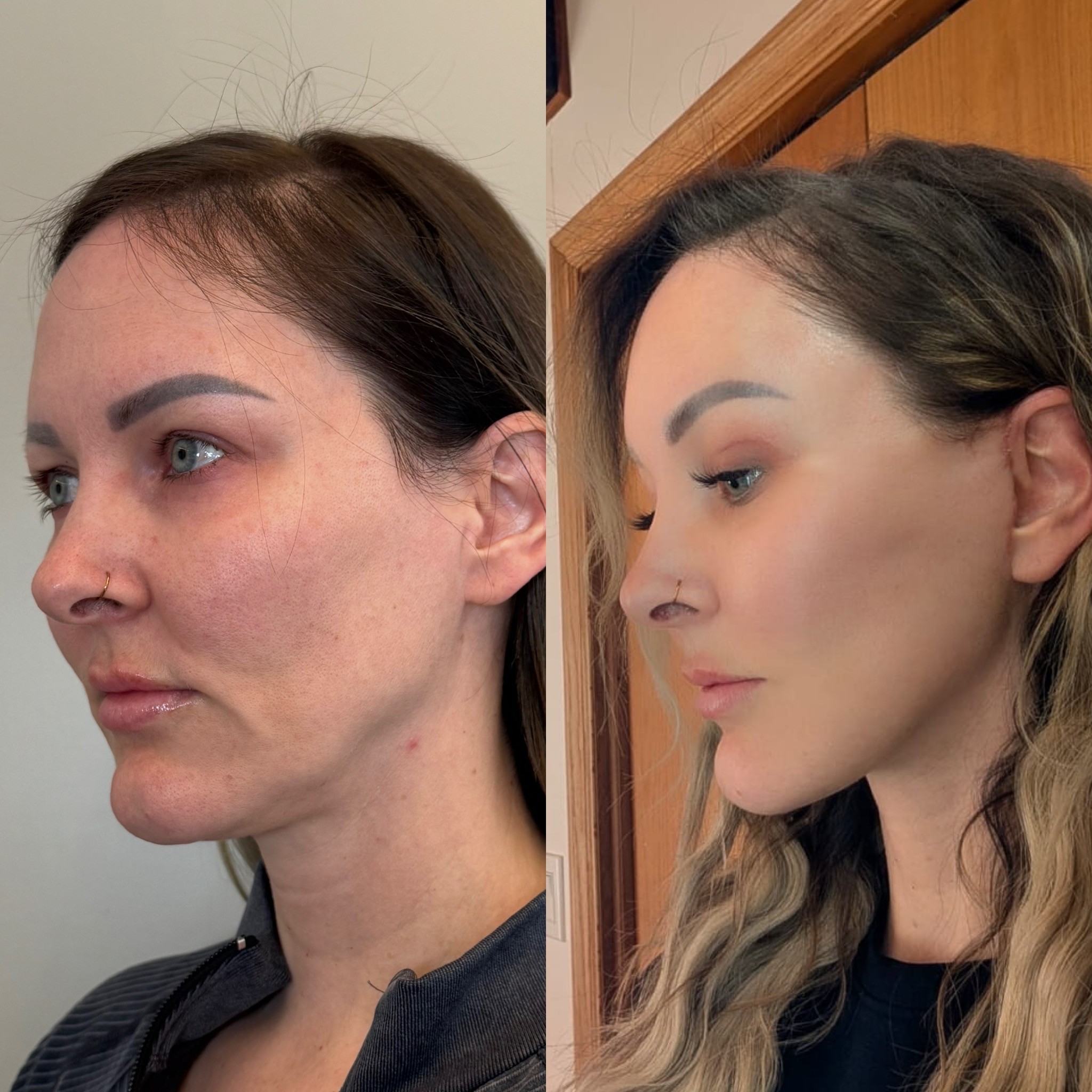

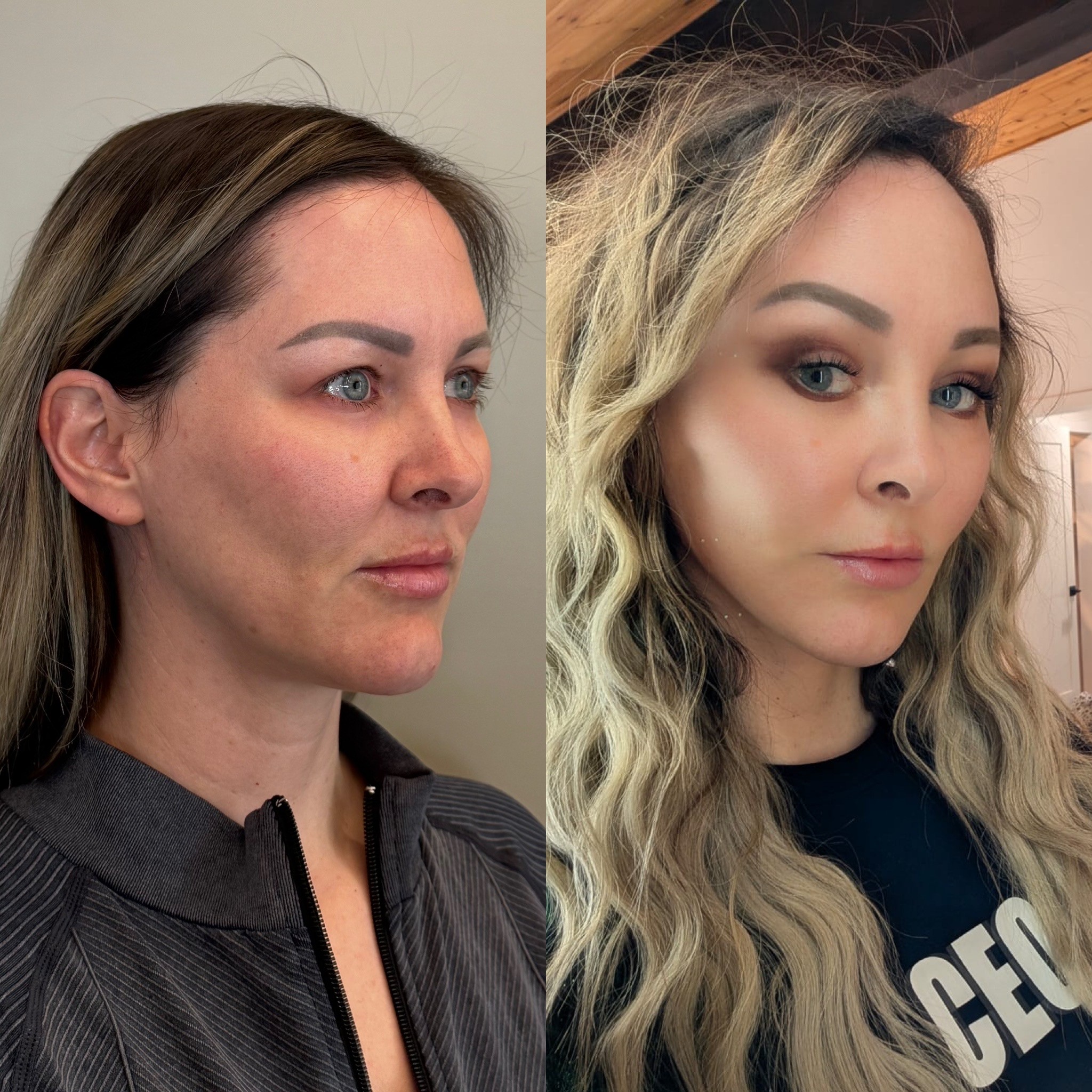
Patient Overview
Patient: Joanne
Age: 45
Gender: Female
Procedures: Short scar deep plane facelift, neck lift, endoscopic browlift, upper blepharoplasty, nanofat injection
After photos taken at: Post-op (timing as shown)
Location: Istanbul, Turkey
Total Facial Rejuvenation: When Every Zone Needs Attention
Some patients present with ageing isolated to one area — the eyelids, the jawline, or the neck. Others, like Joanne, arrive with changes across every zone of the face that have progressed in parallel, each compounding the other. At 45, she showed jowling and loss of jawline definition, neck laxity with early platysmal banding, lateral brow descent weighing on the outer eyelids, upper lid hooding, and the generalised volume loss and skin quality decline that affects the entire facial surface over time. Treating any one of these in isolation would have improved that area but left the adjacent zones looking comparatively older — drawing attention to what was not corrected rather than creating a cohesive result.
Dr. Cem Berkay Sinaci, a fellow of the European Board of Plastic Reconstructive and Aesthetic Surgery (FEBOPRAS) and member of ISAPS and ASPS, designed a five-component surgical plan: short scar deep plane facelift, neck lift, endoscopic browlift, upper blepharoplasty, and nanofat injection. Each element addresses a specific anatomical concern, and together they restore the face as a single harmonious unit.
What Is a Short Scar Deep Plane Facelift?
The short scar facelift — sometimes called a minimal access or limited incision facelift — differs from a traditional facelift in the length and placement of the incision. Rather than extending the scar behind the ear and deep into the occipital hairline, the short scar approach concentrates the incision around the front of the ear and into the temporal hairline, significantly reducing the scar footprint while still providing full access to the deeper facial structures.
The "deep plane" component refers to the surgical depth. The dissection passes beneath the SMAS layer, releasing the retaining ligaments that anchor the facial soft tissues to the skeleton. This allows the descended midface, jowl, and cheek tissue to be elevated as a single composite flap — skin, fat, and muscle moving together. The result is a lift that restores natural contour without surface tension, avoiding the tight or pulled appearance associated with older skin-only techniques.
For Joanne, the short scar approach was appropriate because her ageing changes, while present across all zones, were at a stage where the more limited incision could deliver the necessary access. Not every patient is a candidate for a short scar — more advanced laxity may require a traditional incision length — but when the anatomy allows it, the reduced scarring is a meaningful benefit. Having refined his deep plane technique through fellowship training with Raul Gonzalez in Brazil and cadaver dissection courses in Bangkok, Dr. Sinaci selects the incision design based on what each individual case requires.
The Neck Lift Component
Joanne's neck showed the laxity and early banding that typically accompanies lower face ageing. The neck lift was performed in continuity with the facelift, addressing the platysma muscle in the midline and redraping the cervical skin over a tightened muscular framework. The cervicomental angle — the clean transition from chin to neck that defines a youthful profile — was restored. This component works in direct concert with the facelift; the jawline definition achieved by the deep plane lift is only fully appreciated when the neck beneath it is equally refined.
Endoscopic Browlift: A Different Approach from Temporal Lifting
Joanne's surgical plan included an endoscopic browlift rather than the temporal browlift used in some of the other cases in this gallery. The distinction is significant. A temporal browlift addresses only the lateral portion of the brow through incisions at the temples. An endoscopic browlift uses several small incisions hidden within the hairline — typically three to five, each approximately one to two centimetres — through which an endoscope and specialised instruments are introduced. The surgeon visualises the deeper structures on a monitor and releases the periosteum from the frontal bone, allowing the entire brow to be elevated and secured in a higher position.
The endoscopic approach is particularly suited to patients who have descent across the full width of the brow, not just the lateral tail. It also allows the surgeon to selectively weaken the corrugator and procerus muscles — the muscles responsible for frown lines between the brows — providing a subtle smoothing effect in the glabellar region without the frozen appearance of neurotoxin injections. For Joanne, the endoscopic browlift created a natural elevation that opened the entire upper face, setting the stage for the upper blepharoplasty that followed.
Upper Blepharoplasty: Precision After Brow Correction
With the brow lifted to its corrected position, the true extent of Joanne's upper eyelid skin excess could be accurately assessed. This sequencing matters — performing blepharoplasty before or without browlift correction risks removing eyelid skin that is actually being displaced downward by the brow, potentially leading to difficulty closing the eyes postoperatively. With the brow addressed first, Dr. Sinaci was able to conservatively remove the genuine eyelid redundancy, restoring a clean crease and visible lid platform.
Non-dissolvable sutures were used for the blepharoplasty closure, consistent with the approach applied across all eyelid cases. These sutures produce minimal inflammatory reaction in the thin eyelid skin and are removed at four to six days, yielding a finer scar than dissolvable alternatives.
Nanofat Injection: The Regenerative Layer
The final component of Joanne's rejuvenation addressed something that no lifting procedure can correct: the decline in skin quality, dermal thickness, and facial luminosity that accompanies ageing. Nanofat — the patient's own fat harvested, mechanically emulsified, and filtered to isolate the stromal vascular fraction — was injected into targeted facial areas. This preparation is rich in adipose-derived stem cells and growth factors that stimulate collagen production and dermal regeneration from within.
Unlike traditional fat grafting, which adds visible volume, nanofat works beneath the surface. The changes emerge gradually over weeks to months as the regenerative cells integrate and begin their biological work. Patients typically notice improved skin texture, increased thickness and resilience, and a subtle luminosity that cosmetics cannot replicate. In Joanne's case, nanofat complemented the structural lifting by restoring the skin quality that makes a facelift result look genuinely youthful rather than simply tighter.
The Combined Result: Structure and Surface Together
What distinguishes Joanne's case is the integration of structural correction — facelift, neck lift, browlift — with surface-level rejuvenation through blepharoplasty and nanofat. Each procedure operates at a different anatomical depth and addresses a different dimension of ageing. The deep plane lift restores skeletal-level tissue position. The neck lift recreates muscular tone. The browlift elevates the periosteal attachments. The blepharoplasty removes surface redundancy. The nanofat regenerates dermal quality. Together, they produce a result that reads as comprehensively refreshed rather than partially corrected.
Why Five Procedures in One Session
Performing five procedures in a single surgical session raises a natural question about safety and recovery. The answer lies in the anatomical logic of the combination. The facelift, neck lift, and browlift share a continuous surgical field — the dissection planes are contiguous, and addressing them together is more efficient and less traumatic than staging them as separate operations with separate recoveries, separate rounds of anaesthesia, and separate periods of healing. The blepharoplasty adds minimal operative time to an already-accessed facial field. The nanofat harvesting and injection is a low-impact addition that does not meaningfully extend the procedure.
For the patient, a single combined surgery means one recovery period rather than three or four, one set of postoperative restrictions, and a synchronised result where everything heals and settles together.
Choosing Comprehensive Facial Surgery in Istanbul
For international patients researching total facial rejuvenation options, Joanne's case demonstrates the level of procedural complexity that experienced facial surgeons in Istanbul routinely manage. The decision to combine a short scar deep plane facelift with endoscopic browlift, blepharoplasty, and nanofat injection requires not only technical proficiency in each individual technique but a unified aesthetic vision that accounts for how each component interacts with the others. The result visible in Joanne's photographs — natural, balanced, and refreshed without any trace of an operated appearance — is the product of that integrated planning.