
Lipo-Abdominoplasty 6 Week Results | Patient Aminna
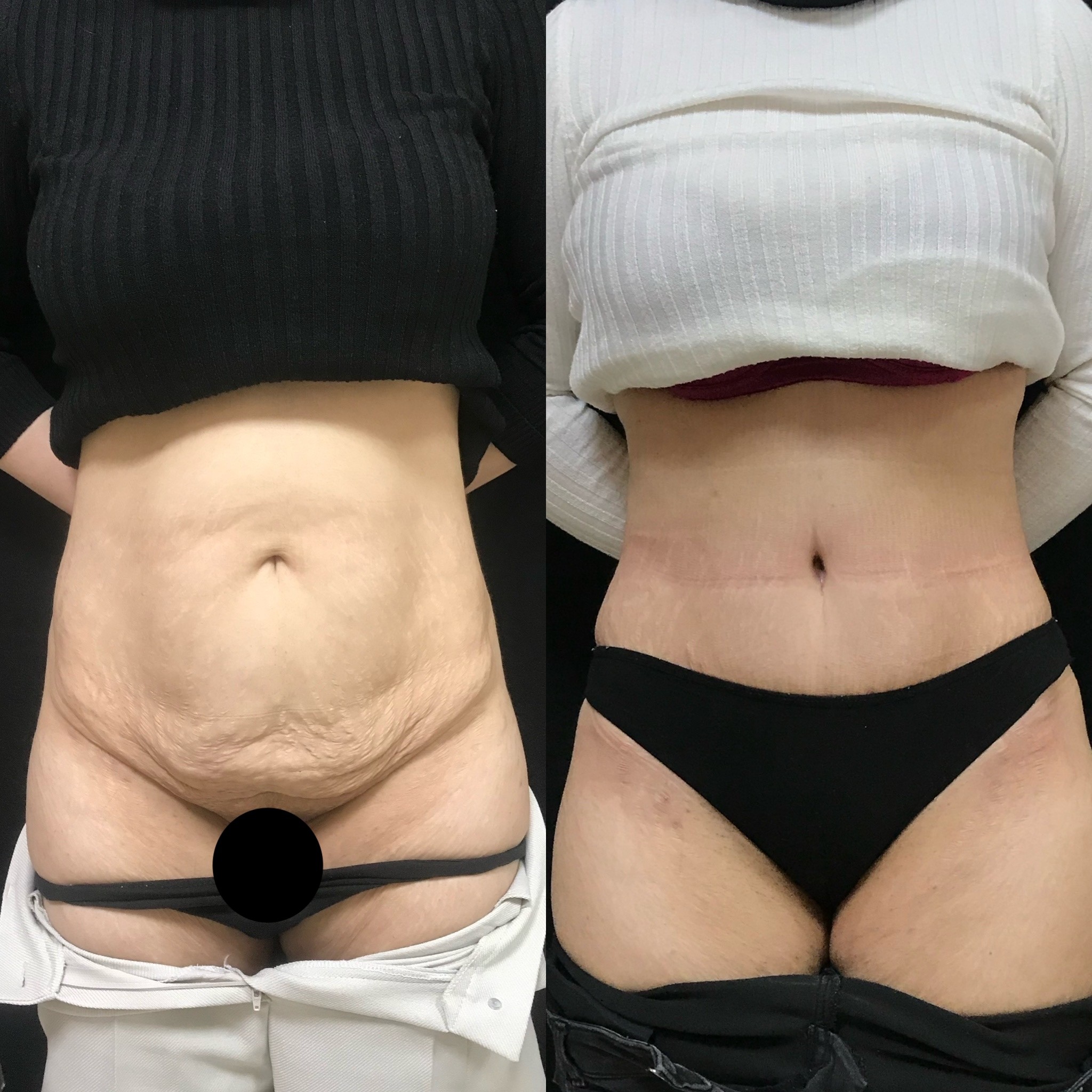
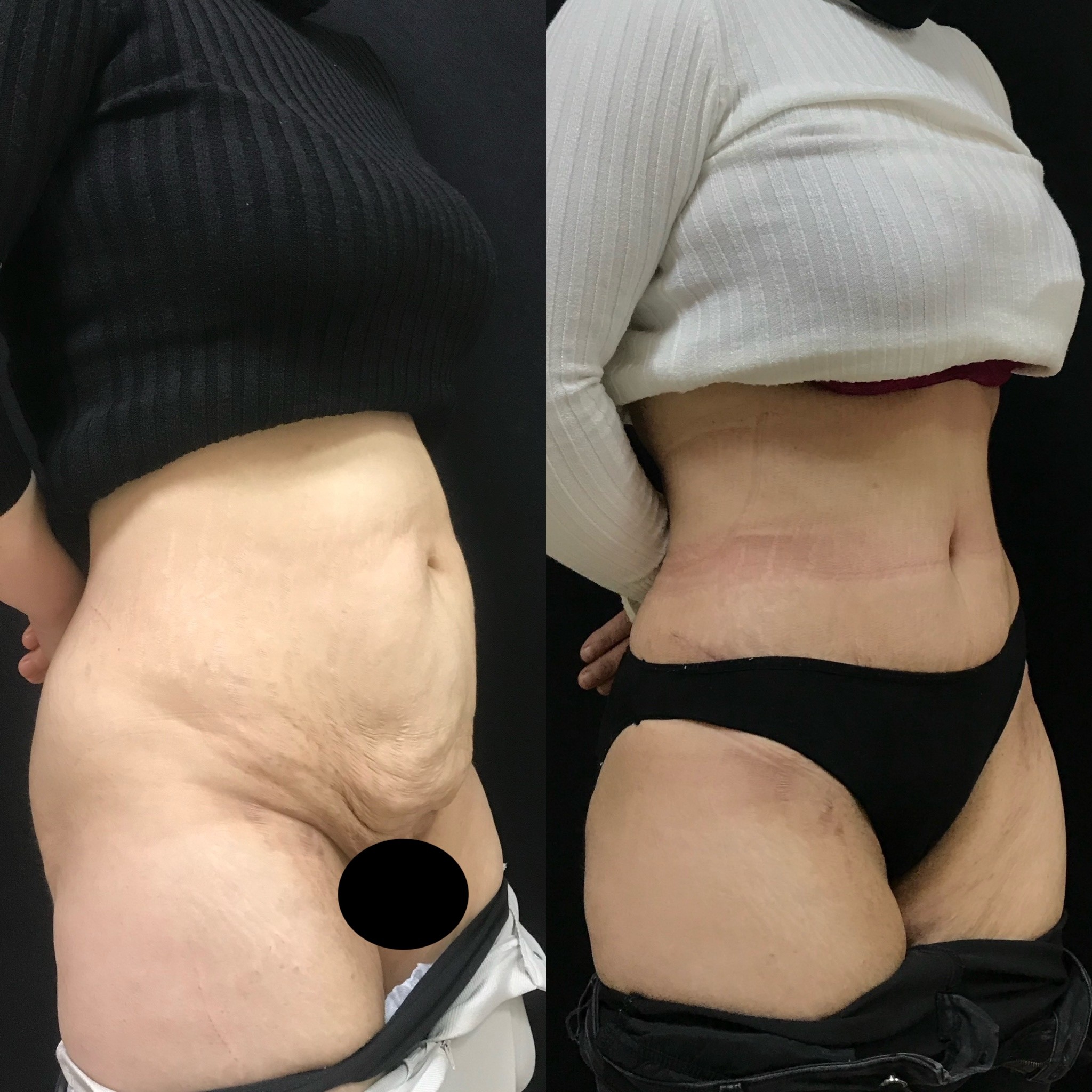
Tummy tuck with liposuction and diastasis repair before and after at 6 weeks. Lipo-abdominoplasty results by Dr. Cem Berkay Sinaci, Istanbul, Turkey.

Patient Overview
Age range: 35–45 years old
Gender: Female
Procedures: Full abdominoplasty with liposuction and diastasis recti repair (lipo-abdominoplasty)
After photos taken at: 6 weeks post-surgery
Case Description
Aminna underwent a full lipo-abdominoplasty with diastasis recti repair at our clinic in Istanbul. Her concerns were ones we see frequently — a persistent lower abdominal pouch, a widened waistline, and a feeling of core weakness that affected her daily comfort and confidence. Despite being at a healthy body weight, her abdominal shape did not reflect her overall fitness level. This disconnect between body weight and body shape is one of the hallmarks of post-pregnancy abdominal changes and is driven by structural damage that lies beneath the surface.
When Body Weight is Not the Problem
There is a common misconception that a protruding abdomen always means excess body fat. In many cases — and Aminna's is a clear example — the issue is structural rather than compositional. The three main structural changes that create a persistently rounded abdomen regardless of body weight are separated abdominal muscles that can no longer hold the abdominal contents in place, excess skin that has lost its elasticity and hangs over the waistline, and localized fat deposits that sit in hormonally determined patterns and resist diet and exercise.
Each of these three problems requires a different surgical solution, which is precisely why lipo-abdominoplasty combines all three into one procedure. Liposuction addresses the fat, abdominoplasty removes the skin, and diastasis repair restores the muscle wall. Leaving any one of these components untreated compromises the overall result because the remaining problem becomes more visible once the others are corrected.
The Role of Timing: Why 6 Weeks is a Turning Point
We have shared cases at four days, one week, and one month in our gallery. Aminna's six-week result represents a meaningful milestone in the recovery timeline, and here is why.
At six weeks, the acute healing phase is essentially complete. The internal sutures holding the muscle repair have gained significant strength. The tissues that were elevated during surgery have re-adhered to the underlying structures. The most pronounced swelling has cleared. And critically, six weeks is typically the point at which patients are cleared to begin reintroducing exercise.
For many patients, this is the moment the procedure starts to feel truly worth it. The restriction period is over, the body is starting to feel familiar again, and the mirror is reflecting a shape that is noticeably different from what they saw before surgery. The result at six weeks is not yet final — subtle swelling persists, and the contour will continue to sharpen over the next three to six months — but it is the first point at which the patient can see their trajectory clearly and feel confident about where things are heading.
What the 6-Week Photographs Show
Comparing Aminna's before and after photographs at six weeks, several changes are evident. The lower abdominal pouch is gone. The abdominal profile is flat and firm, reflecting the repaired muscle wall underneath. The waistline has regained definition thanks to the liposuction contouring of the flanks. The navel appears natural and well-positioned within the new contour. The scar is still in its early maturation phase — visible and pink — but sits low within the bikini line.
There is still a degree of firmness in the lower abdomen at this stage. The tissues in this area are the last to fully soften because they were the most extensively treated during surgery and because gravity draws residual fluid downward throughout the day. Patients often notice that the lower abdomen looks slightly flatter in the morning and marginally more swollen by evening. This pattern is normal and gradually diminishes over the following two to three months.
Returning to Exercise After Lipo-Abdominoplasty
Six weeks marks the beginning of a graduated return to physical activity, and this is a topic that patients ask about constantly. The guidelines we follow are based on the biology of tissue healing and the structural demands placed on the muscle repair.
At six weeks, the muscle plication has developed enough tensile strength to tolerate moderate loads. Walking, cycling, swimming, and light resistance training are generally cleared at this point. Core-specific exercises — planks, crunches, sit-ups — are introduced more cautiously, typically beginning at eight weeks with low intensity and progressing gradually. High-impact activities such as running, jumping, and heavy lifting are usually cleared between ten and twelve weeks, depending on individual healing progress.
The key principle is gradual progression. The repaired abdominal wall needs to be loaded incrementally so that it adapts and strengthens without being overwhelmed. Patients who rush back to intense training risk discomfort, prolonged swelling, and in rare cases, compromise of the repair. Patients who follow the graduated timeline almost universally report that their core feels stronger than it did before surgery — often stronger than it has felt in years — because the structural foundation is intact again.
Surgeon's Note
Aminna's six-week result is a case I find particularly useful for patient education because it sits right at the inflection point of recovery. The hard part is behind her — the early swelling, the compression garment, the movement restrictions — and the result is now clearly visible even though it will continue to improve.
What I want prospective patients to take from this case is the trajectory. If you look at our four-day case, you see peak swelling and the very beginning of the journey. At one month, the shape is emerging but still evolving. At six weeks, the destination becomes clear. And at three months and beyond, the final refinement settles in. Understanding this arc before your surgery allows you to experience each stage with patience rather than anxiety.
Technically, Aminna's result demonstrates something I always emphasize during consultations: the importance of treating the abdomen as a three-dimensional structure. Fat reduction alone does not fix loose skin. Skin removal alone does not fix a bulging muscle wall. And muscle repair alone does not address the excess tissue that sits over it. Only when all three layers are addressed together does the result look complete and natural from every angle.
Frequently Asked Questions
What can I do at 6 weeks after a tummy tuck that I could not do before?
At six weeks, most patients are cleared to resume driving without restriction, return to all normal daily activities including light housework and carrying moderate loads, begin a graduated exercise program starting with walking, cycling, and light weights, and sleep in their preferred position rather than on their back with the upper body elevated. The compression garment is typically transitioned to daytime-only wear or discontinued entirely, depending on the surgeon's assessment.
How much swelling is still present at 6 weeks after abdominoplasty?
At six weeks, the majority of swelling has resolved, but a degree of firmness and puffiness typically remains in the lower abdomen. Most patients notice this is worse in the evening and better in the morning. This residual swelling accounts for roughly 15 to 25 percent of the remaining change between the six-week appearance and the final result. It resolves gradually and is usually fully gone by four to six months.
Is the tummy tuck result at 6 weeks close to the final result?
The overall shape and proportions at six weeks are a good preview of the final outcome, but the result continues to refine. The waistline becomes more defined as residual swelling clears, the lower abdomen softens and flattens further, and the scar fades significantly. Most patients describe the difference between six weeks and six months as going from a good result to a polished one.
How soon after lipo-abdominoplasty can I return to work?
This depends on the nature of the work. Desk-based or remote work can often be resumed within two to three weeks. Jobs requiring light physical activity typically require three to four weeks. Physically demanding occupations involving heavy lifting, bending, or prolonged standing generally require six to eight weeks before a full return. International patients who work remotely often resume work during their recovery stay in Istanbul.
Can I have another pregnancy after a tummy tuck with diastasis repair?
It is physically possible to become pregnant after a tummy tuck, and the procedure does not affect fertility or the safety of a future pregnancy. However, pregnancy will stretch the abdominal skin and muscles again, which can partially or fully reverse the results of the surgery. For this reason, most surgeons recommend completing your family before undergoing lipo-abdominoplasty to ensure the longest-lasting result.